








Design Tips, Luxury Furniture, Modern Furniture
Recliner vs. Lounge Chair with Ottoman: Which is Right for You?
Jan
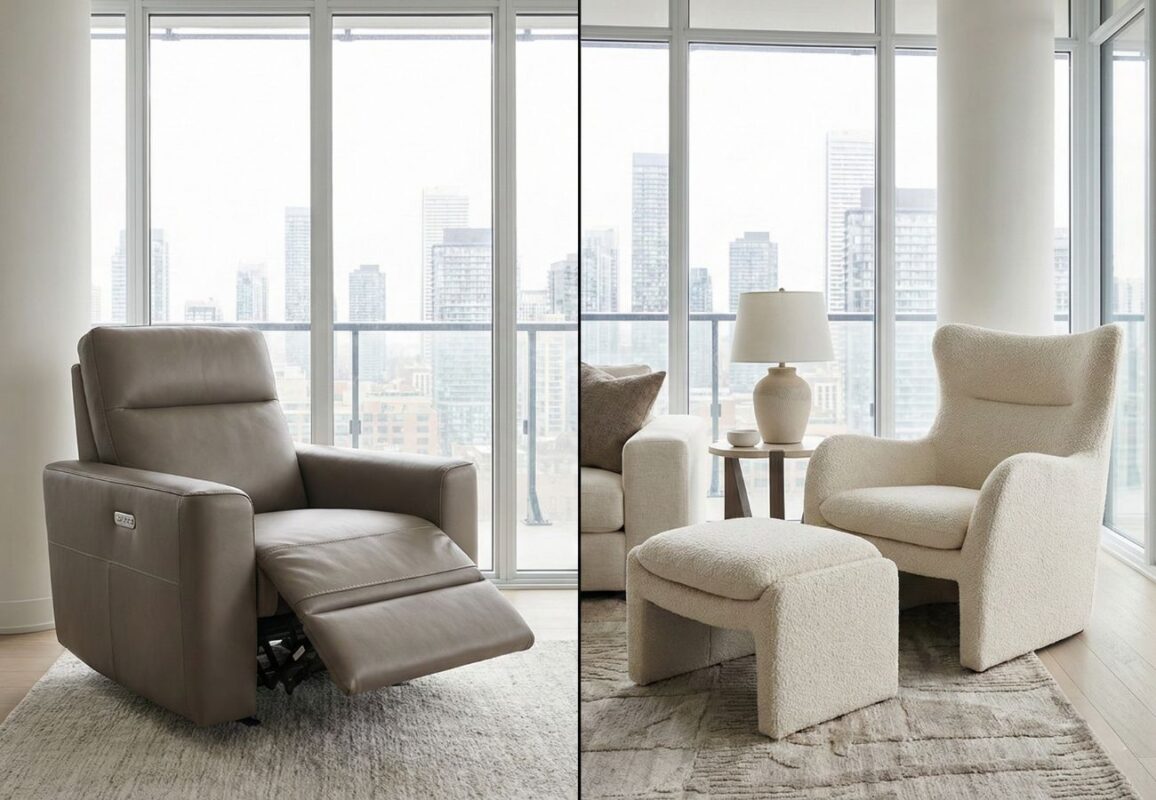
Choosing the best seat in the house is often the most critical decision when furnishing a living room. For many of our clients at Modern Sense Furniture, the Recliner vs. Lounge Chair debate is the hardest to settle. It is a choice between active functionality and passive style, and it requires you to consider your floor plan, your back health, and how you actually use your living space.
This decision involves more than just picking a color or fabric. It is a choice between active functionality and passive style. It requires you to consider your floor plan, your back health, and how you actually use your living space on a Tuesday night versus a Sunday morning.
Whether you are outfitting a spacious estate in King City or a refined condo in downtown Toronto, this guide will walk you through every critical angle of the Recliner vs. Lounge Chair debate. We will explore ergonomics, space planning, and the latest 2026 design trends to help you make the right choice.
Table of Contents
The Recliner vs. Lounge Chair Breakdown: Mechanics & Design
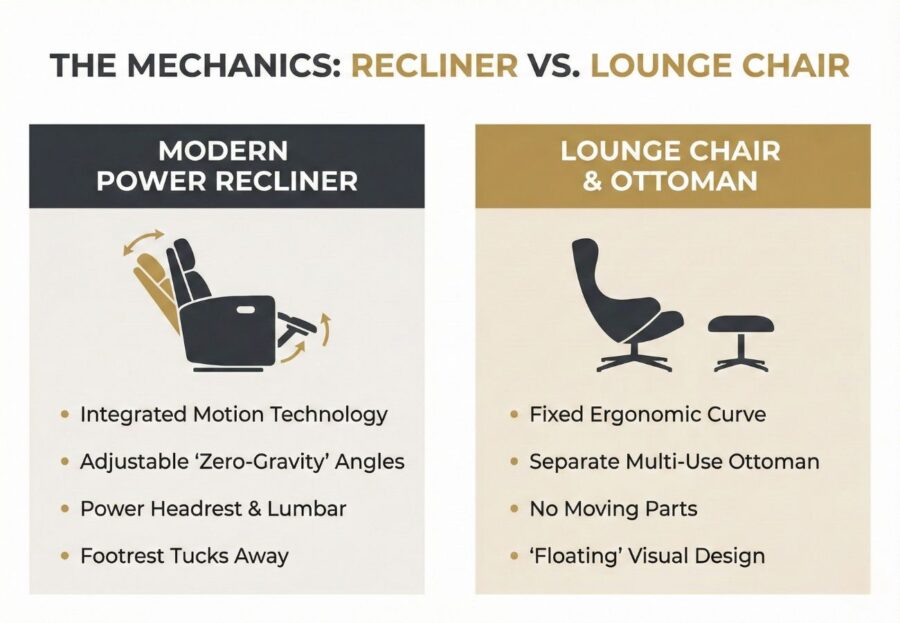
Before we look at which chair is “better” for your specific needs, it is helpful to define what separates these two high-end seating options. While they both serve the primary purpose of relaxation, they achieve it through very different engineering philosophies.
The Modern Recliner: High-Tech Comfort and Adjustability
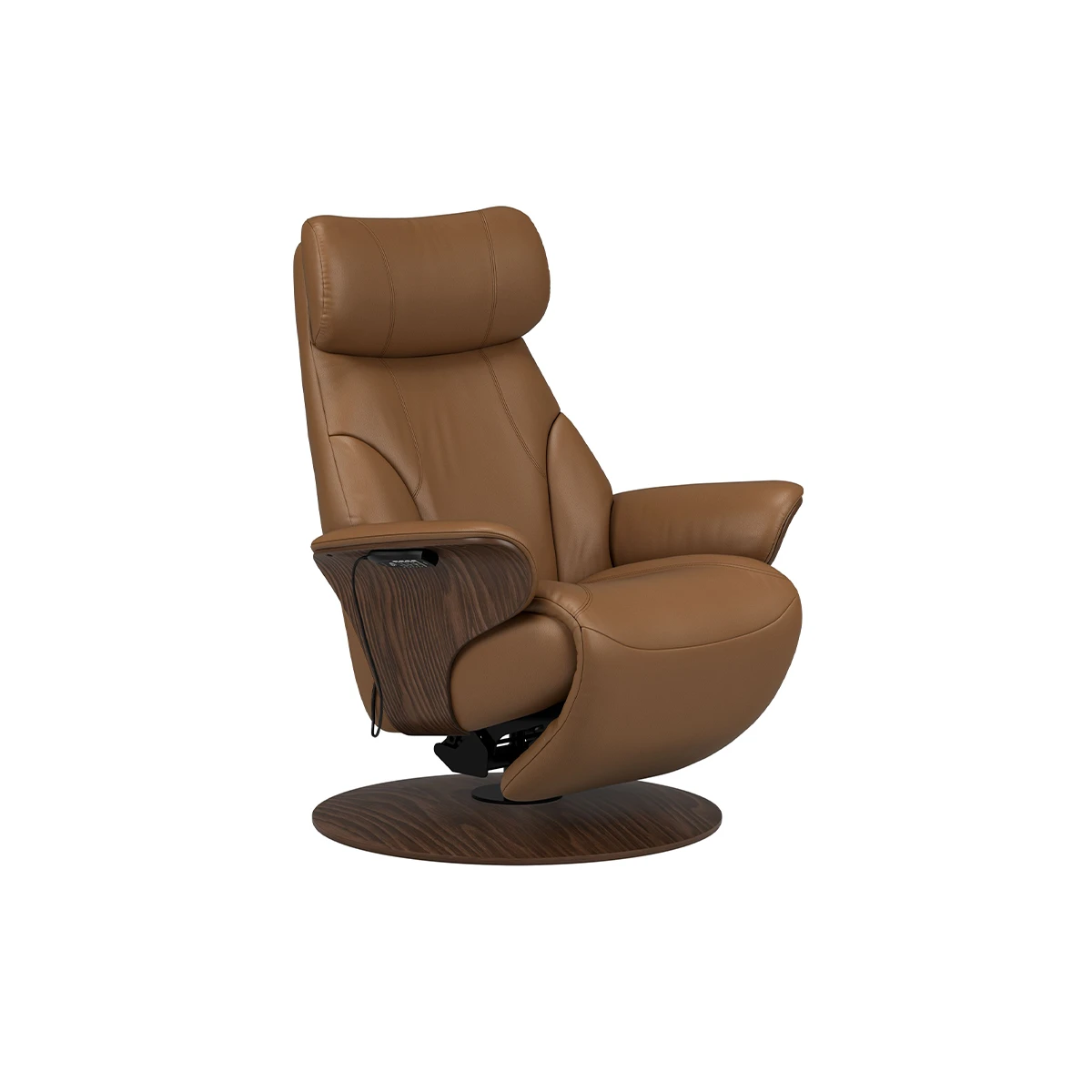
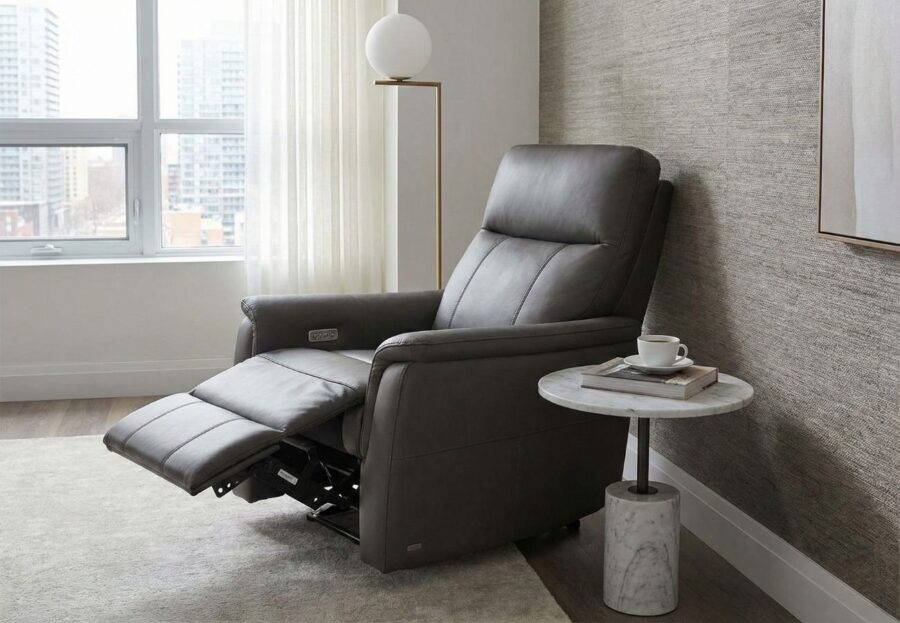
A recliner is an “all-in-one” machine designed to shift your center of gravity. In the past, recliners were often synonymous with bulky, overstuffed chairs that dominated a room. However, contemporary European and Canadian designs have completely transformed this category. Today’s high-end recliners often look indistinguishable from standard armchairs until you activate the mechanism.
The defining feature of a recliner is motion. Whether manual or powered, the backrest tilts, and the footrest extends to support your legs. This integrated movement allows you to change your body position without leaving the chair.
Why Zero-Gravity Mechanisms Matter for Back Pain
Many of the premium models we carry feature “zero-gravity” capabilities. This position elevates your feet to the same level as your heart. It is a feature originally developed by NASA to reduce the stress of takeoff on astronauts, but in your living room, it serves a medical purpose.
By distributing your weight evenly, a zero-gravity recliner decompresses the spine and reduces strain on the lower back vertebrae. According to the Canadian Chiropractic Association, maintaining proper spinal alignment while resting is crucial for long-term joint health. If you suffer from chronic lumbar pain or circulation issues, this mechanical advantage is something a static chair simply cannot replicate.
The Lounge Chair and Ottoman: Sculptural Beauty and Versatility
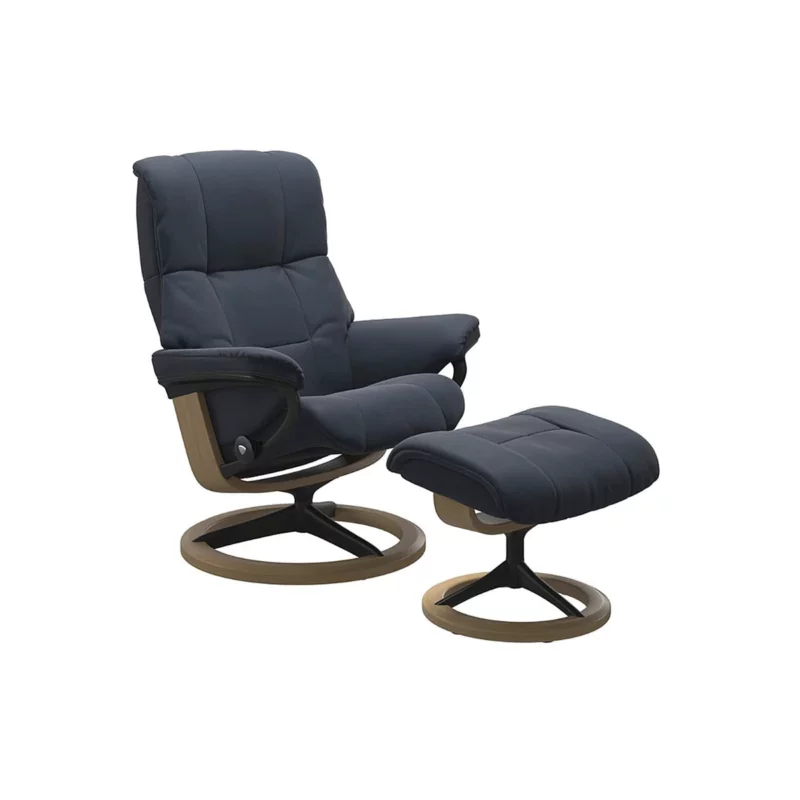
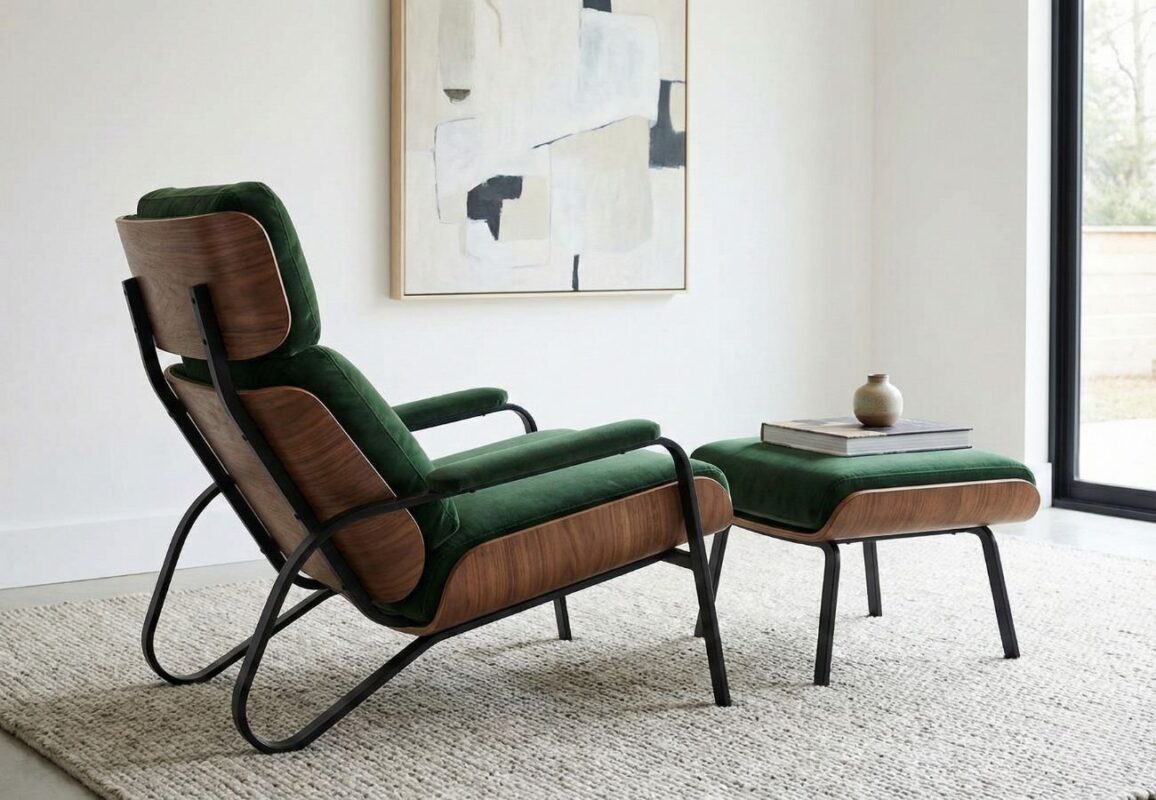
The lounge chair paired with a separate ottoman is a design icon. Think of the classic mid-century silhouettes that grace architectural magazines. This combination separates the seat from the footrest, creating a two-piece setup that is often more visually “light” than a recliner.
Unlike a recliner, a lounge chair is static. It has a fixed back angle that is engineered by the designer to be the “ideal” lounging position. Because there are no motors or moving metal parts inside, the frame can be thinner, the legs higher, and the overall profile much sleeker.
Using an Ottoman as a Multifunctional Condo Solution
The ottoman is the secret weapon of this setup. In a smaller Toronto condo where every square foot counts, a recliner’s footrest is useless when the chair is closed. An ottoman, however, serves multiple roles. It is a footrest when you are relaxing, but pull it away and place a tray on it, and it becomes a coffee table. Push it against the wall, and it becomes extra seating for a guest during a party. This flexibility is a major selling point for those who host often.
| Feature | Modern Recliner | Lounge Chair + Ottoman |
|---|---|---|
| Primary Mechanism | Integrated motion (Power/Manual) | Static (Fixed angle) |
| Footrest Style | Pop-out / Fold-under | Separate freestanding piece |
| Aesthetic Profile | Function-driven, often grounded | Form-driven, often raised on legs |
| Best Use Case | TV watching, napping, back relief | Reading, conversation, hosting |
Recliner vs. Lounge Chair: Analyzing Ergonomics For Best Support for Your Body
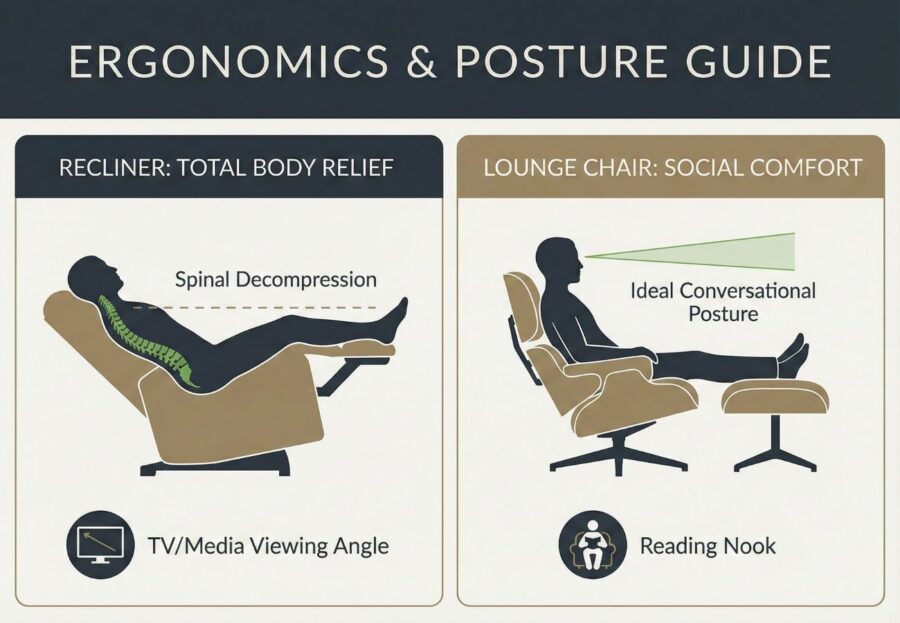
Comfort is subjective, but ergonomics is a science. When choosing between a recliner and a lounge chair, you are choosing between adjustable support and fixed support. Understanding how your body reacts to sustained sitting is key to making the right purchase.
Lumbar Support and Adjustable Headrests in Recliners
The human spine is not a straight line; it is an S-curve. When we sit for long periods, gravity tends to collapse this curve, leading to slouching and pain. A high-quality power recliner allows you to micro-adjust the back angle to support your lumbar region actively. Many of our premium reclining chairs also feature articulating headrests. This allows you to recline your body fully while tilting your head forward slightly, which is the perfect position for watching television without straining your neck muscles.
Preventing Neck Strain During Movie Marathons
If your primary goal is a home theater setup, the recliner is the superior choice. In a standard lounge chair, if you slide down to get comfortable, your gaze naturally points at the ceiling. To watch a screen, you have to tuck your chin to your chest, which creates tension. A recliner with an adjustable headrest solves this by supporting the head in a neutral, forward-facing position even when your back is at a 45-degree angle.
The Static Comfort of a High-End Lounge Chair
Do not mistake “static” for “uncomfortable.” An exclusive lounge chair is designed to hold the body in a relaxed, open posture. Because the designer controls the angle, they can ensure the seat depth and back height are perfectly proportioned. This is often better for active relaxation, such as reading a book or chatting with family, where you want to be comfortable but alert.
Ideal Postures for Reading and Conversation
Lounge chairs generally have a slightly more upright posture than a fully extended recliner. This “conversational angle” makes eye contact easier. If you are sitting in a deep recliner, it can be difficult to turn and speak to someone on the sofa next to you. A lounge chair keeps you in the social flow of the room. Furthermore, many people find that the separate ottoman allows for more freedom of movement; you can sit cross-legged or dangle one leg off the side, which is difficult to do on a narrow recliner footrest.
- Choose a Recliner if: You have specific back pain, you want to nap, or you watch 2+ hours of TV at a time.
- Choose a Lounge Chair if: You want to read, you entertain guests frequently, or you prefer a firmer, supportive seat.
Space Planning for GTA Living: Condos vs. Houses
We know that in Toronto, floor space is a luxury. The physical footprint of your furniture can make or break the flow of a room. This is where the Recliner vs. Lounge Chair battle gets technical.
Maximizing Floor Space with Wall-Hugger Recliners
One common misconception is that recliners require a massive amount of room. While this was true for the “dad chairs” of the 1990s, modern engineering has solved this. “Wall-hugger” or “zero-wall” recliners are designed so that the seat tracks forward as the back reclines. This means you can place the chair as close as 2 to 4 inches from a wall, and it will still recline fully.
When the chair is closed, it takes up a very compact footprint, usually about 30 to 35 inches square. This makes it an excellent choice for narrow condo living rooms where you need to keep walkways clear when the chair is not in use.
Measuring “Traffic Flow” Around Extended Footrests
The catch with a recliner is the “open” state. When fully extended, a recliner can be 65 inches long or more. You must ensure that when the footrest is up, it does not block the path to the balcony door or the kitchen. However, the beauty is that this obstruction is temporary; you simply close the chair when you get up.
The Visual Footprint of a Lounge Chair Set
A lounge chair and ottoman setup has a permanent footprint. The ottoman does not fold away. If your lounge chair is 35 inches deep and the ottoman is 25 inches deep, with a 10-inch gap for your legs, you are looking at a fixed setup that takes up nearly 6 feet of length at all times.
Maintaining Open Sightlines in Open-Concept Rooms
While the lounge chair takes up more floor space permanently, it often takes up less “visual” space. Lounge chairs are typically raised on legs, allowing you to see the floor underneath. This trick of the eye makes a small room feel larger and airier. Recliners often have solid bases to hide the motor mechanism, which can look heavier and more grounded. In an open-concept condo with floor-to-ceiling windows, the silhouette of a lounge chair often preserves the view better than a solid recliner.
| Space Consideration | Recliner | Lounge Chair + Ottoman |
|---|---|---|
| Wall Clearance | Minimal (if wall-hugger model) | Minimal (static back) |
| Floor Area (In Use) | Expands (approx. 65″ length) | Fixed (approx. 70″ length with gap) |
| Floor Area (Not in Use) | Compact (approx. 35″ length) | Fixed (Ottoman remains) |
| Visual Weight | Heavier, solid base | Lighter, open legs |
Interior Design Trends 2026: Aesthetics and Materials
At Modern Sense Furniture, we keep a close pulse on the international design markets in Milan and High Point. Leading publications like Architectural Digest have noted that the 2026 trend is moving away from stark minimalism toward “warm comfort.” This shift influences how both recliners and lounge chairs are being designed for the modern home.
The Rise of “Hidden Motion” in Luxury Recliners
The most exciting trend in recliners is “hidden motion.” Manufacturers are now placing control buttons on the inside of the armrest or using touch-sensitive sensors hidden in the leather, removing the unsightly plastic wands or levers of the past. The battery packs are now rechargeable and hidden, meaning you can place a power recliner in the middle of a room without a cord snaking across the floor to an outlet. This allows high-end recliners to compete aesthetically with even the most sculptural accent chairs.
Choosing Leather vs. Fabric for Longevity
Because recliners involve movement and friction between cushions, high-grade leather is often the preferred choice for durability. It moves with the mechanism and develops a patina over time. However, 2026 is seeing a surge in performance bouclé and heavy-weave fabrics that offer a softer, cozier tactile experience, perfect for the “warm minimalism” trend popular in Toronto interiors right now.
Lounge Chairs as Architectural Statement Pieces
If you browse our showroom, you will notice that lounge chairs are becoming more adventurous. Designers view the lounge chair as the “jewel” of the living room. It is the place to take a risk with a bold colour, a unique shape, or a mixed-material frame (such as walnut wood paired with matte black metal).
Matching Mid-Century Modern Styles with Contemporary Decor
The “Mid-Century Modern” influence remains strong, but it is evolving. We are seeing lounge chairs with softer, more organic curves rather than the rigid, boxy shapes of the past. A curved lounge chair softens the hard angles of a typical square condo room. If your sofa is neutral and linear, a curvy lounge chair with a round ottoman creates a necessary visual balance.
Making the Right Recliner vs. Lounge Chair Choice for Your Lifestyle
So, who wins the Recliner vs. Lounge Chair battle? The honest answer is that it depends entirely on your hierarchy of needs. Are you designing a room for show and conversation, or a sanctuary for recovery and rest?
Summary Checklist: Recliner vs. Lounge Chair
You should buy a Luxury Recliner if:
- You want the ultimate functional comfort for back health.
- You need to save floor space when the chair is not being used.
- Your living room doubles as your primary media/TV room.
- You prefer a clean look without a separate ottoman floating in the room.
You should buy a Lounge Chair & Ottoman if:
- You prioritize aesthetic design and visual lightness.
- You want a flexible ottoman that can serve as a table or guest seat.
- You prefer a more upright, social posture for reading and chatting.
- You want a “statement piece” that acts as a focal point for the room’s decor.
Visit Modern Sense Furniture for a Test Sit
Reading about comfort is a good start, but feeling it is essential. A chair that looks perfect online might not fit your height or body type. At Modern Sense Furniture, we invite you to visit our Toronto showroom to test our extensive collection of Italian and European seating. Sit in a zero-gravity recliner, put your feet up on a designer ottoman, and let our design experts help you find the perfect match for your home.
Ready to find your perfect seat? Explore our exclusive collection of luxury reclining chairs or visit us in-store today.