








Design Tips, Modern Furniture
A Designer’s Guide to Wood Finishes in Modern Furniture
May
·
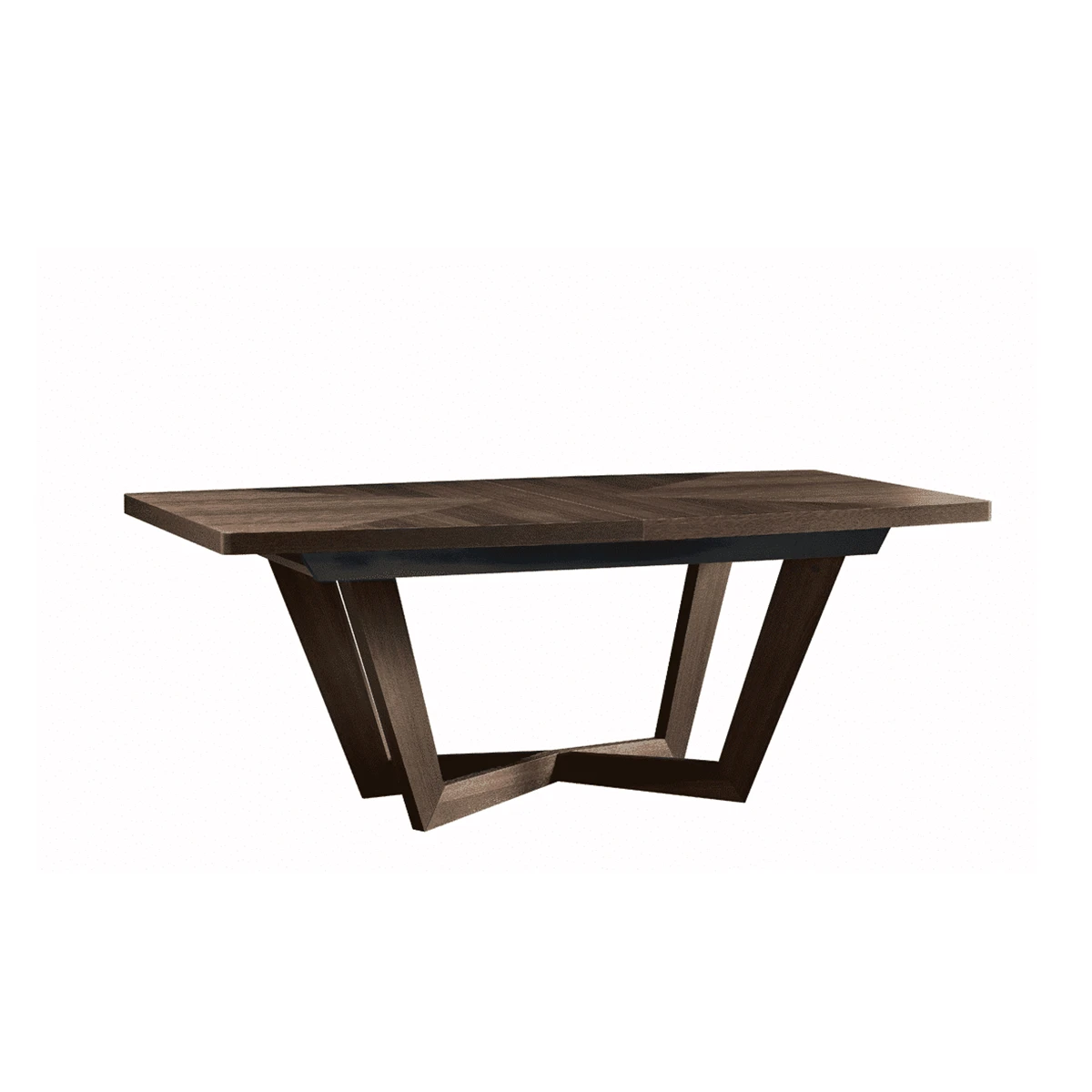
Walk into ten modern furniture showrooms and you will see roughly the same shapes: low slung sofas, slim legged dining tables, organic curves on credenzas. What separates a piece that feels alive from one that feels like a stage prop is almost always the finish on the wood. Get the finish right and a $1,200 dining table reads like a $4,000 piece. Get it wrong and the opposite. Discover our contemporary dining room furniture featuring rich wood finishes, refined craftsmanship, and modern designs that instantly elevate the look and feel of your space.
What follows is the working framework our designers use to choose wood finishes for furniture across living rooms, dining rooms, and bedrooms. Five major species, three major finish chemistries, and the rules for matching them to the room. Bring this with you when you shop.
In this article
- The five wood species that define modern furniture in 2026
- Matte vs satin vs gloss: what each finish actually does
- Veneer vs solid wood: when each one is the right answer
- How to mix wood tones without it looking accidental
- Finish chemistry: oil, lacquer, and polyurethane in plain language
- What is in and what is out for wood furniture in 2026
- Frequently asked questions
The five wood species that define modern furniture in 2026
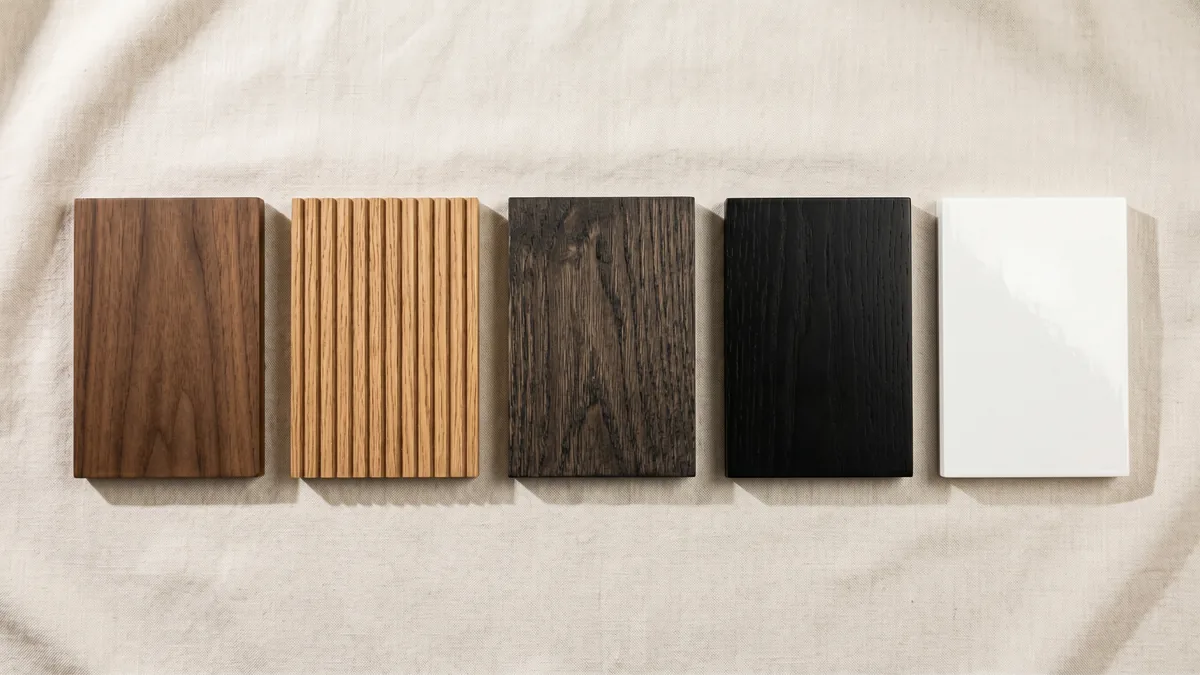
Modern furniture in North America revolves around five species, each with a different visual personality:
- Walnut. Rich chocolate brown with strong grain figure. The default for luxury modern; reads warm and confident. Janka hardness 1010, hard enough for tabletops.
- White oak. Pale honey to cream tones with prominent ray fleck. The current darling of Scandinavian and Japandi modern. Janka 1360, harder than walnut. Holds finishes evenly.
- Smoked oak (fumed oak). White oak treated with ammonia or a smoking process to deepen the colour to deep cocoa. Same hardness as oak; reads richer than walnut.
- Cherry. Pink at first, deepens to red orange in 12 to 24 months under light. Less common in pure modern, common in transitional.
- Ash. Very pale, prominent grain, a light blonde alternative to oak. Common in Scandinavian and minimalist Italian modern.
Mahogany, teak, and cherry still appear in modern furniture but typically as accents rather than main pieces. Pine and birch are budget species; under a thin lacquer they read inexpensive because the grain pattern is too soft to carry the eye.
Matte vs satin vs gloss: what each finish actually does
Sheen level changes more than appearance. It changes maintenance, durability, and how the piece reads in a room.
| Sheen | Visual | Maintenance | Best for |
|---|---|---|---|
| Matte (0 to 10 percent gloss) | Soft, organic, hides scratches | Easy spot repair | Living room, bedroom, dining |
| Satin (20 to 40 percent gloss) | Subtle reflection, depth | Moderate | Versatile across most rooms |
| Semi gloss (40 to 70 percent gloss) | Glossy but not mirror | Demanding (shows fingerprints) | Modern glam, accent pieces |
| High gloss (70 plus percent) | Mirror finish, high drama | High (shows everything) | Lacquer pieces, minimalist showrooms |
The 2026 default for modern luxury furniture is matte to satin walnut, with high gloss reserved for accent pieces or full lacquer wardrobes. Mid sheen reads timeless. Full matte reads organic and now. Full gloss reads showroom and dates faster.
Veneer vs solid wood: when each one is the right answer
The most common misconception in furniture shopping: veneer means cheap. The truth: most heirloom furniture from the 18th century onward used veneer over solid wood substrates. Veneer over a high quality plywood or MDF core is often more dimensionally stable than solid hardwood, which moves with humidity.
- Choose solid wood when: you want a piece that can be sanded and refinished multiple times over decades, the piece will see daily abuse (dining table edge, desk surface), or the design language is rustic and grain matched panels are not a priority.
- Choose veneer over solid hardwood substrate when: you want a large unbroken matched grain field (a 10 foot dining table top in book matched walnut is impossible in solid), the piece is a big flat panel (wardrobe doors, headboards) where solid would warp, or the design uses an exotic species too rare or expensive in solid form.
How to mix wood tones without it looking accidental
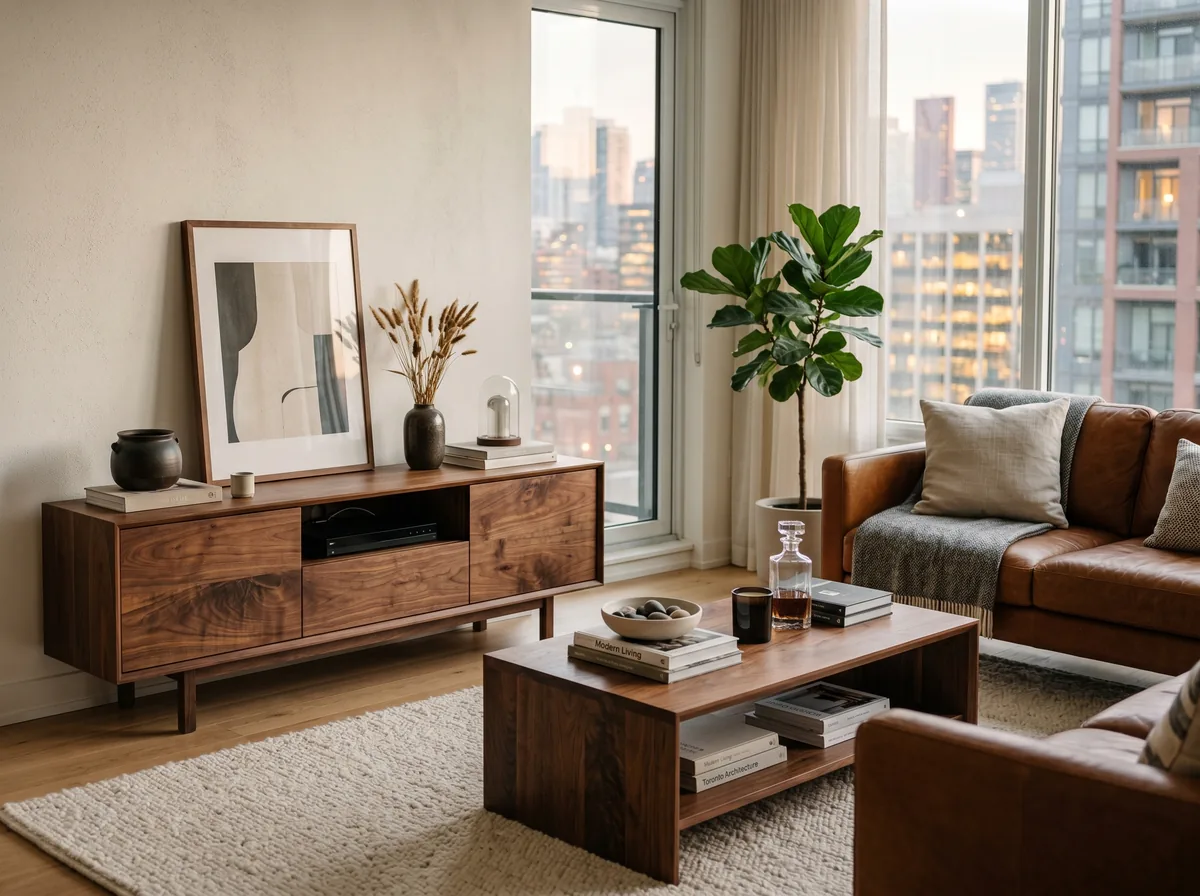
The single most useful design rule of the last decade: stick to two, occasionally three, wood tones in one room. A walnut dining table can sit on white oak floors with an ash sideboard, and the room reads layered. Add a fourth wood (cherry side table) and the room reads mismatched.
The trick is to vary contrast deliberately. If your floors are warm white oak, the biggest piece (dining table or sofa surround) should contrast with the floor (deep walnut, smoked oak, or ebony). Smaller pieces can echo the floor tone. The eye reads contrast as intention; closeness without matching reads as a mistake.
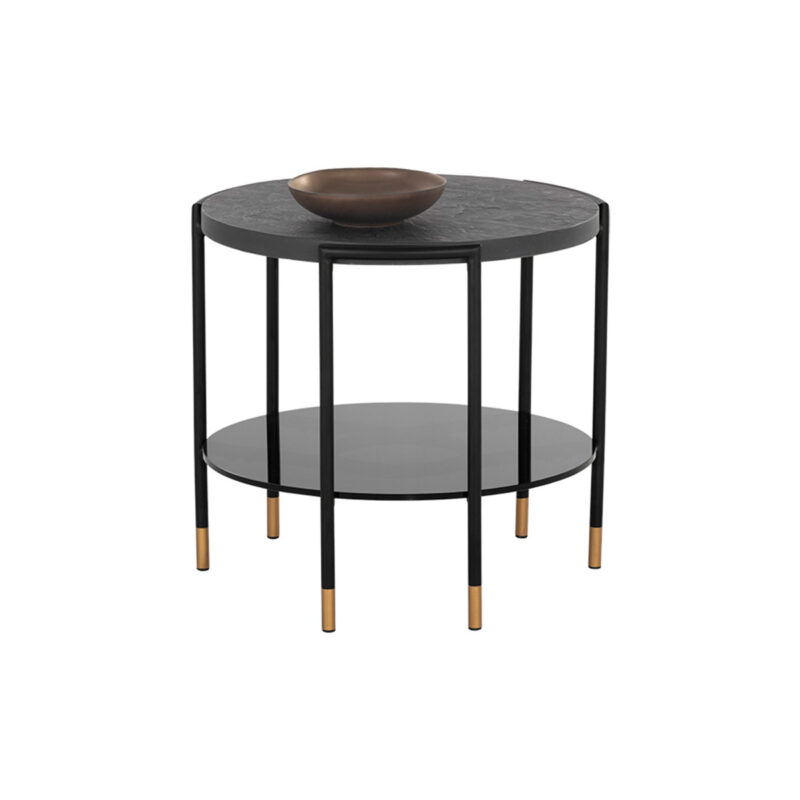
One safe combination across most modern interiors: warm white oak floors plus a walnut feature piece (dining table or media console) plus an ebony or smoked oak accent (a small side table or shelving unit). Three tones, decreasing visual mass.
Finish chemistry: oil, lacquer, and polyurethane in plain language
Three finish families dominate modern furniture. Each has a personality.
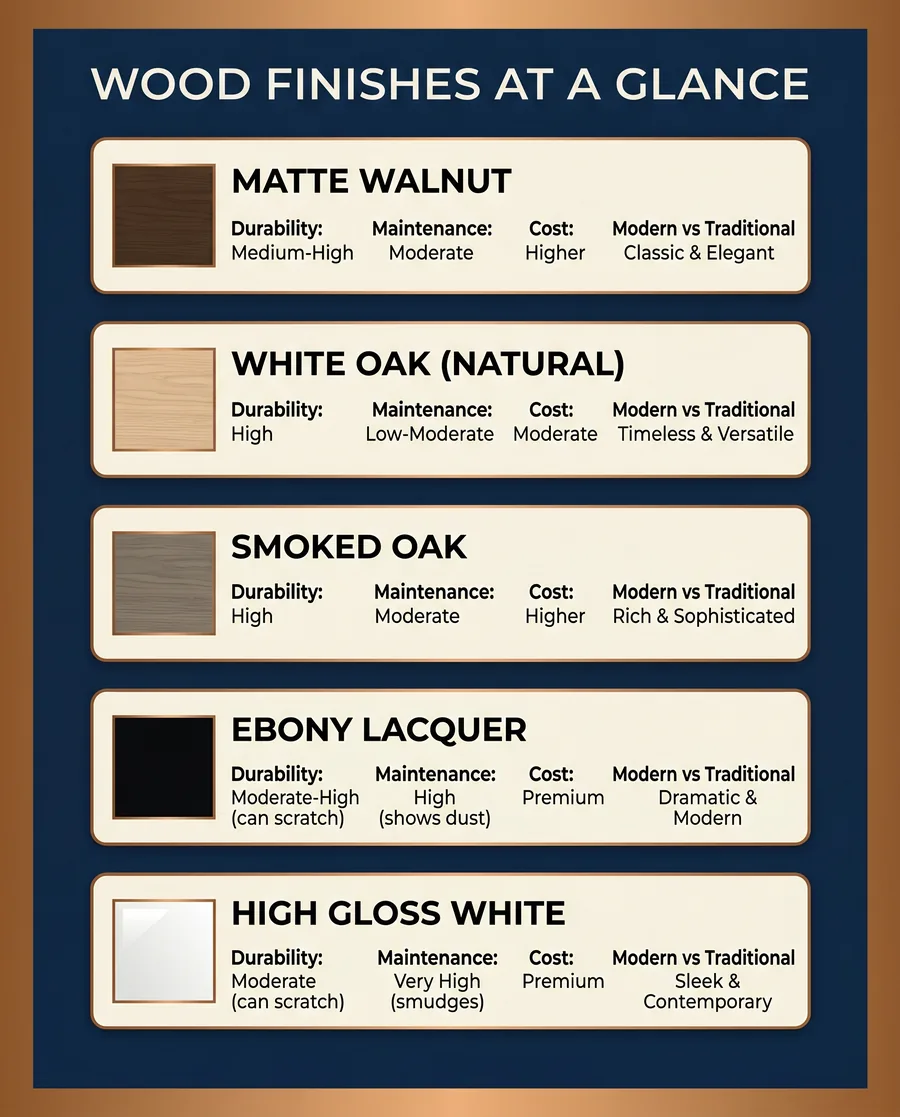
- Hardwax oil (Rubio Monocoat, Osmo, Saicos). The current favourite of high end Italian modern. Penetrates the wood rather than sitting on top. Reads natural and tactile. Spot repairable with a soft cloth. Less protective against deep scratches than polyurethane. Refresh every 3 to 5 years.
- Polyurethane (water or oil based). Sits on top of the wood as a clear film. Most protective option for daily use surfaces. Water based dries clear and stays clear; oil based ambers over time which can be desirable on walnut. Hard to spot repair (scratches usually need a full refinish of the top surface).
- Lacquer (nitrocellulose or catalyzed). Builds in thin coats to a glassy finish. The standard for high gloss white modern furniture. Catalyzed lacquer is the most durable, holds its sheen for 15 plus years.
What is in and what is out for wood furniture in 2026
Trends shape the showroom faster than the home, but they tell you what to avoid buying right now if you want a piece to feel current in five years.
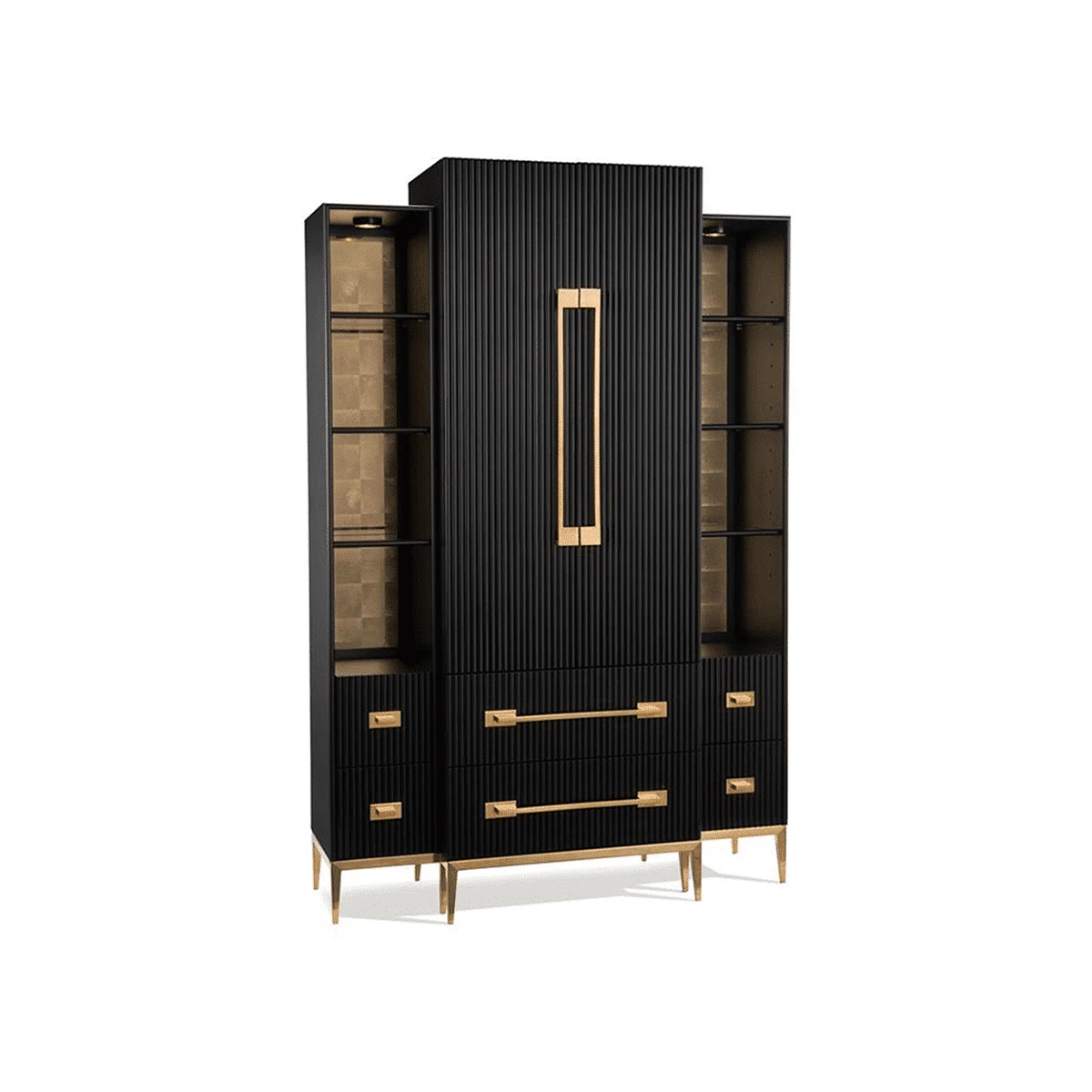
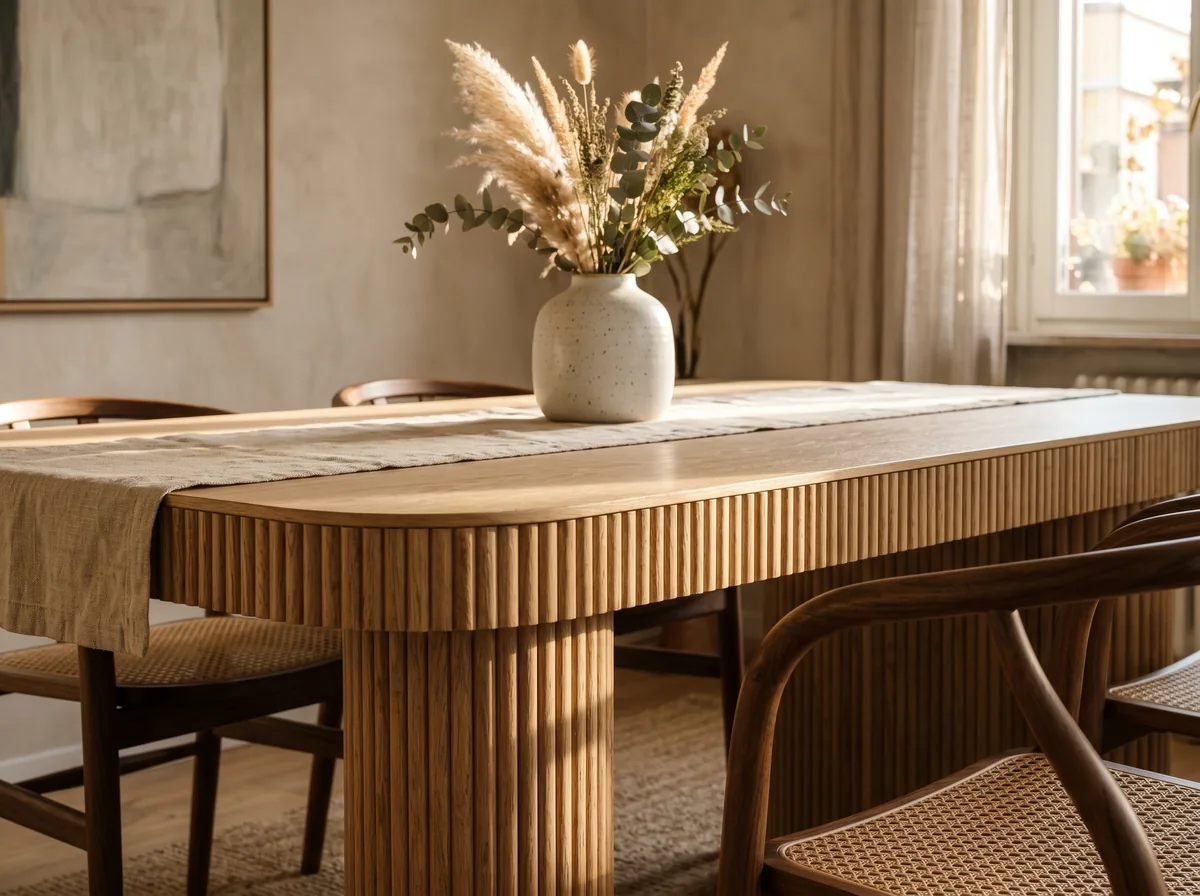
- In: matte walnut and warm white oak, fluted and reeded vertical patterns, soft curves on table edges, hardwax oil finishes, large book matched veneer panels.
- Coming back: burl wood (especially on credenzas and headboards), smoked oak, mid tone fumed pieces.
- Out: orange tinted cherry stains, glossy espresso finishes, distressed reclaimed barn wood, two tone pieces with contrast bands.
The safe long term bet: matte to satin walnut or natural white oak in a hardwax oil finish. Both species have been continuously fashionable in luxury furniture for the last 80 years; the finish is reversible if trends change.
Wood Finishes Reference Card for Modern Interiors (Free PDF)
A printable reference card with finish recommendations by room, lifestyle, and natural light level.
Download the free guideFrequently asked questions
Which wood finish is most durable for a dining table?
Catalyzed polyurethane is the most protective for daily use, but a hardwax oil (Rubio Monocoat, Osmo) is more practical because spot repairs are simple and the finish does not yellow over time.
Is veneer cheaper than solid wood furniture?
Sometimes, but not always. A high end veneer over a hardwood substrate is often more dimensionally stable and uses rare species you could not get in solid form. Cheap veneer over particleboard with paper edge banding is what makes veneer earn its bad reputation.
Walnut or white oak for a modern dining table?
Walnut for warmth and depth, white oak for a brighter, more Scandinavian feel. White oak is harder (Janka 1360 vs walnut’s 1010) and resists indentation better. Walnut hides crumbs and small stains more graciously.
Will my walnut furniture fade in direct sunlight?
Yes. Walnut bleaches over months of direct UV exposure. Use a UV stable finish (water based polyurethane or oils with UV inhibitors), close blinds during peak hours, and rotate the piece annually to even the fade.
Should I match my furniture wood to my floors?
No. Contrast is your friend. If you have warm white oak floors, a walnut dining table or a smoked oak credenza reads more deliberate than another shade of warm oak.
Are matte finishes harder to keep clean?
Counterintuitively, no. Matte finishes hide fingerprints, water marks, and dust far better than gloss. They show some marks more (oil from skin can darken matte finishes locally) but spot repair is easy with a quick re application of the same oil.
Keep reading
Choosing wood is a tactile decision. Run your hand across walnut, oak, and lacquer in person at our Toronto showroom, or browse our modern furniture collection online. Our designers can ship samples across the GTA and beyond.