








Design Tips, Luxury Furniture
How to Design a Luxury Home Theatre That’s Actually Comfortable
Jun
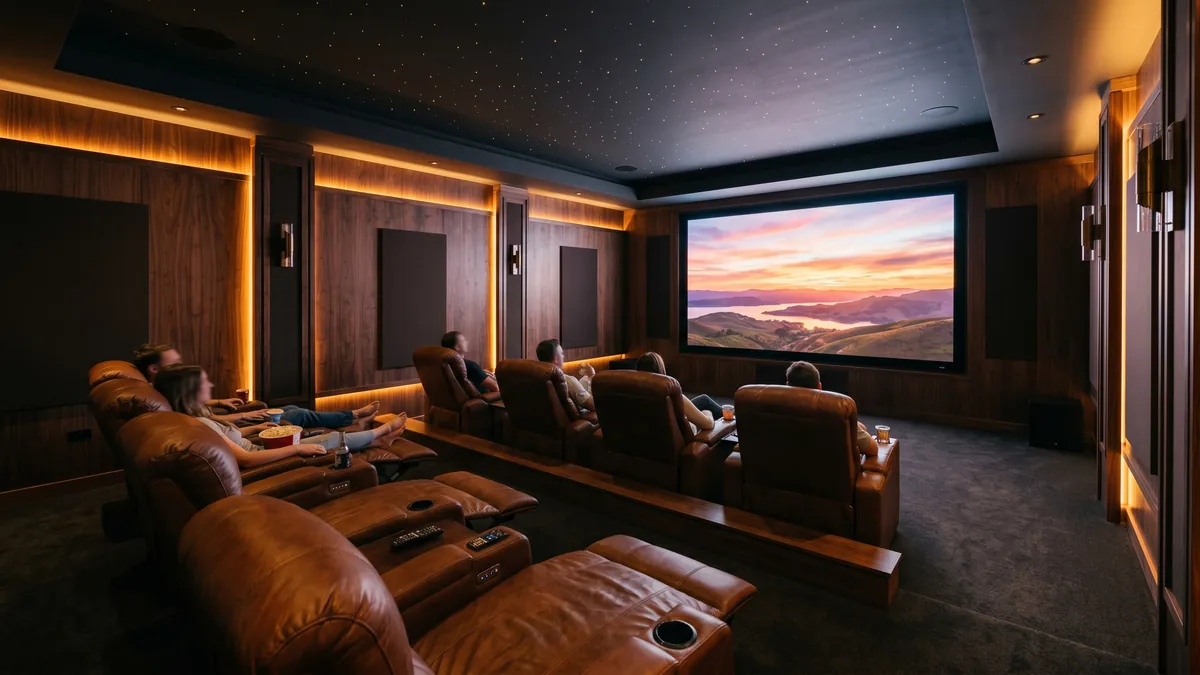
A home theatre is the room that looks great in a real estate listing photo and ruins your back after 90 minutes of a movie. The classic mistake: people pick the projector and the screen first, then squeeze seating into whatever floor area is left. The right approach reverses the order. Pick the seating first. Build the room around it. For a deeper read on motion furniture, our team has covered comfortable home theatre seats in detail; this article covers the room itself.
Below is the framework for designing a luxury home theatre across living rooms, finished basements, and dedicated cinema rooms in Toronto, Mississauga, and across the GTA. Six rules, five mistakes, and a layout cheat sheet you can hand to your contractor.
In this article
- Why seating drives the rest of the room
- The three tiers of home theatre seating that actually work
- Screen size and the 0.6 rule
- Riser height, row spacing, and why pros build a step
- Lighting that is actually cinematic (not just dim)
- Acoustics, finishes, and the role of soft furniture
- Frequently asked questions
Why seating drives the rest of the room
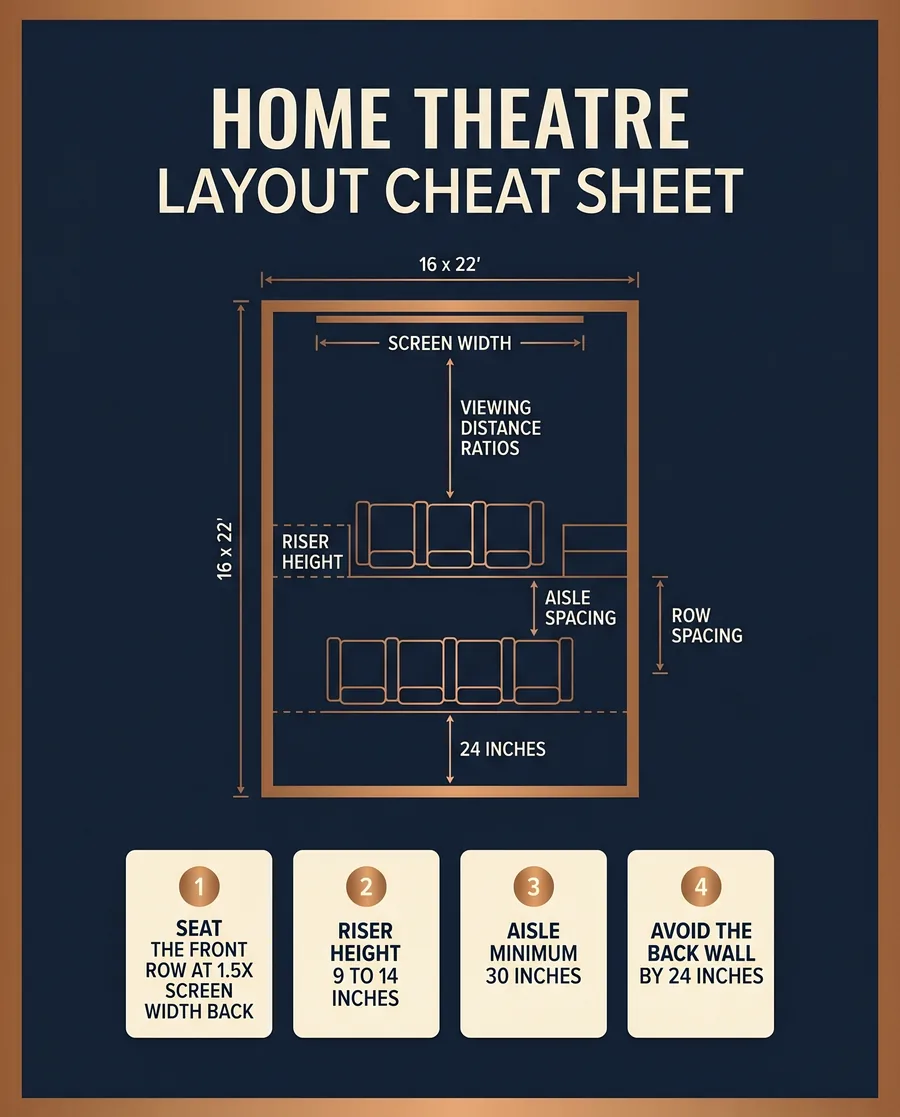
The seating dictates everything: viewing distance, screen size, room length, and riser height. A pair of premium leather recliners (Stressless, Himolla, Ekornes) needs about 36 inches of depth when fully reclined. Add 12 inches for footrest clearance and you have a 48 inch deep zone per row. A two row theatre therefore needs at least 96 inches of depth just for seating, plus 24 to 36 inches of circulation in front and behind.
If your room is shorter than 18 feet, a single row of recliners or a deep curved sectional is a better choice than trying to fit two cramped rows. The two row theatre is for rooms 22 feet and longer.
The three tiers of home theatre seating that actually work
Most home theatre seating falls into three quality tiers. The price difference looks dramatic; the comfort difference is usually clear within the first hour of a film.
- Builder grade theatre seats ($800 to $1,500 per seat). Polyurethane “leather” (vinyl), cup holders, single motor recline. Comfortable for 60 to 90 minutes, then pressure points compound. The foam compresses noticeably after 18 to 24 months.
- Mid range power recliners ($1,800 to $3,500 per seat). Top grain leather, dual motor (headrest and footrest move independently), USB charging. Comfortable for 2 to 3 hours. Lasts 8 to 12 years.
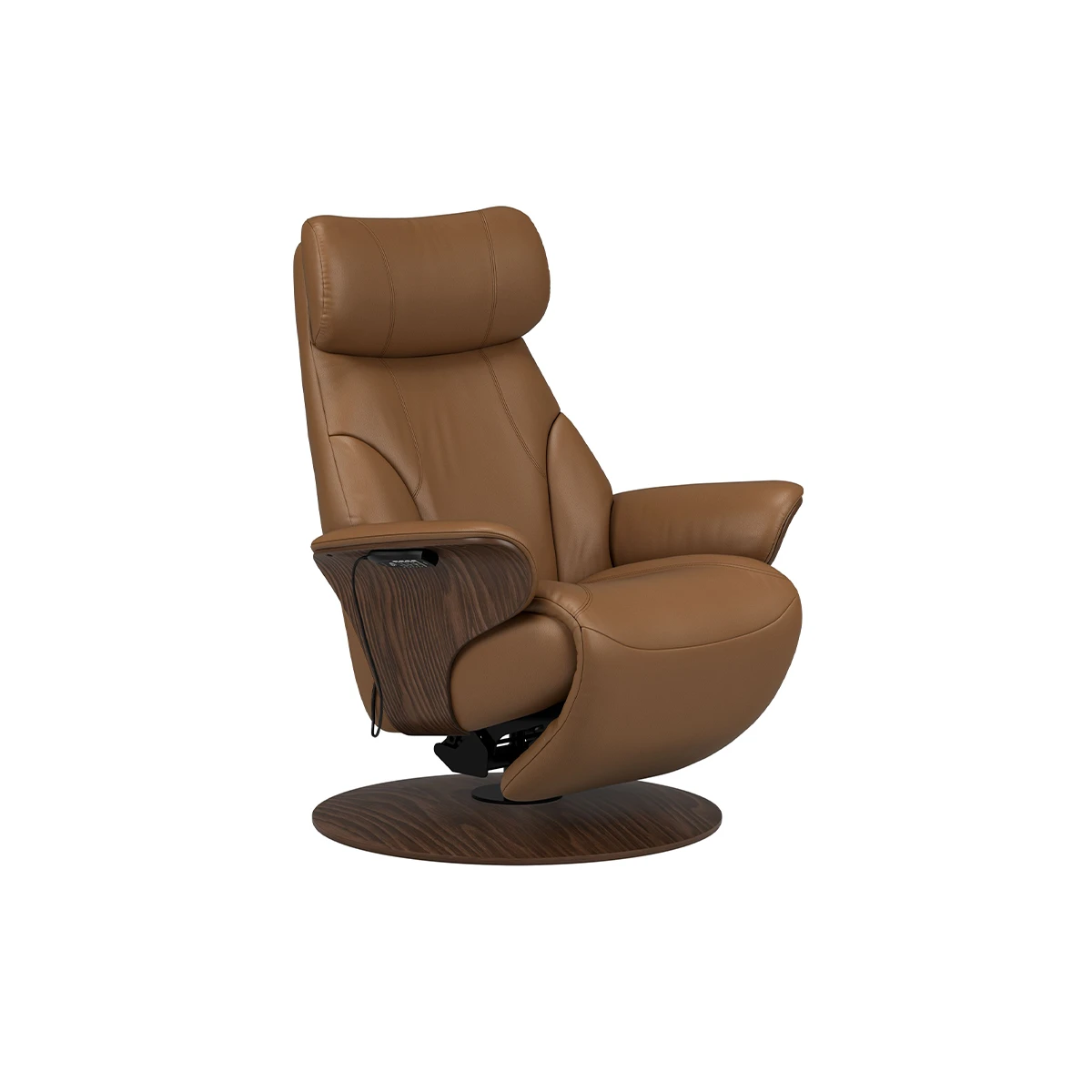
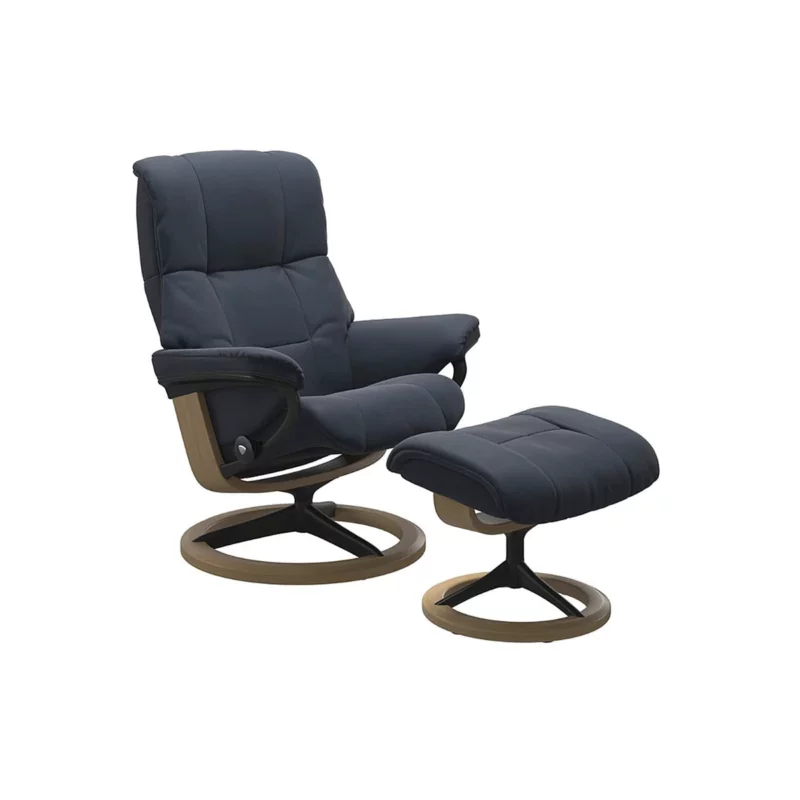
- Premium ergonomic recliners ($3,800 to $7,000 per seat). Stressless, Himolla, Fjords, Ekornes. Sliding base, automatic lumbar adjustment, hand stitched leather. Comfortable for 4 plus hours. Lasts 15 to 25 years.
For a dedicated screening room you will use weekly for 10 plus years, the Stressless recliners usually pencil out cheaper per year. For a media room used a few times a month, mid range power recliners are the rational choice.
Screen size and the 0.6 rule
The single most useful rule for screen sizing: the screen width should be about 0.6 times the seating distance. For a 12 foot viewing distance, that is roughly an 86 inch wide screen, equivalent to a 100 inch diagonal at 16:9. Closer to 0.7 for action films and sports, closer to 0.5 for casual TV viewing.
The classic mistake is going too big. A 150 inch screen at 12 feet (a ratio of 1.05) puts the edges outside your peripheral vision; you spend the movie scanning. The right ratio puts the whole image in the comfortable foveal field, which is what cinemas optimize for.
Riser height, row spacing, and why pros build a step
A riser exists for one reason: to let the back row see the bottom of the screen without staring through the front row’s heads. The right height depends on the back row distance from the screen and the screen height.
- Riser height: 9 to 14 inches. Most rooms land at 11 to 12 inches.
- Riser depth (front edge to back edge): 60 to 72 inches. Enough to fit the back row recliners with their footrests fully extended without overhanging.
- Step lighting on the front edge. A small recessed LED strip on a dimmer prevents the classic ankle bruise.
If the room ceiling is under 9 feet, a riser may push the back row’s heads too close to a recessed light or HVAC. Single row designs work better in low ceilings.
Lighting that is actually cinematic (not just dim)
Cinematic lighting is not just darker. It is layered, dimmable, and almost never overhead during the film itself. Three layers most luxury home theatres use:
- Cove lighting at the ceiling perimeter on a dimmer. Warm 2700K LEDs hidden behind a crown moulding throw soft amber wash on the ceiling.
- Wall sconces on the side walls. Low wattage (3 to 5 W LED), down lighting only, on a separate dimmer.
- Step or floor lighting. A 2 inch warm LED strip along the riser front edge and optionally along the rear wall baseboard.
Avoid recessed pot lights directly above seating. Their light bounces off the screen and washes the picture. Avoid harsh accent lights on art behind the back row; they pull the eye away from the screen.
Acoustics, finishes, and the role of soft furniture
A home theatre with hard floors, drywall, and glass turns into an echo chamber. Three or four big seats are not enough on their own to absorb the reflections. Pros add at least 20 percent of wall surface in soft acoustic treatment, plus a thick wool or wool blend rug under the seating zone.
- Side walls. Framed velvet panels, fabric wrapped acoustic boards, or vertical wood slat panels with mineral wool behind. Walnut slat panels do double duty as acoustic and visual.
- Back wall. Bookshelves with mixed objects (books, sculpture, soft baskets) scatter reflections naturally.
- Floor. 8 by 10 minimum wool rug under the seating area. A bare hardwood floor is the fastest way to ruin dialogue clarity.
- Ceiling. Acoustic ceiling tiles or a soft fabric ceiling cloud above the front row controls early reflections.
For specifics on soundproofing between rooms, the Government of Canada noise control resource has practical guidance on STC ratings and dampening.
The Home Theatre Comfort Checklist (Free PDF)
A printable planning checklist for screen, seating geometry, lighting, and acoustics in a luxury home theatre.
Download the free guideFrequently asked questions
How big should a home theatre screen be?
Aim for a screen width that is about 0.6 times the seating distance. From 12 feet, that is roughly an 86 inch wide screen (about a 100 inch diagonal). Closer to 0.7 for action films, 0.5 for casual TV.
Are Stressless recliners really worth $4,000 each for a home theatre?
For weekly use over 15 plus years, yes. The patented Plus system adjusts head and lumbar support automatically through the recline arc, which is the difference between watching three movies in a row comfortably and standing up to stretch every 45 minutes.
Do I need a riser for a two row theatre?
Yes, if you want both rows to see the bottom of the screen without head obstruction. A 9 to 14 inch riser depth covers most cases. Single row theatres skip the riser entirely.
How dark should a home theatre be?
Dark enough that the projector blacks read black, not grey. Cove lighting and wall sconces on dimmers should drop to roughly 1 percent of full output during the film. Solid blackout treatment over windows or a dedicated interior room is the standard.
Can I use a wall mounted TV instead of a projector?
Yes. An 85 inch OLED in a media room replaces a projector for casual viewing distances under 11 feet. Above 11 feet, a projector with a 100 inch plus screen still wins.
How much does a luxury home theatre cost in Toronto?
A finished luxury theatre with premium recliners, a quality projector and screen, acoustic treatment, and lighting design starts at approximately $30,000 for a 16 by 22 foot room. Cinema grade builds with custom millwork and Stressless seating run $80,000 to $150,000.
Keep reading
Designing a home theatre starts with how the seat feels after the first hour. Visit our Toronto showroom to test drive Stressless and Himolla recliners side by side, or browse the recliner collection online. We ship across the GTA, Mississauga, Vaughan, and across Canada.