












Bedroom styling ideas
How to Curate a Boutique Hotel Experience in Your Guest Bedroom
Oct
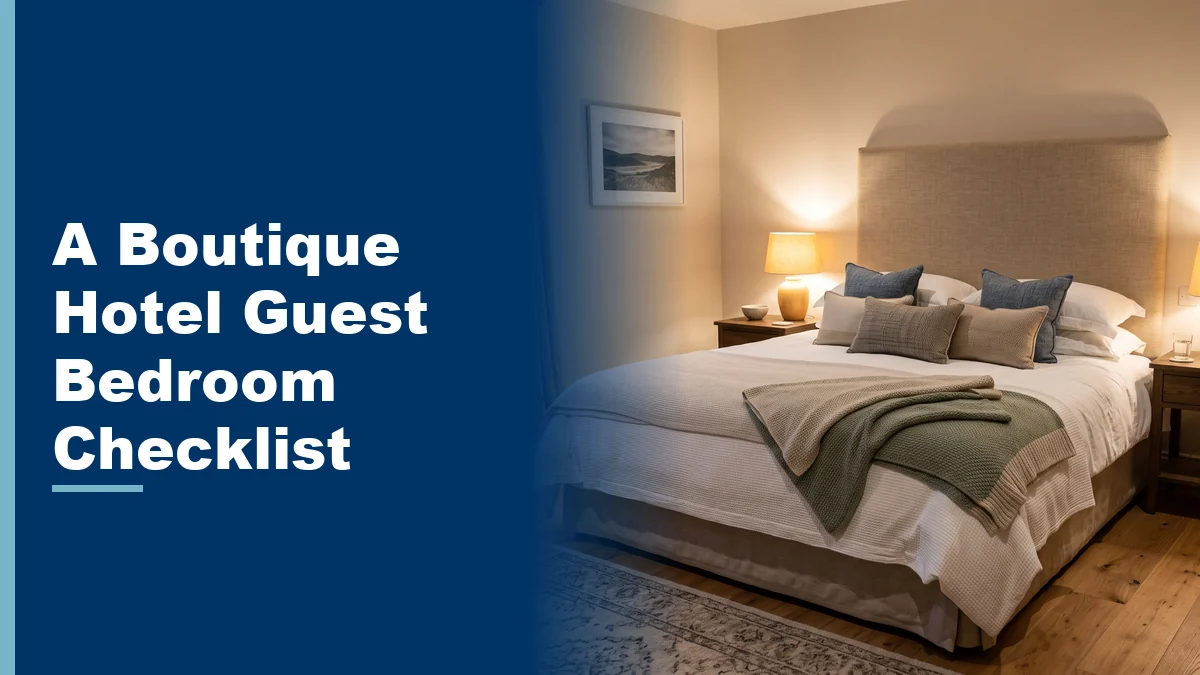
A boutique hotel guest bedroom feels calm and finished within about three seconds of walking in, and almost none of that feeling comes from an expensive renovation. It comes from a short list of furniture and styling decisions repeated consistently: a considered bed, layered lighting, a place to set a bag down, and almost nothing left out on a surface. Bring that same short list into a spare room furnished from our modern bedroom furniture collection and the room stops feeling like storage overflow and starts feeling like somewhere a guest actually wants to stay.
None of this requires knocking down a wall or adding square footage. It requires choosing a smaller set of better pieces and being disciplined about what does not make the cut.
The boutique hotel guest bedroom checklist
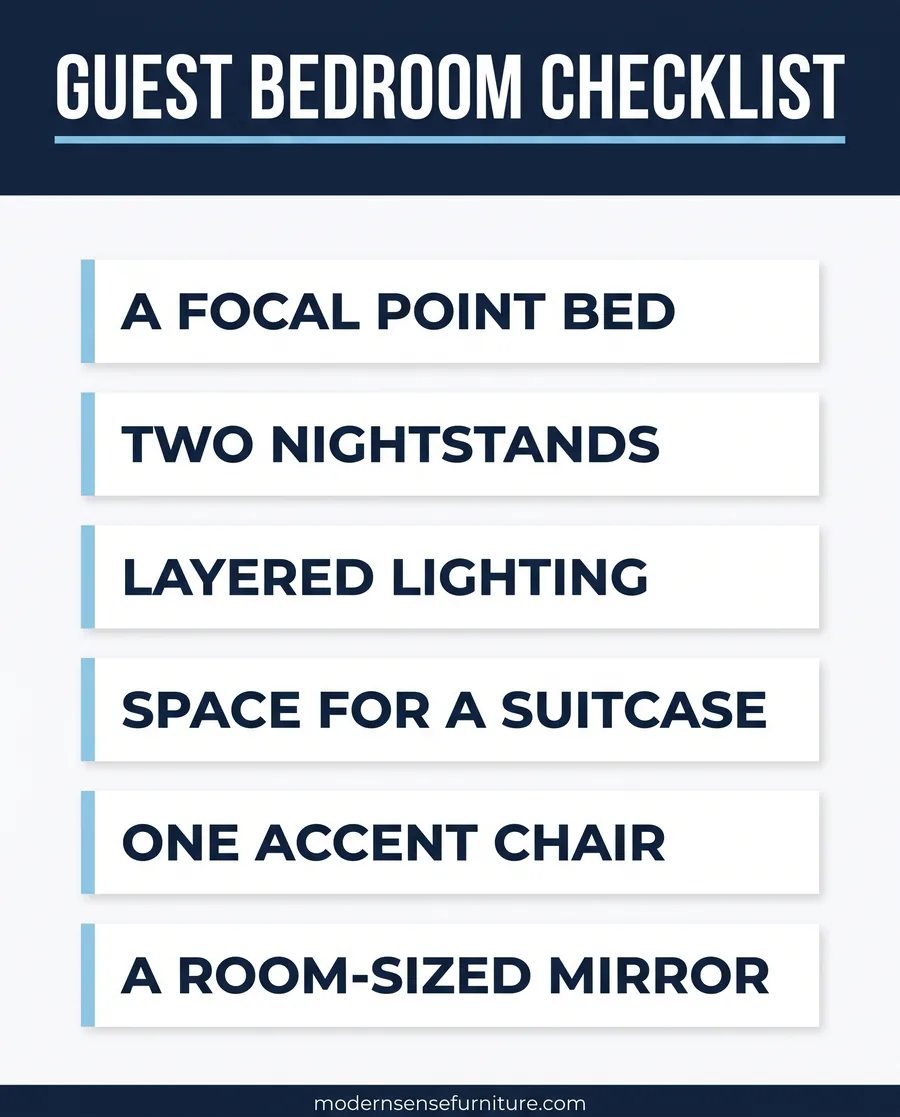
Every boutique hotel room we have ever admired shares the same short list of furniture decisions, and none of them are complicated on their own. The difference is that a hotel design team applies all of them together and edits out everything else. A guest bedroom at home usually has one or two of these pieces already and is missing the rest, which is exactly why it reads as unfinished even when nothing in it looks bad.
- A well-proportioned bed with a substantial headboard as the room’s clear focal point
- At least two light sources at different heights, not just one overhead fixture
- A nightstand on each side of the bed, even in a narrow room
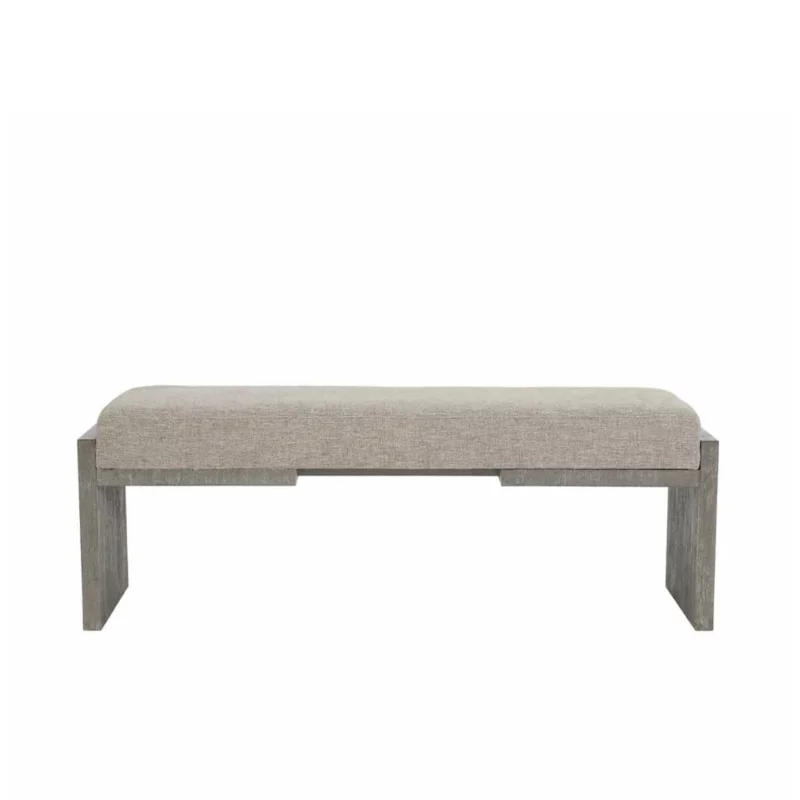
- A luggage bench or a bare stretch of floor for an open suitcase
- One accent chair or bench, used sparingly rather than for storage
- A mirror sized to the room, not left over from another space
Pro tip
Walk the room and remove one item for every new item you add. A boutique hotel guest bedroom reads as considered mostly because of what is missing: no exercise equipment doubling as a clothes rack, no box of decorations waiting for a shelf somewhere else in the house.
Start with the bed, then layer the linens
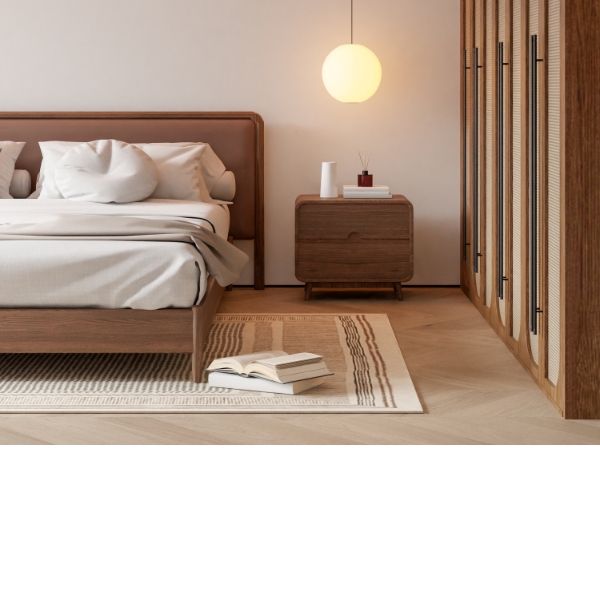
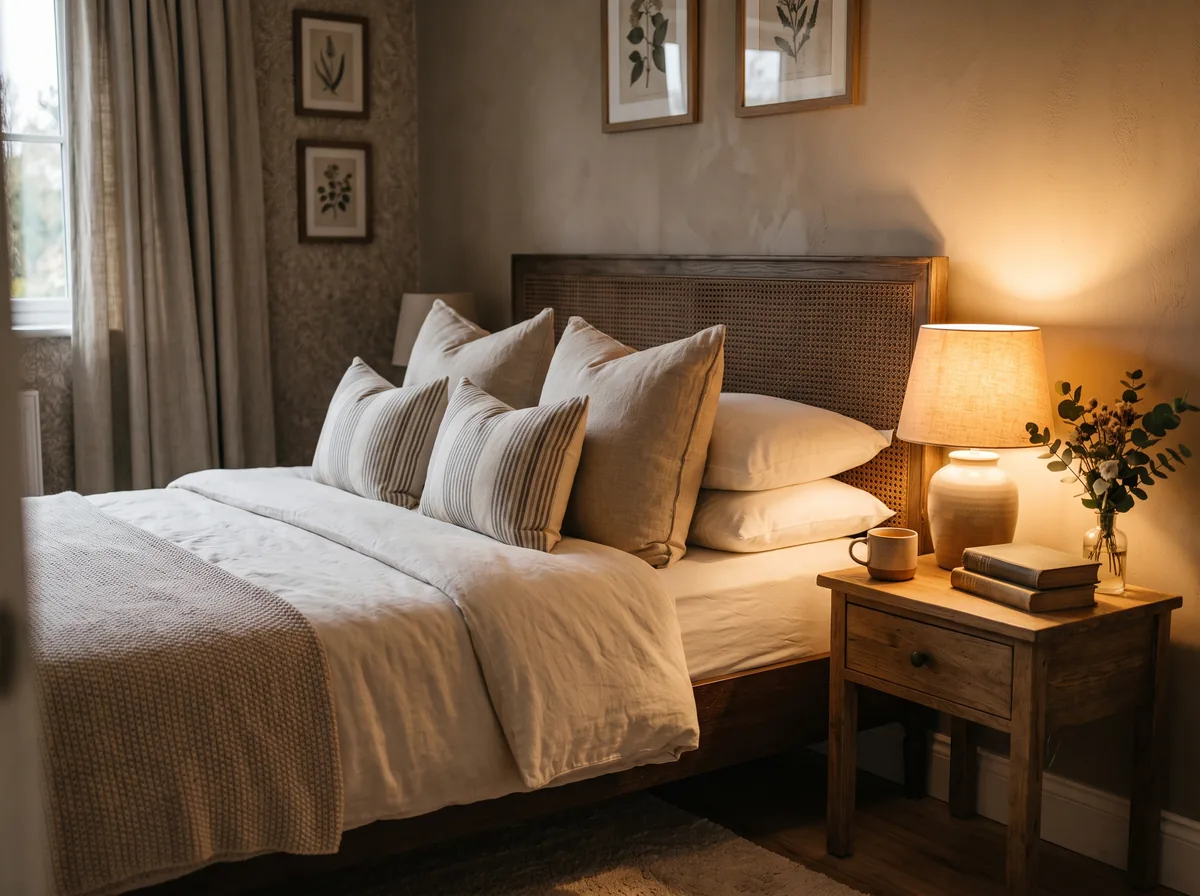
The bed carries most of the visual weight in a small bedroom, so it is worth choosing before anything else in the room. A headboard with real presence, whether upholstered, wood or channel-tufted, gives the eye a clear place to land the moment someone opens the door. Our luxury bed and nightstand pairings are chosen specifically to work as a set, since a bed and a nightstand from unrelated collections rarely reads as intentional even when both pieces are individually beautiful.
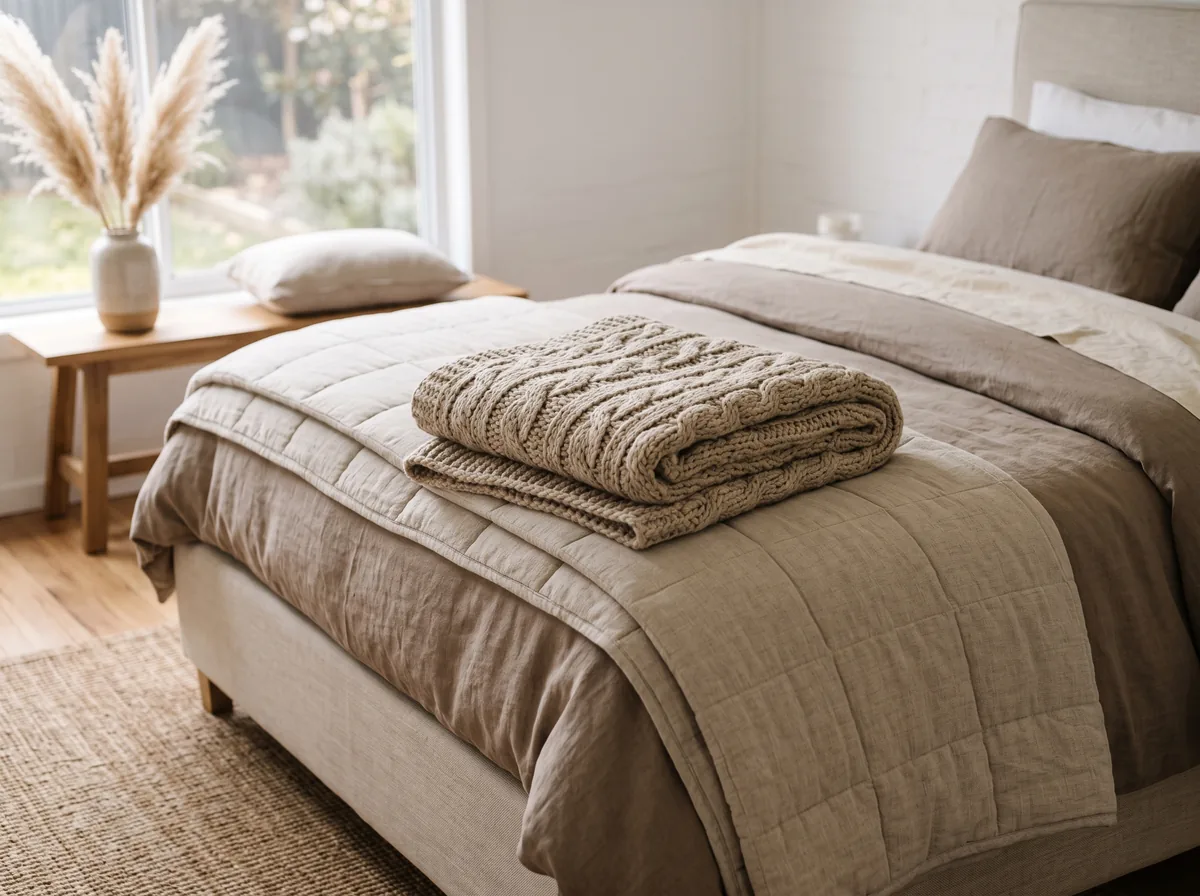
Layering matters more than any single linen choice. A tailored duvet or coverlet, a folded throw across the foot of the bed, and a small cluster of pillows in varied but related textures tend to read as hotel-like far more reliably than a single matched bedding set on its own. Fabric quality and care guidance vary by manufacturer, so the American Home Furnishings Alliance publishes general furniture and textile care information worth a look before you decide how a specific fabric fits your household.
Lighting layers do more work than any single fixture
A single ceiling fixture is the fastest way to make any bedroom feel like a spare room rather than a hotel room. A true boutique hotel guest bedroom almost always layers at least three light sources: a soft ambient overhead or wall wash, a reading light at each side of the bed, and a smaller accent light on a dresser or console. Our room by room lighting guide walks through how to combine those layers without the room ending up over-lit or unevenly bright.
Warmer bulbs generally suit a guest bedroom better than a cool, bright white, since warmth tends to read as restful rather than clinical. Dimmable fixtures, where the wiring supports them, let the same room shift from bright enough to unpack a suitcase to soft enough to read in bed, which is closer to how an actual hotel room is designed to behave.
Save your money
Two well-placed table lamps on matching nightstands do more for the boutique hotel feel than a single expensive statement fixture on the ceiling. If the budget forces a choice, spend it on the lamps a guest actually reaches for at bedtime.
Surfaces, storage and what a guest actually needs
A guest bedroom earns its hotel feeling partly through what it offers a visitor without them having to ask. A nightstand with a drawer for glasses or a phone charger, a bench or a clear patch of floor for a suitcase, and a spot to hang a jacket or a robe all cover the basic needs a guest has in the first ten minutes after arriving. None of these require a large room, only a deliberate decision about where each one goes.
Keep decorative surfaces close to empty. A single tray with a carafe and glass, one small plant, and perhaps a single framed print reads as considered. A crowded dresser top, even if every object on it is attractive individually, reads as clutter the moment a second person has to find space for their own things.
Good to know
Fabric care, lighting compatibility with dimmer switches and furniture finishes vary by product line and household. This guide offers general styling guidance, not a specification sheet for any single piece. Ask our design consultants about the care and compatibility details for a specific bed, lamp or fabric before you buy.
Download the free quick guide
A printable checklist for furnishing a boutique hotel guest bedroom, from the bed and lighting down to the small details.
Frequently asked questions
What is the single most important piece of furniture for a boutique hotel guest bedroom feel?
The bed, specifically the headboard, since it carries most of the visual weight in almost any bedroom. A well-proportioned headboard with real presence gives the eye a clear focal point the moment someone walks in, which is a large part of why a hotel room reads as finished even before you notice the lighting or the linens. Choose the bed first, then build the nightstands and lighting around it as a set.
Do I need two nightstands even in a small guest bedroom?
It helps more than most people expect, even in a narrow room. Two matching nightstands with lamps create the layered lighting effect that reads as hotel-like, and they give a guest a place on each side of the bed for glasses, a phone or a book. If space is genuinely tight, a slim console-depth nightstand on each side usually still fits and preserves the paired look better than one nightstand and an empty wall.
How many lights should a guest bedroom actually have?
Most boutique hotel rooms layer at least three light sources: a soft ambient overhead or wall wash, a reading light at each side of the bed, and a smaller accent light on a dresser or console. A single ceiling fixture alone tends to read as a spare room rather than a considered one. Dimmable fixtures, where the room’s wiring supports them, add flexibility without requiring extra lamps.
What should I leave out of a guest bedroom to keep it feeling like a hotel?
Anything unrelated to sleeping and unpacking: exercise equipment doubling as a clothes rack, storage boxes waiting for another room, and a crowded dresser top are the most common culprits. A boutique hotel guest bedroom feels finished largely because of what has been edited out, not because every surface is filled with decorative objects.
Can a boutique hotel guest bedroom feel work in a very small room?
Yes, and a small footprint can actually make the checklist easier to apply, since there is less room for extra furniture and clutter to creep in. Focus the available space on the bed, a slim nightstand on each side, and layered lighting rather than trying to fit in every piece from a larger bedroom. A smaller, well-edited room often reads as more intentional than a larger one furnished halfway.
A boutique hotel guest bedroom comes down to a short list, applied consistently: a considered bed, layered lighting, a clear place for a suitcase, and a nightstand that actually gives a guest somewhere to set their glasses down. Furnish for those four things before anything else, and the room will read as intentional long before you add a single decorative object.
If you want to see beds, nightstands and lighting sets that pair well together in person, our North York showroom location has full bedroom vignettes set up exactly this way, so you can see the layering in a real room before you commit to it in yours.