














Dining room ideas
Choosing Ceramic and Sintered Stone For Italian Dining Tables
Oct
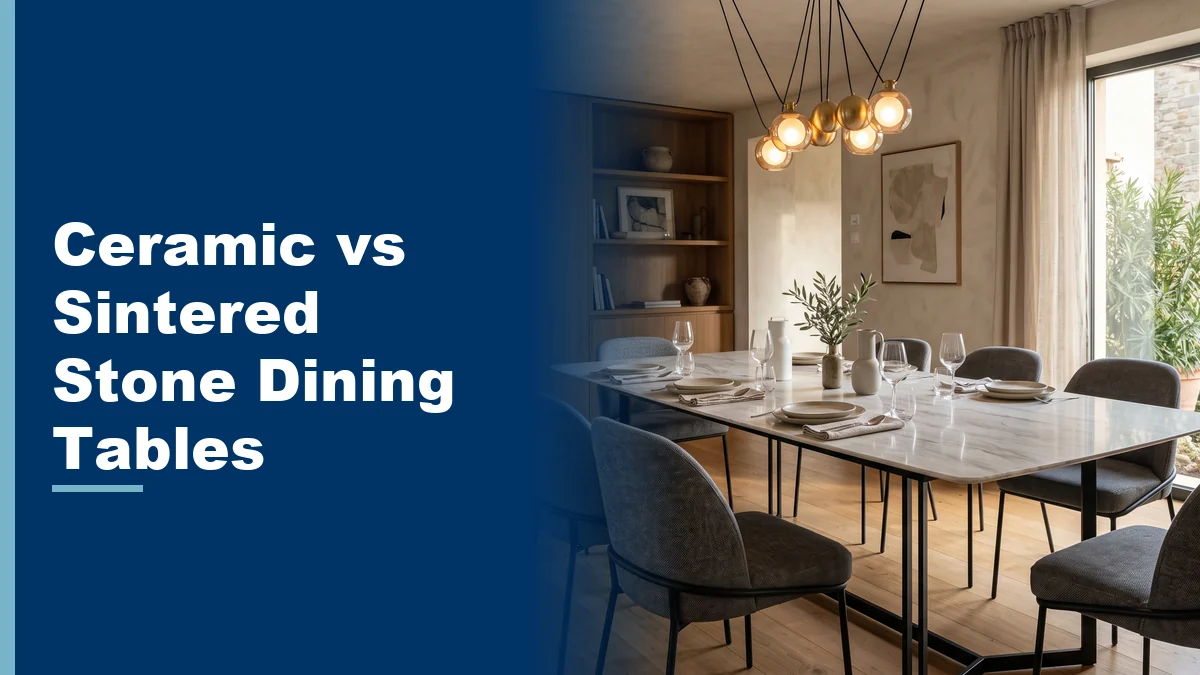
Here is the short version: ceramic and sintered stone dining tables are two names for a closely related family of engineered surfaces, both built to look like natural stone without a piece of marble or granite anywhere in the slab, and the real decision between them usually comes down to finish, edge profile, and how the top is fabricated, not a single winner. If you are comparing options in our dining room collection, this is the breakdown worth reading before you fall for a finish photo alone.
Both materials are manufactured under heat and pressure rather than quarried, which is why sintered stone dining tables can offer patterns and colours that do not exist in natural stone at all. The differences that matter for a dining table specifically are narrower than most product pages let on.
What ceramic and sintered stone dining tables actually are
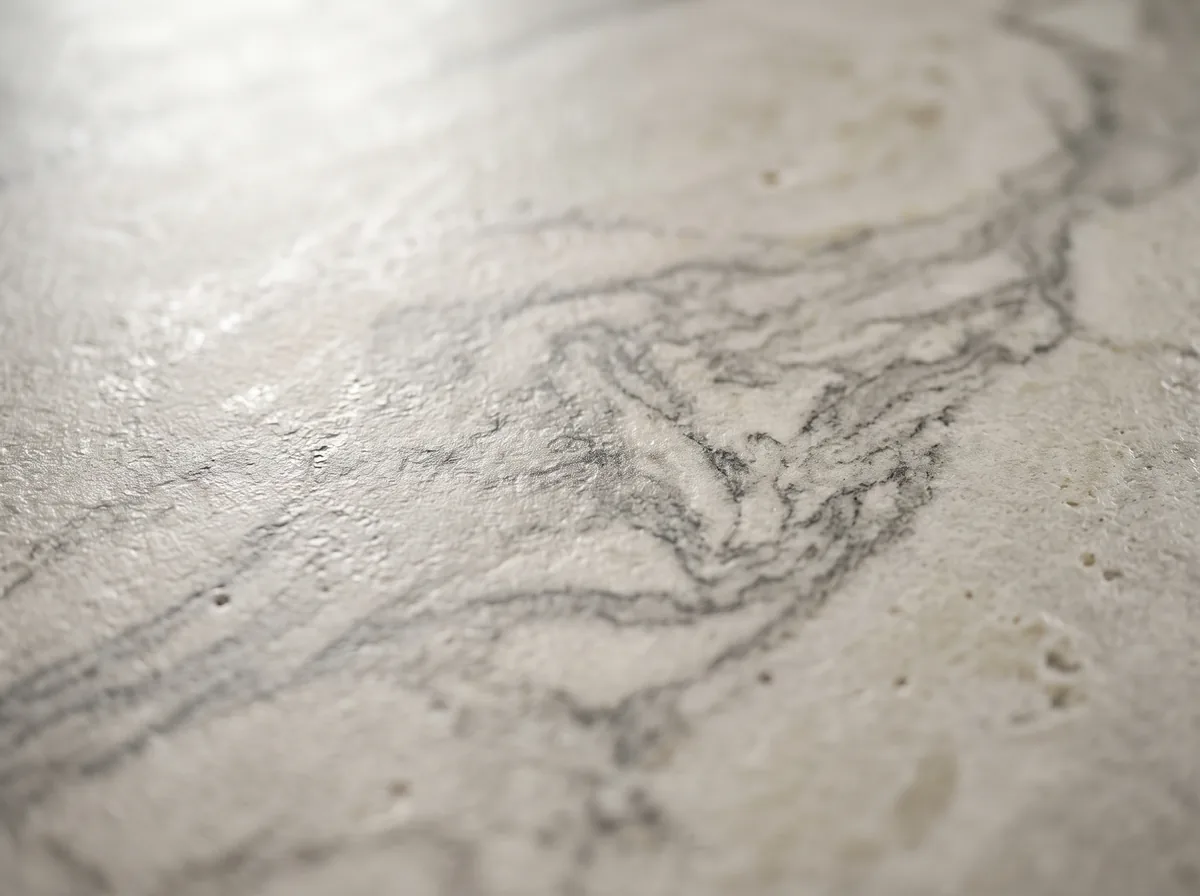
Ceramic and sintered stone are close cousins. Both start as fine mineral powders, typically a blend of clays, silica, quartz and mineral pigments, that are compacted under intense pressure and then fired or sintered at very high heat. That process fuses the material almost solid, which is why manufacturers can print a detailed veined pattern into the surface and have it read as convincing marble or limestone from across the room.
The term sintered stone is generally used for the thicker, denser slabs produced by pressing and heat-treating the mineral blend into large panels, while ceramic often refers to a porcelain-based surface produced with a related but distinct firing process. In these exquisite dining table productions, the two terms get used loosely enough by different manufacturers of Italian furniture that the practical differences show up more in the specific product line than in the label on the spec sheet.
Quick take
Both materials resist everyday heat and moisture better than many traditional wood or laminate surfaces, according to the manufacturers that produce them, though how any specific top performs still depends on the exact product and how it is cared for. Neither should be treated as immune to damage from sharp impacts or improper cleaning.
Ceramic vs sintered stone dining tables, side by side
Put the two materials next to each other on the points that actually change how a dining table looks and feels in a room, and the decision gets more concrete than a showroom label.
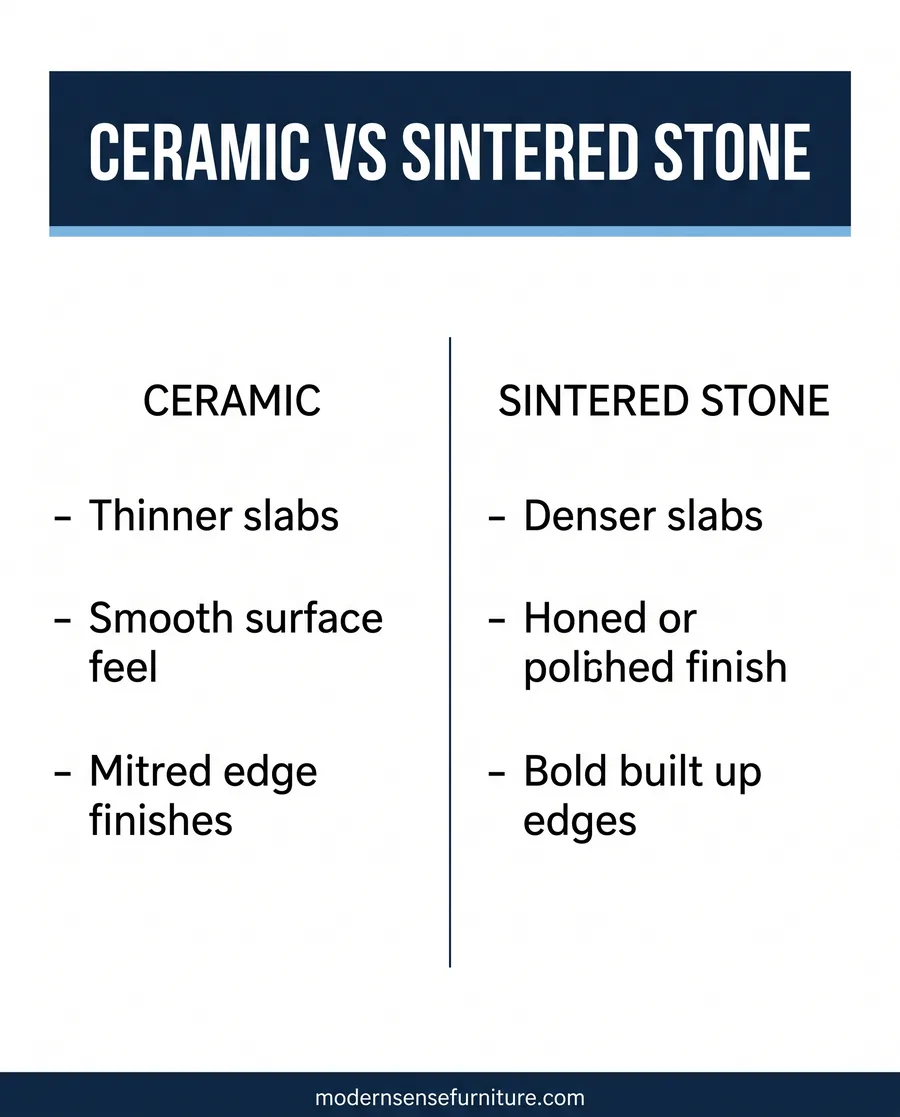
| What matters | Ceramic top | Sintered stone top |
|---|---|---|
| Typical slab thickness | Often thinner, sometimes layered onto a substrate | Often produced in thicker, denser slabs |
| Pattern and colour range | Wide range of printed marble and stone looks | Wide range, including bold veining and solid tones |
| Surface feel | Smooth, closer to polished porcelain tile | Can be honed, matte or polished depending on the line |
| Edge and fabrication | Often finished with a mitred or wrapped edge | Can be fabricated with a thicker solid-look edge |
| Common use in this collection | Dining tables and console tops | Dining tables, coffee tables and cocktail tables |
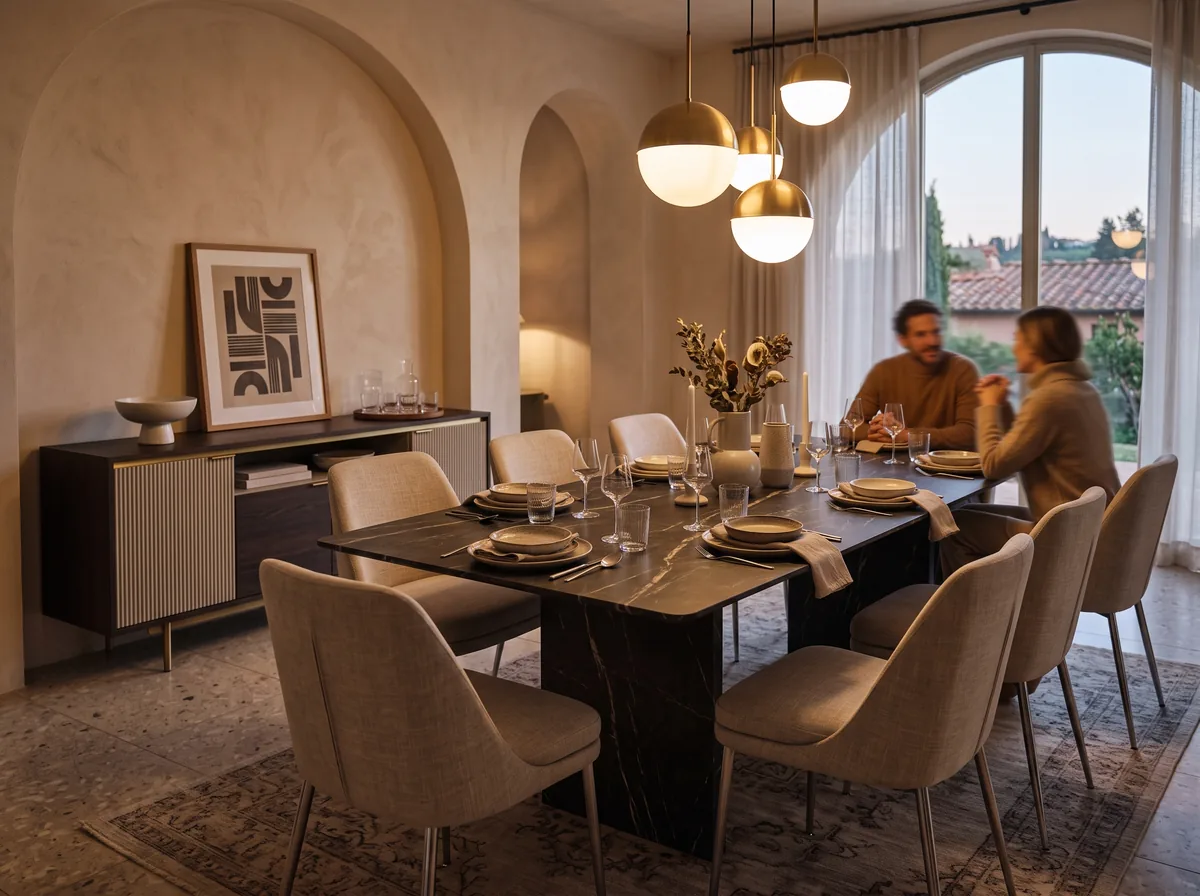
Finish, edge profile and how the top is fabricated
The finish on a sintered stone dining table changes how it reads in a room almost as much as the colour does. A honed or matte finish scatters light and tends to hide fingerprints and light dust better than a high polish, which is why it is often chosen for a table that gets daily family use. A polished finish throws back more light and reads as glossier and more formal, closer to a slab of polished marble.
Edge profile is worth asking about directly, since it affects both the look and the feel of the table at the point where hands and elbows actually rest. A thin, crisp edge reads as architectural and modern. A thicker built-up edge, sometimes created by mitring two pieces of the slab together, reads as more substantial and can make a slim top look and feel more solid than its actual thickness.
People often ask
Does a sintered stone dining table need to be sealed like natural stone? Generally no, since the manufacturing process makes the surface far less porous than quarried stone, but care recommendations differ by manufacturer and finish, so it is worth checking the specific care guidance for the exact table you are considering rather than assuming every stone-look surface behaves the same way.
Living with a stone-look dining table day to day
Day-to-day care for both materials tends to be simple: a damp cloth and a mild cleaner handle most spills, and manufacturers generally advise against abrasive scouring pads or harsh acidic cleaners that can dull a polished finish over time. Coasters and trivets are still worth using out of habit, since sudden temperature shocks and sharp impacts are the failure points most manufacturers flag in their own care documentation, regardless of how the surface is marketed.
If a solid stone-look surface feels like too much material for your dining space, or you want to compare it against a natural quarried option, a textured rough granite top or a polished black granite top are both worth seeing in person before you commit, since the way any of these materials photographs rarely matches how it reads under your own dining room lighting.
Good to know
Sintered stone and ceramic dining tables vary by manufacturer, product line and finish. This guide is general shopping guidance, not a spec sheet or warranty statement for any single table. Ask our design team for the exact care instructions and specifications for the piece you are considering before you buy.
Download the free quick guide
A printable reference for comparing ceramic and sintered stone dining table finishes, edges, and care before you order.
Frequently asked questions
Is sintered stone the same thing as porcelain?
They are closely related rather than identical. Both are manufactured from compacted mineral powders under heat and pressure, and manufacturers use the two terms somewhat inconsistently across product lines. Sintered stone often refers to thicker, denser slabs, while porcelain or ceramic often describes a related surface produced with its own firing process. For a dining table specifically, the practical differences usually come down to the individual product’s thickness, finish, and edge rather than the label alone.
Do sintered stone dining tables scratch or chip?
No surface is immune to damage from a hard, sharp impact, and manufacturers generally note that a direct strike at the right angle can chip an edge or corner on any engineered stone surface. In everyday use, most manufacturers describe these surfaces as holding up well against typical scuffs and light abrasion compared to softer materials, though performance varies by specific product line, so it is worth checking the manufacturer’s own documentation for the table you are considering.
Can a sintered stone or ceramic top handle a hot dish straight from the oven?
Manufacturers generally describe these surfaces as more heat-tolerant than many wood or laminate tabletops, since the material is produced under intense heat during manufacturing. That said, sudden temperature shocks and repeated direct contact with very hot cookware are flagged as a risk in most manufacturer care guidance, so using a trivet is still the safer everyday habit rather than relying on the material alone.
How do I clean a ceramic or sintered stone dining table?
Most manufacturers recommend a soft cloth with warm water and a mild, non-abrasive cleaner for everyday spills, avoiding bleach-based products, abrasive scouring pads and strong acidic cleaners that can dull a polished finish over time. Since care recommendations differ by manufacturer and finish, it is worth checking the specific documentation for your table rather than assuming every stone-look surface is cared for the same way.
Is a sintered stone dining table heavier than a wood or glass table?
Generally, yes, since the material itself is dense, though the actual weight depends on the slab thickness and the base or substrate the top is mounted on. If you are working with a condo elevator, a narrow stairwell or a specific delivery route, it is worth asking our team about the finished weight of a specific table before you order rather than assuming it will match a lighter wood or glass piece of similar size.
Ceramic and sintered stone dining tables both deliver the look of natural stone with fewer of its quirks, and the choice between them comes down to finish, edge, and the specific manufacturer’s line more than a broad rule about which material wins. Compare a few tops in person, ask about the exact care instructions, and choose the one that fits how your dining room actually gets used.
Our team can walk you through the sintered stone, ceramic, and granite dining tables currently on our floor side by side. Visit our Toronto modern furniture showroom and bring a swatch of your flooring or wall colour so we can help you compare finishes against your actual room.