














Design Tips, Latest Trends, Luxury Furniture
What Is Italian Modernism? Key Elements for an Authentic Interior Design
Jul
In this article
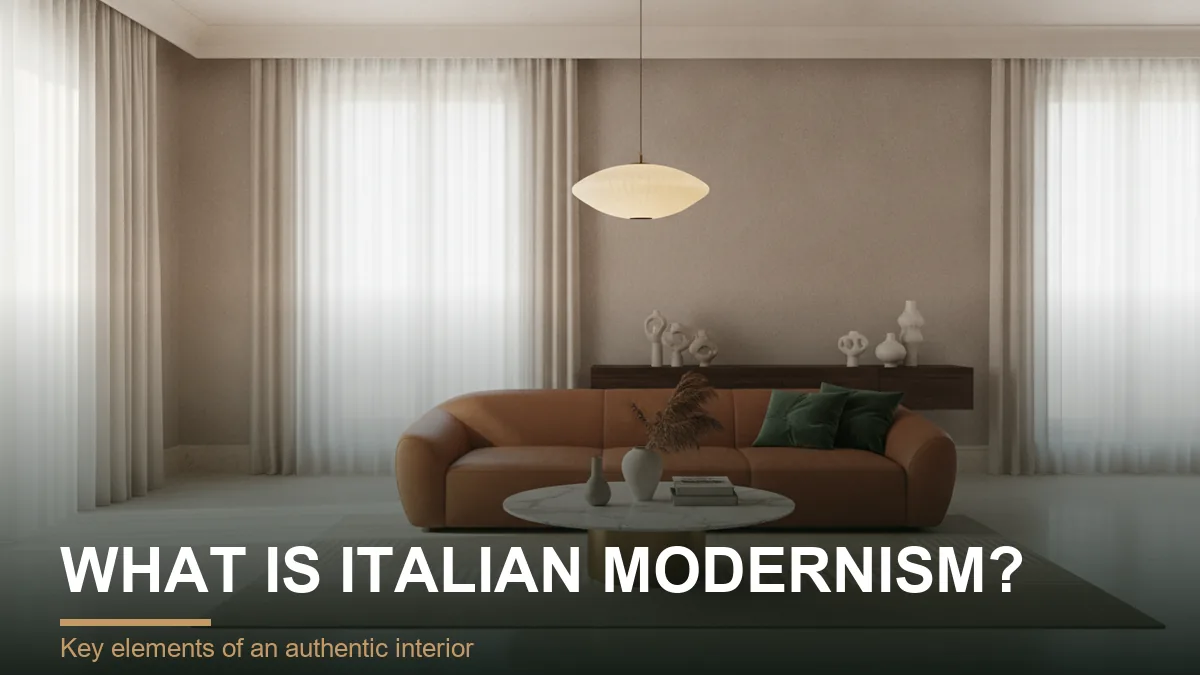
Ask ten people what Italian modernism is and you will get ten answers about glamour and price tags, and almost none about the design itself. Here is the short version: Italian modernism is a twentieth-century design language that pairs the clean geometry of modernism with Italian craft, sculptural form, and a deep respect for materials. It is the reason a single Italian sofa can make a whole room look composed. If you have ever stood in our showroom of modern living room pieces and felt that some of them simply carry more presence than others, you were responding to that language without naming it.
This is not a buying list. It is a guide to the style itself, what it is, where it came from, and the handful of elements that make a room read as authentically Italian modern rather than merely expensive. Once you can see those elements, you can build the look deliberately with sofas, dining pieces, and lighting, instead of hoping it happens by accident.
What Italian modernism actually means
Modernism, broadly, was the early twentieth-century push toward clean lines, honest materials, and form that follows function, stripping away the heavy ornament of earlier eras. Italy took that idea and refused to let it become cold. Italian designers kept the discipline of modernism but folded in centuries of craft tradition, a sculptor’s eye for shape, and an appetite for beautiful materials. The movement known as Italian modernism ran across architecture, design, and the decorative arts, and its furniture is where most of us encounter it today.
The practical upshot is a look that feels contemporary and warm at once. Pieces are spare but not severe. They are precise but still sensual. A room done well in this style looks edited rather than empty, and every object in it feels chosen. That balance, restraint with warmth, is the whole point.
Did you know?
Italy turned design into a national export through events like the Milan Triennale and the city’s annual furniture fair. The Triennale di Milano has championed Italian design since the 1920s, and Salone del Mobile in Milan is still where the world watches what Italian makers do next.
Where did the style come from
The roots run back to the years between the world wars, when Italian architects and designers began rethinking the home around modern life. After the Second World War, a wave of designers and manufacturers turned that thinking into furniture the rest of the world wanted to own. Italian factories paired industrial production with old-world finishing, which is how the country produced pieces that were both modern and impeccably made.
That heritage still shows in the brands we carry. Houses with Italian roots, including makers like Bellini and other Italian-trained workshops behind our Italian furniture store, descend directly from that postwar tradition of sculptural, material-rich design. When you choose one of those pieces, you are buying into a lineage, not just a trend.
People often ask: Is Italian modern the same as mid-century modern?
They overlap but are not identical. Mid-century modern is a broad postwar style with strong American and Scandinavian threads. Italian modern is a specific national strain of it, richer in marble, lacquer, and leather, more sculptural in shape, and generally more luxurious in feel. Think of Italian modern as one of the most refined branches growing off the larger mid-century tree.
The five elements that define it
If you want a room to read as authentically Italian modern, these five elements do most of the work. Hit all five and the style is unmistakable.
- Sculptural silhouettes. Furniture that works as an object on its own, a chair or table you would happily look at empty. Curves are welcome, but they are deliberate, not fussy.
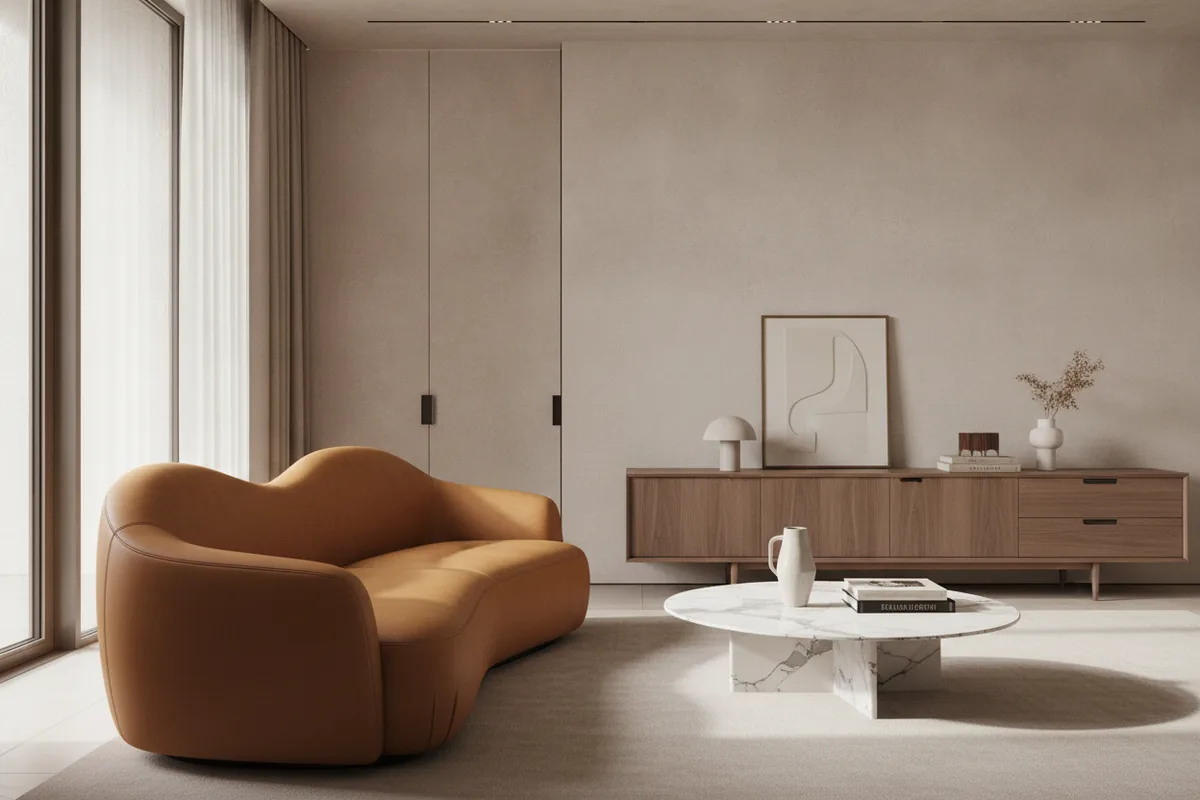
- Luxurious materials. High gloss lacquer, walnut and oak veneers, marble, glass, and full grain leather. The materials carry the room, so they are chosen with care.
- Low, horizontal lines. Sofas and case pieces sit low and stretch wide, giving a room a calm, grounded feel rather than a busy vertical one.
- Restrained colour. Warm neutrals, deep greens, charcoal, and cognac, with colour used sparingly so the materials and shapes stay in focus.
- Visible craftsmanship. Precise joinery, flawless finishing, and details that reward a closer look. The quality is part of the aesthetic, not hidden behind it.
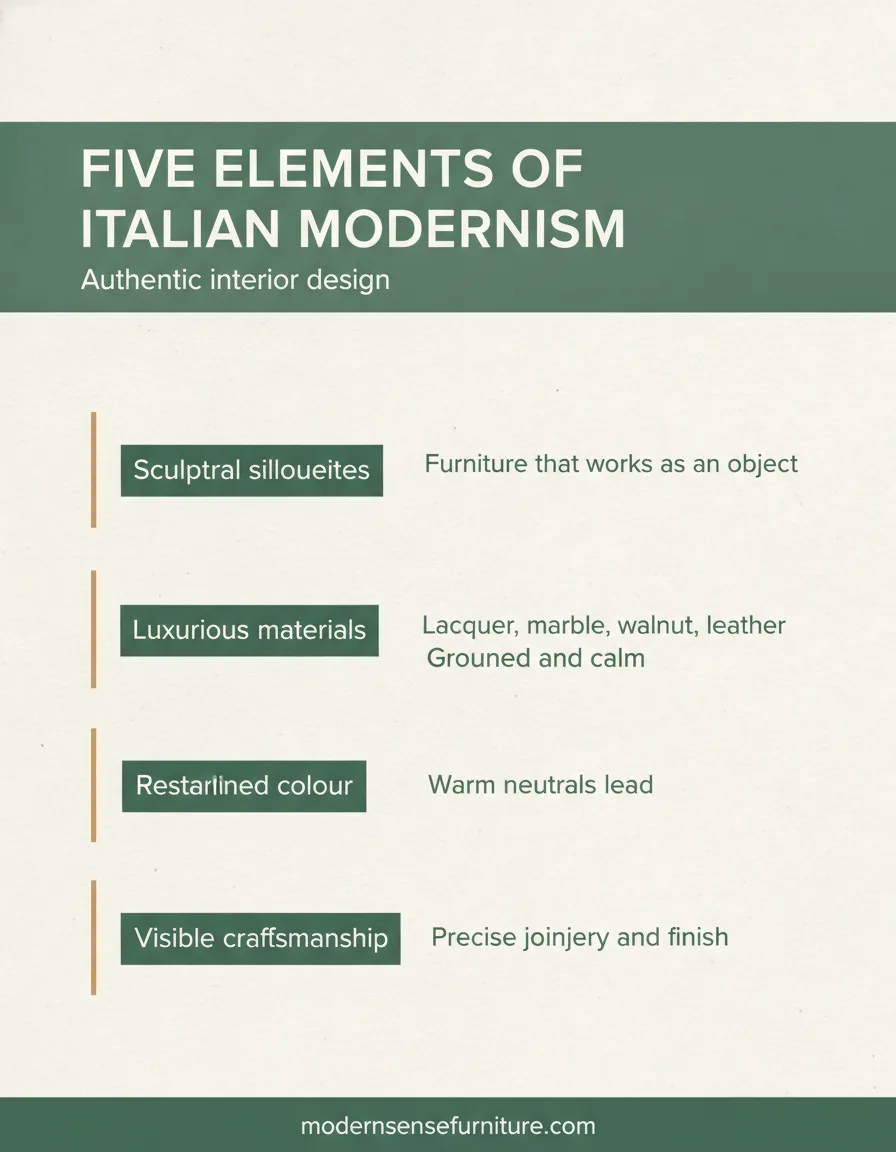
You do not need every piece in a room to tick all five boxes. A single sculptural leather sofa or a marble-topped coffee table can set the tone, and quieter supporting pieces let it lead.
How to build an authentic Italian modern room
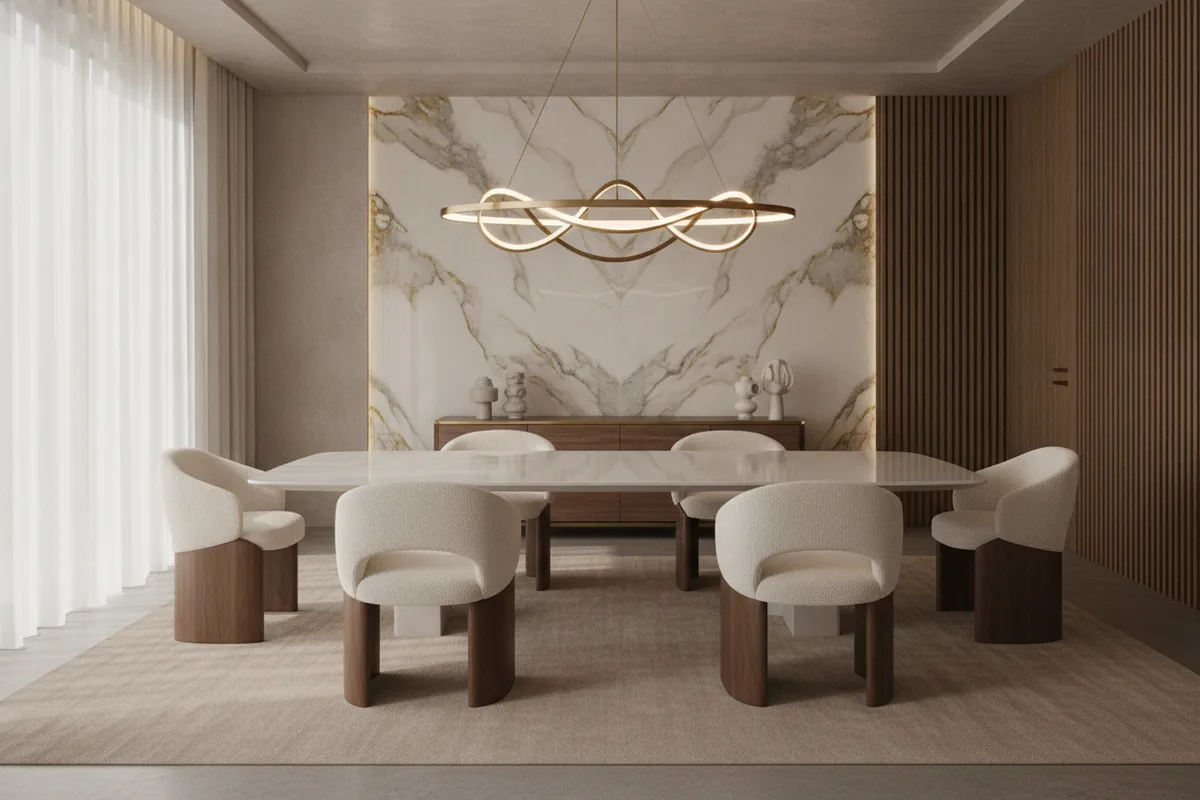
Start by choosing one statement piece and letting everything else support it. In a living room, the anchor is usually the sofa; in a dining room, it is the table. Pick the piece with the strongest silhouette and the richest material, then keep the surrounding choices calmer so it has room to be seen.
Layer materials rather than colours. A lacquered surface next to a wool rug next to a leather seat gives the room depth without a loud palette. Bring in dining chairs or accent chairs that echo one finish from the main piece, so the room feels connected. Then add a single sculptural light fixture, a pendant or a floor lamp with real presence, because Italian rooms treat lighting as furniture, not an afterthought. A console table along a wall is a good place to let one more material moment happen.
Designer tip
When in doubt, remove something. Italian modern lives on restraint. A room with three beautifully chosen pieces and breathing space around them will always read more authentic than a room crowded with good intentions. Edit until each piece has air.
Common mistakes that break the look
A few habits quietly undo the style even when the furniture is right:
- Over-furnishing. Too many pieces, even good ones, crowd out the calm the style depends on.
- Cheap stand-ins. A glossy laminate trying to pass for lacquer reads instantly. Material honesty is half the look.
- Too much colour. Loud walls and busy patterns fight the sculptural forms. Let the shapes lead.
- Forgetting warmth. All hard surfaces and no soft texture turns elegant into cold. A rug and a few natural fabrics fix it.
If you want help getting the balance right, our team offers interior design consultation and can build an Italian modern scheme around the pieces you love, in person or remotely.
Please note: This article is general interior design information about a design style. Brand histories and stylistic descriptions are summarised for context and may simplify a longer story. Modern Sense Furniture is not responsible for design or purchase decisions made from this content. For guidance tailored to your home, speak with our design team.
Download the free quick guide
Save this as a PDF to keep on hand.
Italian Modernism Style Guide (PDF)Frequently asked questions
Bring the look home: Italian modernism rewards a careful eye and a few exceptional pieces. If you want to build a room that feels authentically Italian rather than just expensive, start with one sculptural anchor and let it lead. Modern Sense Furniture carries Italian and Italian-inspired sofas, dining pieces, and lighting, and our designers can plan the whole scheme with you. Reach out to begin.