













Bedroom Ideas
How to Mix and Match Modern Nightstands and Dressers
Nov
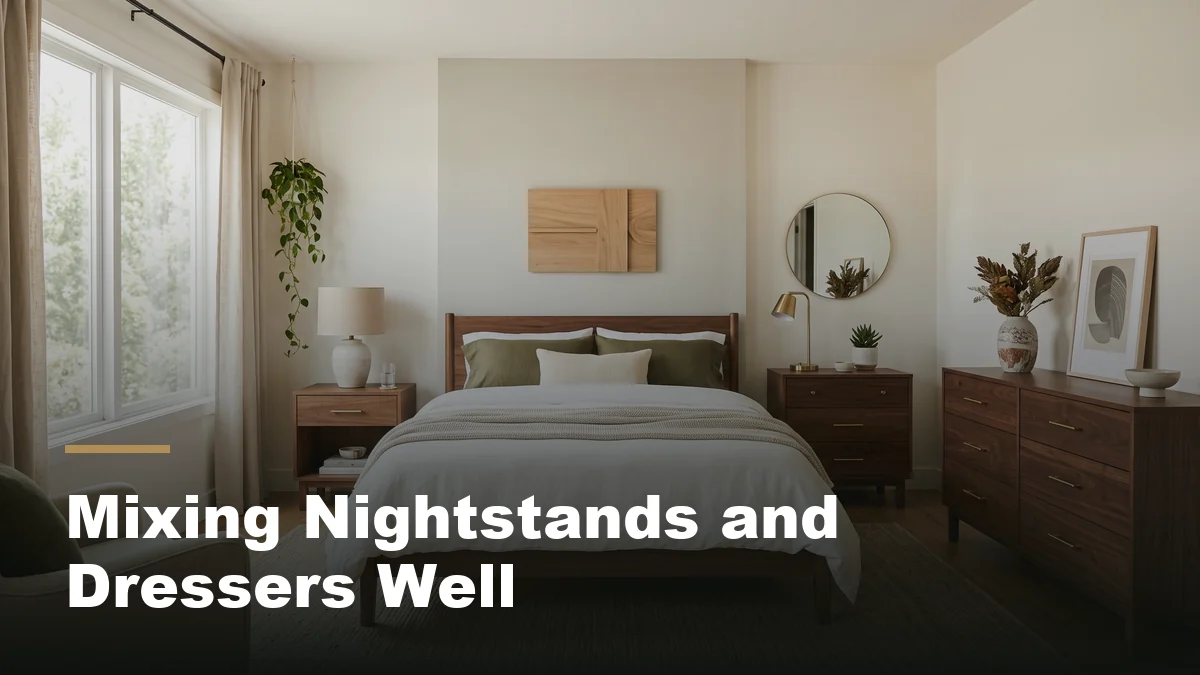
A bedroom rarely needs two identical nightstands and a dresser pulled from the same collection to look put together. What actually makes a set of nightstands and dressers read as one decision instead of two separate purchases is a short list of things that repeat, not everything matching. This is a practical way to mix and match nightstands and dressers for a modern bedroom, built from one collection or several, plus the height, scale, drawer, and door measurements worth checking before any of it gets delivered.
The short version: pick one material or finish tone to repeat across every piece, match the hardware, and keep the tops close to the same height line. Everything else, case height, drawer count, leg style, and even the number of pieces on each side of the bed- is free to differ.
Why an unmatched bedroom set still works
A boxed three-piece bedroom set used to be the default because it was the easy way to guarantee everything would look related. The trade-off is a room that reads as one purchase decision instead of a considered space, and it leaves no room for a nightstand that actually fits a narrow gap beside the bed or a dresser that needs to double as a media console.
Working with a design consultant or building a set piece by piece is a common approach for exactly this reason: it lets each piece answer its own job, storage on one side, a small reading surface on the other, a long dresser for a shared closet, without forcing every item to come from a single collection. The result still reads as coordinated, because a few specific things repeat across the room.
How to mix and match nightstands and dressers without it looking off
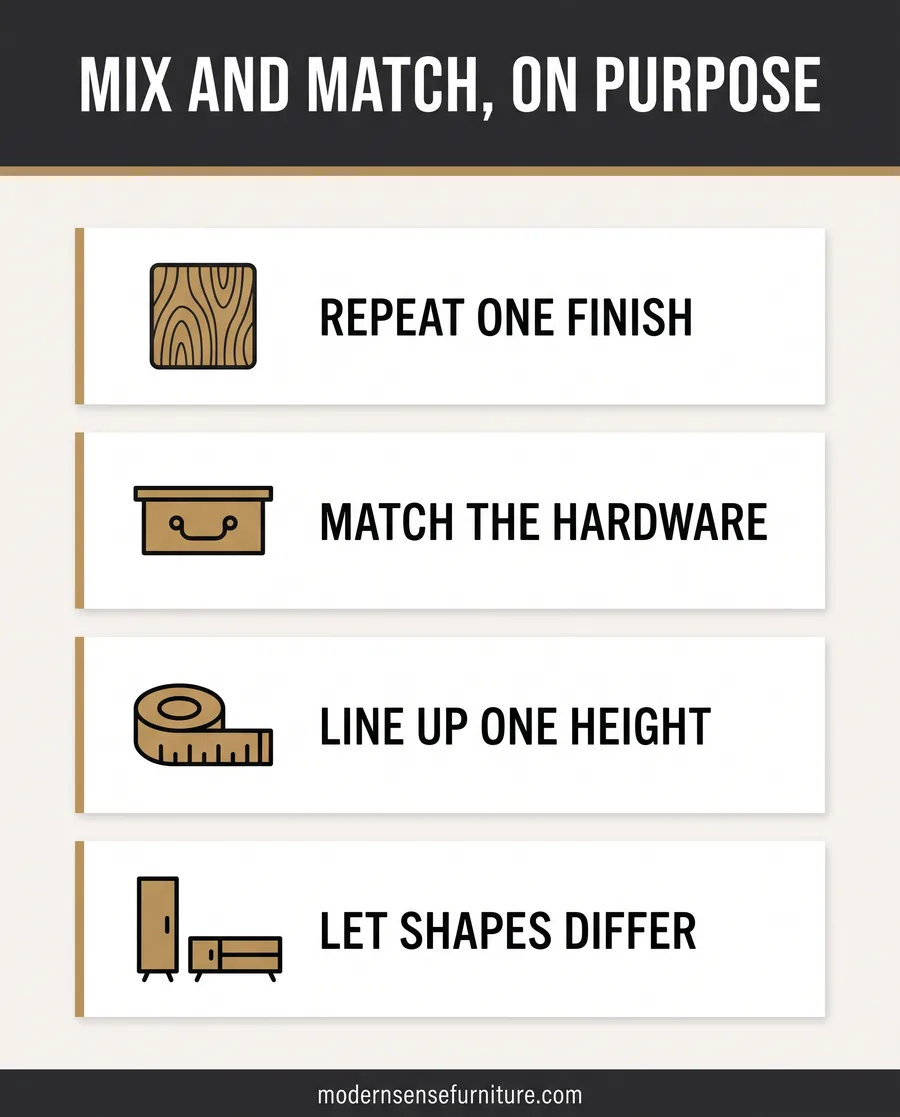
Three things carry the most weight when you mix and match while shopping for nightstands and dressers, and they are worth deciding on before you shop for anything else. Repeat one material or finish tone across every case piece in the room, whether that is a walnut veneer, a matte lacquer, or a specific metal. Match the hardware finish- brass, black, or brushed nickel- on every drawer pull and door handle, even if the pull shapes themselves differ. And keep the tops of the nightstands close to one height line, even if the dresser is taller.
Pro tip
Bring a small swatch or a close-up photo of your existing hardware finish when you shop for a second piece. Brass and nickel read very differently under a showroom’s warm overhead lighting than they do at home, and matching by memory is where most mismatched sets actually go wrong.
| Approach | What it takes | Best for |
|---|---|---|
| A matched three-piece set | One purchase, one finish, little decision-making | A straightforward primary bedroom with symmetrical space on both sides of the bed |
| A mixed set with one repeated finish | Choosing a shared material, hardware tone, and height line up front | An awkward room shape, a reading nook on one side only, or furniture collected over more than one purchase |
| A fully mismatched set | No shared finish or height reference at all | Rarely reads as intentional; usually worth avoiding unless the room is deliberately eclectic |
Line up the height first
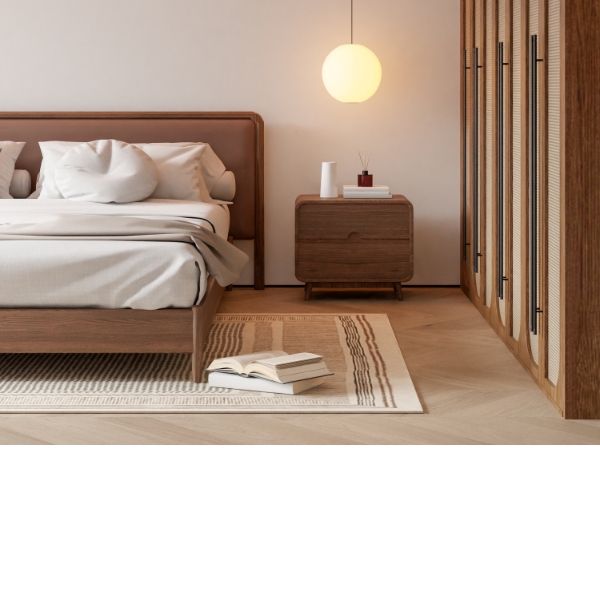
Nightstand height is the detail that gives a mixed set away the fastest, because it is the one measurement your hand checks every night. A commonly used starting point among designers is to keep the top of each nightstand at, or within a couple of inches above, the top of the finished mattress, measured with the bedding you actually use. It is a general planning figure, not a fixed rule, and a lower profile bed or a very thick mattress topper will shift it either way.
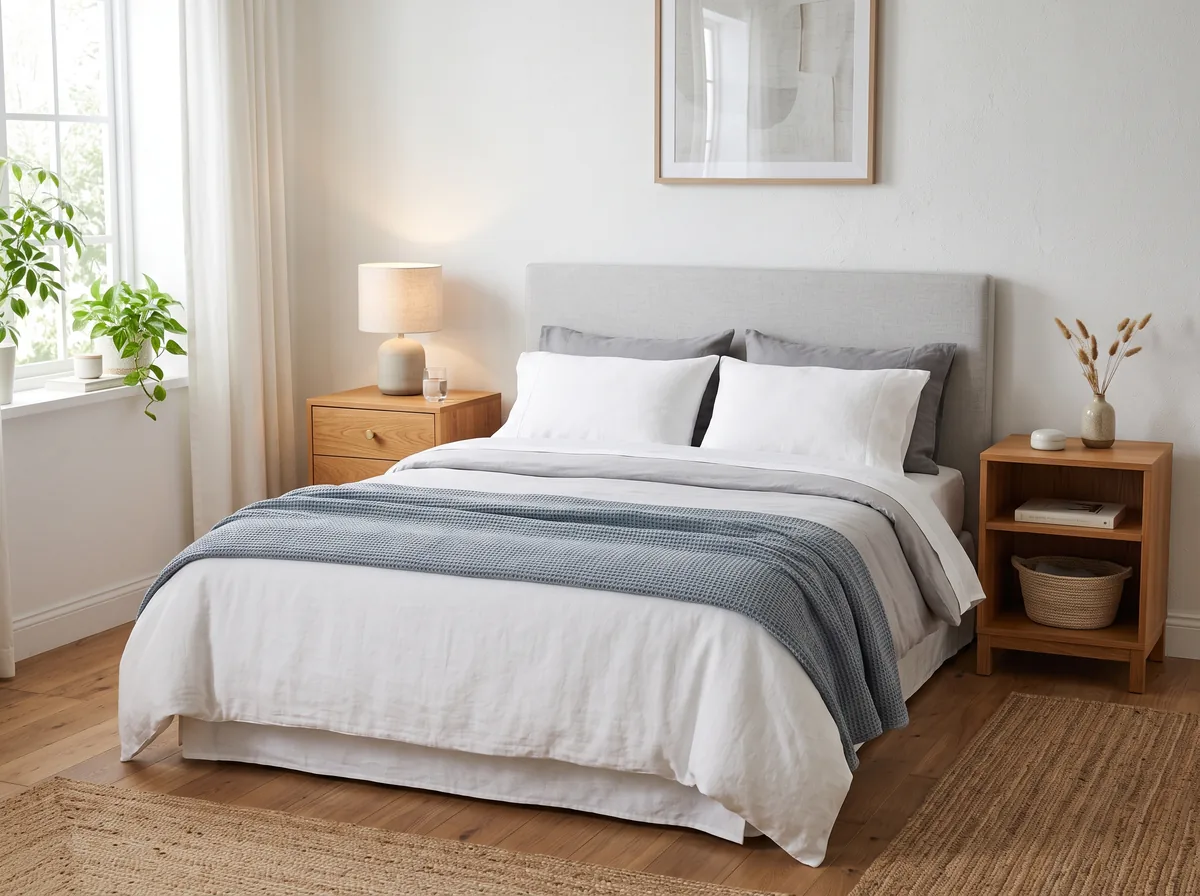
If your two nightstands are genuinely different pieces, a taller one on the side where you read in bed and a lower, slimmer one on the other side, keeping their tops within that same rough range is usually enough for the pairing to still read as considered rather than accidental.
Scale each piece to your bed
Proportion matters as much as height. A nightstand that looks correct beside a queen bed can look undersized next to a king headboard, and an oversized dresser can crowd a smaller room even when the finish and hardware are perfectly matched. A rough starting point some designers use is keeping each nightstand’s width at roughly a third to a half of the headboard’s width, then adjusting from there based on the actual walking space left on either side of the bed. That is a starting point for how to mix and match nightstands and dressers by scale, not a fixed formula.
For the dresser, measure the wall it will sit against before you fall in love with a specific piece. A long, low dresser reads very differently against a narrow wall than it does against a wide one, regardless of how well its finish matches the nightstands beside the bed.
Pairing a tall chest with a low dresser
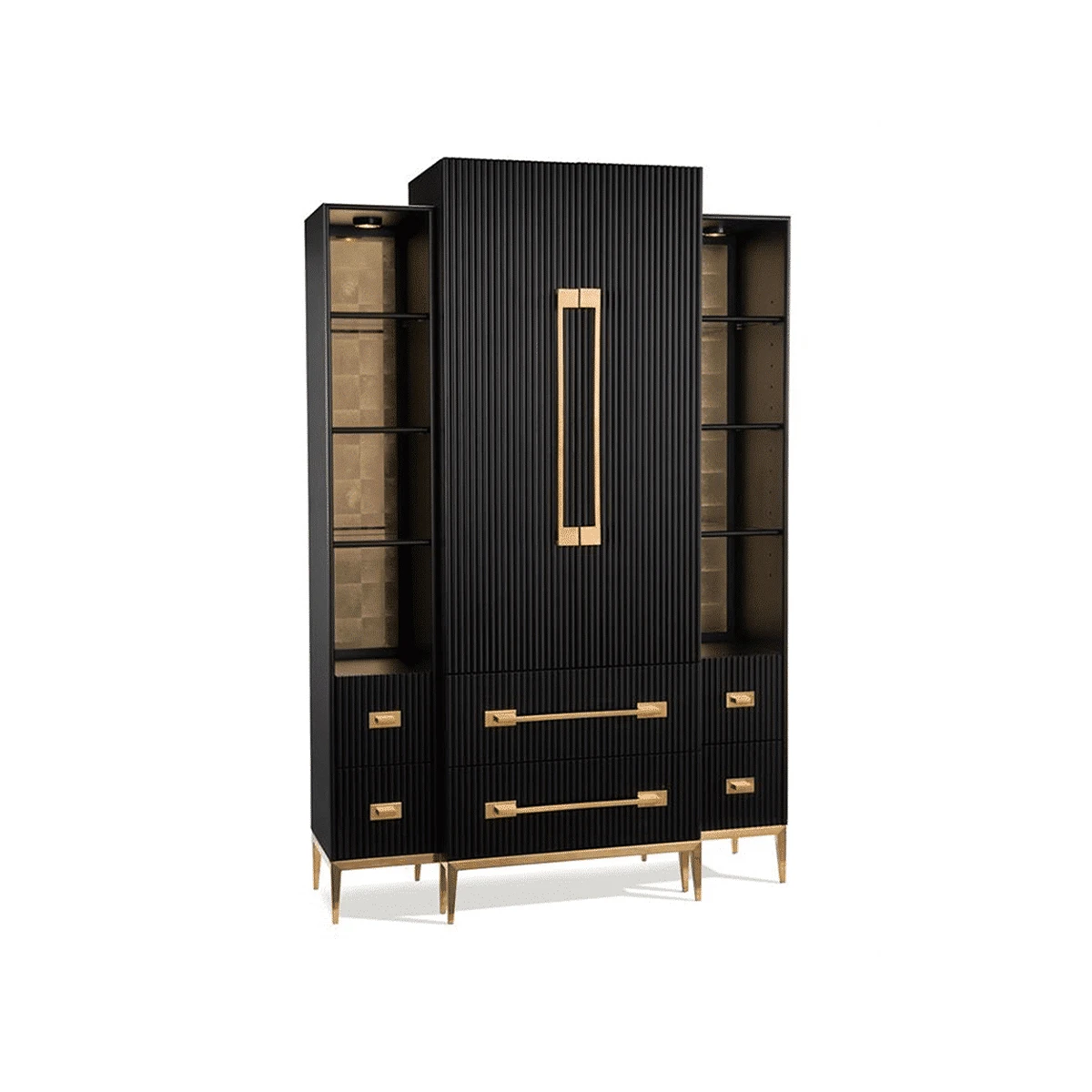
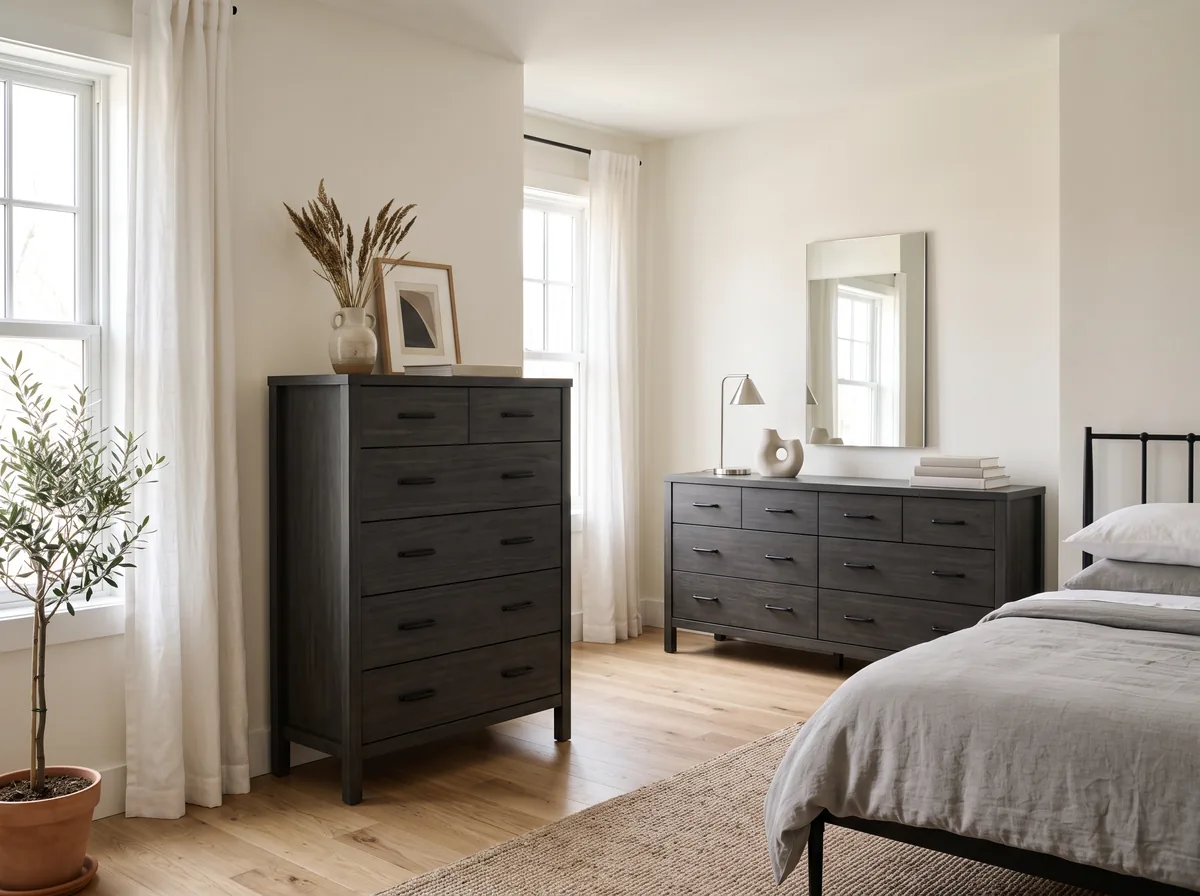
A tall chest and a low, wide dresser almost never come from the same collection, and that is usually the point. The chest handles vertical storage in a corner or against a narrow wall, while the dresser gives you a horizontal surface for a mirror, a tray, or a television. It is one more way to mix and match nightstands and dressers by job instead of by collection: paired in the same finish and hardware tone, the height difference reads as intentional layering instead of a mismatch.
Save yourself a delivery headache
Measure your doorway, hallway turns, and any stairwell before you order a wide dresser or a tall chest, not just the spot where it will finally sit. A piece that fits the bedroom perfectly still has to get there first.
Asymmetric nightstands, on purpose
Two different nightstands on either side of the bed is its own deliberate choice, not a compromise. It works well when the two sides of the bed genuinely have different needs: one partner wants drawer storage for glasses and medication, the other wants an open shelf for a stack of books, or when the room itself is asymmetric, a window on one side and a closet door on the other. Deciding to mix and match nightstands and dressers on purpose, rather than settling for two leftover pieces, is what makes the pair look considered instead of accidental. Keep the same finish and hardware, keep the tops close in height, and let the two pieces differ everywhere else.
Measure before you buy: Drawer depth and door swing
A few measurements catch most of the problems that show up after delivery day. Work through these before you order any nightstand or dresser you plan to pair with an existing piece:
- Measure the finished mattress top height, with your actual mattress and any topper in place, and compare it to each nightstand’s listed height
- Measure the drawer depth on any nightstand or dresser you already own so a new piece’s drawers can hold the same items
- Check how far a drawer extends when fully open, so it clears a bed frame, a bench, or a walking path
- Check the door swing arc on any nightstand with a door instead of a drawer, since a door needs open floor space a drawer does not
- Measure the wall width for the dresser and the floor space on each side of the bed for the nightstands before you shop
Good to know
Heights, proportions, and clearances in this article are general planning figures, not fixed rules. Confirm the exact dimensions of your own bed, mattress, and room before ordering any nightstand or dresser.
Download the free quick guide
A quick-reference list of what to measure and check before you mix and match nightstands and dressers for your bedroom.
Frequently asked questions
Do nightstands have to match exactly?
No. A matched pair is the simplest option, but two different nightstands can work well as long as they share a material or finish tone, matching hardware, and roughly the same top height. The differences that remain, drawer count, shelf versus door, width- tend to read as intentional, not mismatched, once those few things repeat.
What should stay the same between mismatched pieces?
Three things carry the most weight: one repeated material or finish tone across every case piece, one matching hardware finish on every pull and handle, and nightstand tops kept close to the same height line. Case height, leg style, and drawer count are free to differ once those three repeat.
Can one nightstand be taller than the other?
Yes, particularly when the two sides of the bed serve different purposes, one for reading with a lamp and a stack of books, the other for a simple surface. Keeping both tops within a couple of inches of each other, and close to the mattress top, generally keeps the difference from looking accidental instead of intentional.
Building a set you actually like
A mixed bedroom set comes together around a small number of repeated decisions rather than a single matching collection. Before you order anything:
- Pick one material or finish tone and one hardware tone to repeat across every nightstand and dresser in the room
- Keep the nightstand tops close to one height line, even if the pieces themselves are different heights and widths
- Measure drawer depth, drawer swing, and door swing against what you already own before adding a new piece
- Let silhouette, drawer count, and leg style differ freely once those repeats are locked in
Our design team offers free in-house consultations at our North York showroom, and virtual consultations across North America, if you would rather work through a pairing with someone in the room. Book a design consultation and bring your measurements.