














Dining room ideas, Furniture Buying Guides
Upholstered vs. Wood Dining Chairs: Maintenance and Comfort Compared

Nov
Are upholstered dining chairs actually more work than wood ones, or is that just a reputation they carry? The honest answer depends on what you are comparing and how you plan to look after them. Upholstered vs wood dining chairs is less a question of one being objectively better and more a question of which trade-offs fit your household, so before you choose from our dining chair collection, it helps to know what each option actually asks of you day to day.
Quick take
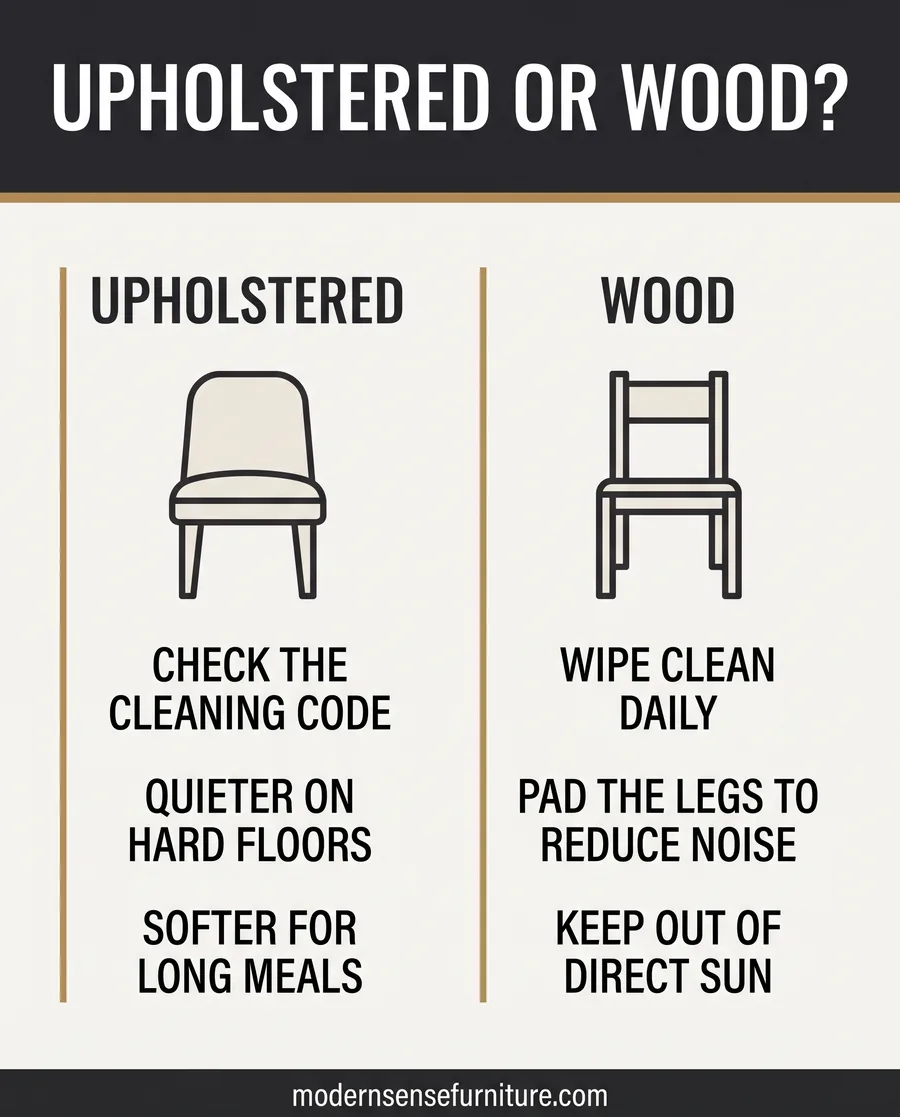
Wood chairs are generally simpler to wipe down day to day. Upholstered chairs are usually more comfortable and quieter against a hard floor, and how much extra care they need comes down almost entirely to the fabric and its cleaning code, not the fact that it is upholstered at all.
If comfort is your top priority
Comparing upholstered and wood dining chairs on comfort starts with a handful of measurable factors for furniture in the dining room, not the material alone. Seat depth matters. Designers commonly work from a seat depth around 17 to 18 inches (43 to 46 cm), enough that the front edge does not press into the back of your knees, but not so deep that shorter guests cannot reach the backrest. Seat height follows a similar pattern, generally around 17 to 19 inches (43 to 48 cm) under a table roughly 28 to 30 inches (71 to 76 cm) high. A backrest angled slightly back, rather than perfectly vertical, tends to feel more comfortable for a long meal. None of these are fixed rules, but they are the figures most designers start from before adjusting for a specific chair.
Padding thickness and density affect comfort more than whether the surface is fabric or leather. A thinly padded upholstered chair can feel harder than a well-shaped wood seat, and a deep, supportive foam core under a fabric cover usually matters more to comfort than the covering material itself.
If low maintenance matters most
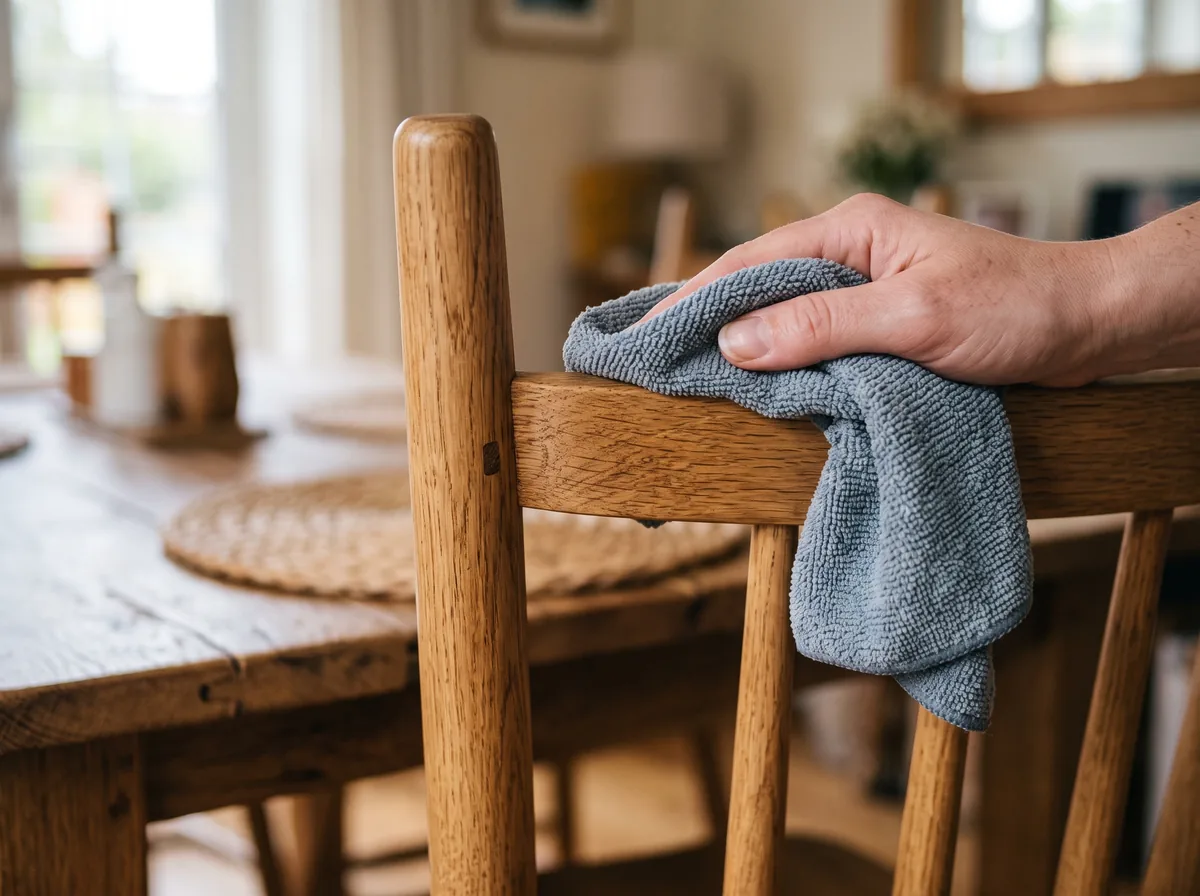
Wood chairs have a real advantage here for everyday upkeep. Bernhardt’s own furniture care guidance recommends removing household dust with a soft cloth along the grain, keeping wood furniture away from extreme heat, humidity, and direct sunlight, and wiping spilled liquids from the surface right away with a soft, slightly damp cloth. That is largely it for routine care. There is no fabric to worry about staining and no cleaning code to check first.
Upholstered chairs are not high maintenance by default, but they do add one extra step: knowing what the fabric is rated for before you clean it, which is where the cleaning code comes in.
If you already love a fabric or leather seat
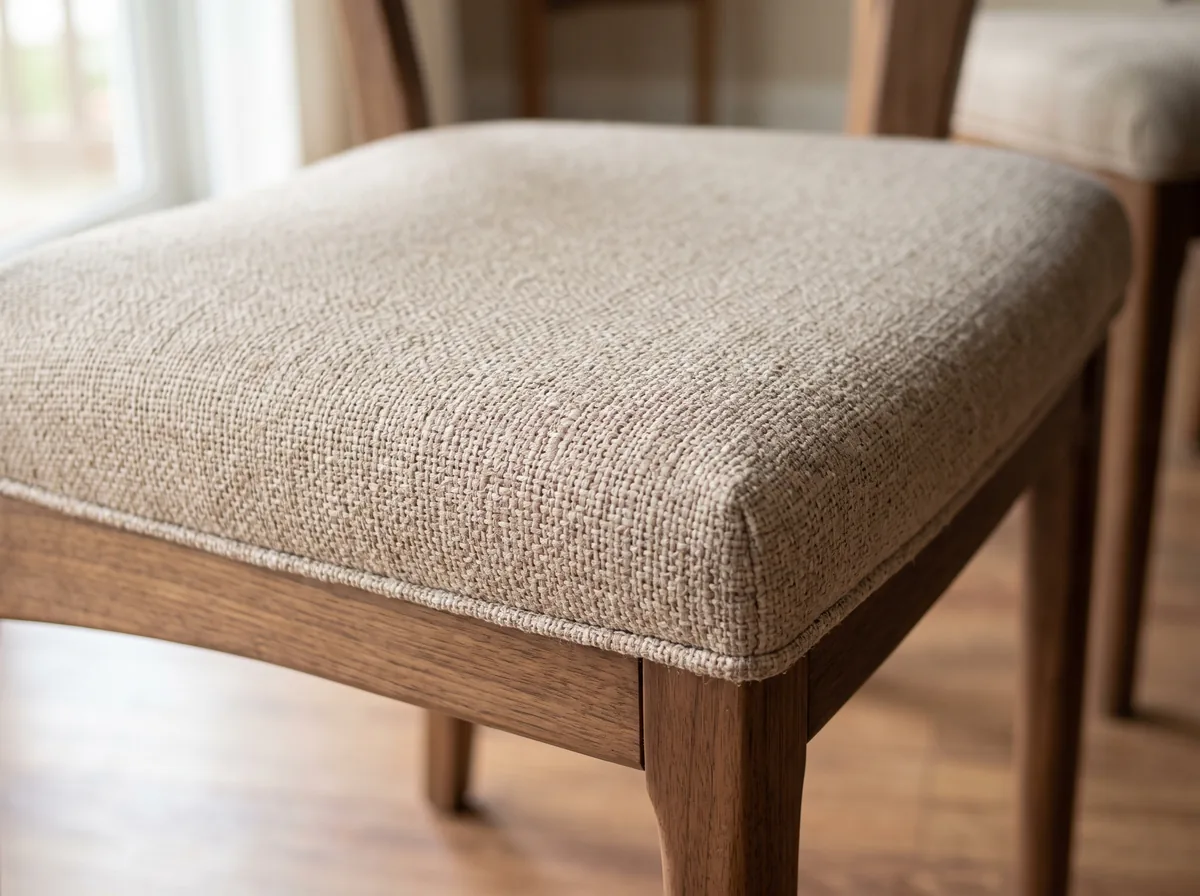
Every upholstered piece is supposed to carry a cleaning code on a tag, usually stapled underneath the seat or cushion. Bernhardt’s own cleaning instructions lay out what each one means: code W calls for a water-based shampoo or foam cleaner and no solvents, code S calls for a dry cleaning solvent only, with water avoided entirely, code SW (also written W-S) allows either a mild shampoo or a solvent, and code X means vacuuming or light brushing only, with no water or solvent cleaner at all.
Save your money
Check the care tag’s cleaning code before you reach for water, steam, or a detergent spray, and before you book a cleaning service. Using a water-based cleaner on a solvent-only or vacuum-only fabric can set a stain permanently or leave a water ring that no amount of cleaning afterward will fully lift.
Leather asks for a different approach entirely. The same Bernhardt guidance recommends frequent dusting or vacuuming with an upholstery attachment, avoiding furniture polish, saddle soap, oils, ammonia, or soap-based cleaners, and wiping the entire affected area with a lightly dampened cloth and a mild, non-detergent solution rather than spot-treating just the stain. Leather should also stay out of prolonged direct sunlight, which can fade it over time.
If a performance fabric is on your shortlist
Performance fabrics are worth a closer look if spills are a regular concern at your table. Sunbrella’s own cleaning guidance walks through blotting a fresh spill with a dry cloth, brushing off loose dirt, and cleaning with a mild soap and water solution rather than a harsh chemical cleaner. The company positions these fabrics as easy to clean and built to stand up to everyday messes, not as immune to staining, and the cleaning steps it publishes are still a real part of keeping the fabric looking good, not an afterthought.
If you have kids or pets at the table
A code W or code SW fabric is generally easier to live with in a household with frequent spills, since a mild water-based cleaner is an option instead of a dry cleaning solvent alone. A code X fabric, which only allows vacuuming, is harder to keep looking fresh under regular kid or pet use, whatever the fabric’s colour or pattern.
Wood chairs sidestep the fabric question entirely but pick up their own household habit: scraping across a hard floor can scratch both the chair legs and the floor over time, and a felt or rubber pad under each leg is a simple way to cut down both the noise and the scratching, worth checking with your flooring installer if you have a specific floor finish to protect. That trade-off, easy spot-cleaning against easy scratch prevention, is really the core difference between upholstered and wood dining chairs for a busy household.
Upholstered vs wood dining chairs, side by side
| Factor | Upholstered chairs | Wood chairs |
|---|---|---|
| Everyday comfort | Usually softer against the body when the padding is well made | Depends heavily on the shape of the seat and backrest |
| Cleaning a spill | Depends on the fabric’s cleaning code, from a simple water-based wipe to a solvent-only approach | Typically a quick wipe with a soft, damp cloth |
| Noise on a hard floor | Fabric and padding tend to dampen scraping sounds | Can scrape or creak without a felt or rubber pad |
| Changing the look later | Fabric and colour can be changed by reupholstering | Wood tone is fixed unless the piece is refinished |
Good to know
This article offers general comfort and care guidance for dining chairs. It is not a substitute for the specific care tag on your own furniture, which should always take priority over general advice like this.
Download the free quick guide
A quick-reference checklist of comfort and care questions to ask before choosing upholstered or wood dining chairs.
Frequently asked questions
What does a W, S, WS, or X code on a dining chair tag mean?
These are cleaning codes found on most upholstered furniture tags. W means a water-based shampoo or foam cleaner is safe to use. S means only a dry cleaning solvent should touch the fabric, with water avoided. WS, sometimes written W-S, means either approach can work. X means the fabric should only be vacuumed or lightly brushed, with no water or solvent cleaner at all. Check the tag before cleaning anything, since using the wrong method can set a stain permanently.
Are performance fabrics actually stain resistant?
Performance fabrics like Sunbrella are generally easier to clean and more forgiving of everyday spills than a standard decorative fabric, but no fabric is immune to every stain. The manufacturer’s own guidance still walks through blotting spills promptly and cleaning with a mild soap solution, which suggests routine care still matters even with a performance fabric.
Do wood dining chairs need any regular care at all?
Yes, though less than most people assume. Dusting along the grain, keeping the chairs out of direct sunlight and away from heat sources, and wiping up spills right away covers most of what a wood finish needs. A felt or rubber pad under each leg also helps protect both the chair and your floor from everyday scraping.
So which wins, upholstered or wood? Neither one, categorically. Wood asks less of you day to day and shrugs off scrapes and wipes without a second thought. Upholstered chairs generally feel better for a long meal and stay quieter around the table, and the maintenance reputation they carry mostly comes down to whether you check the cleaning code before you clean. Pick based on comfort and how the room feels, then plan the care routine around whichever one you choose.