













Furniture Buying Guides
Choosing the Right Modern Accent Chairs for Narrow Condo Living Rooms
Oct
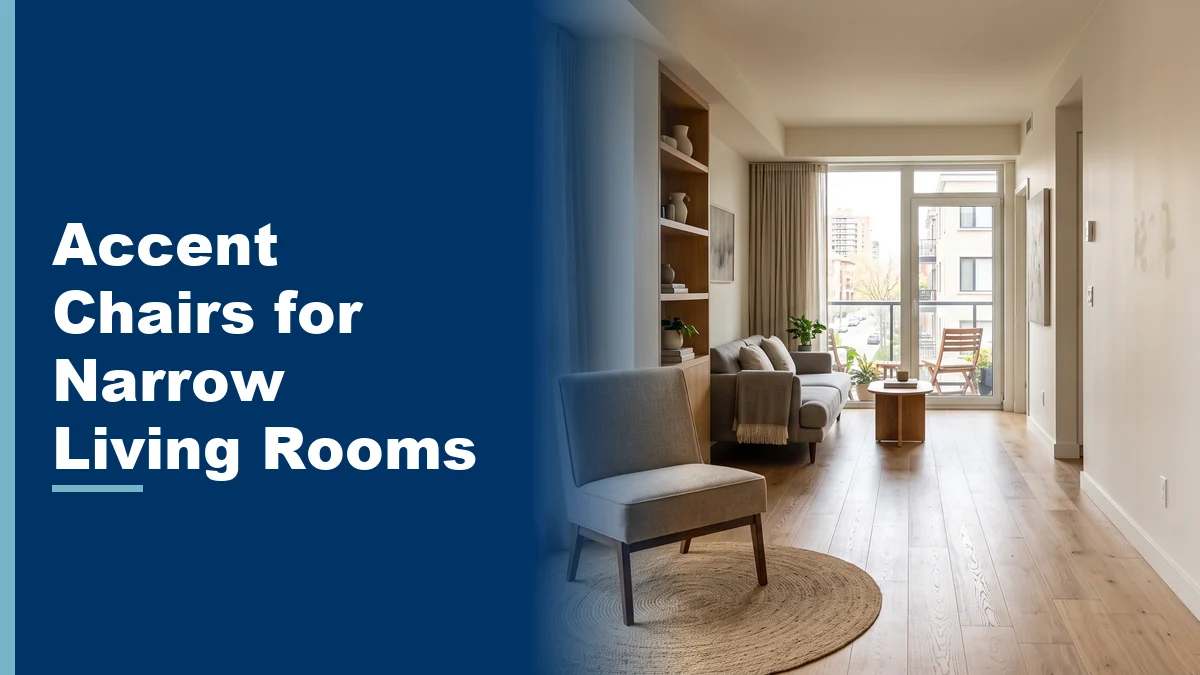
Every narrow condo living room seems to collect the same problem chair: the one that looked perfect in a showroom photo and now blocks the path to the balcony door. Choosing accent chairs for narrow living rooms is less about finding a pretty shape and more about solving a small geometry problem before a style problem. Get the fit right, and the room still breathes. Get it wrong, and even a genuinely beautiful chair reads as clutter the moment someone tries to walk past it. We work through exactly this with shoppers browsing our condo furniture collection on almost every showroom visit, and the fixes are more specific than simply buying something smaller.
A narrow living room usually means one long wall, one obvious traffic lane, and not much forgiveness for a chair that swings wide or sits deep. The good news is that the right accent chair can still do real work in that kind of room: anchoring a reading corner, balancing a sofa, or giving a second seat to a room that otherwise runs everyone toward the same three cushions.
Why accent chairs need extra care in a narrow living room
Most narrow living rooms in Toronto condos share a layout habit: a single walking lane runs from the entry to the balcony or the kitchen, and every piece of furniture either respects that lane or fights it. A sofa is easy to plan around because it hugs one wall. An accent chair is the piece people misjudge, because it often gets chosen for its shape from a catalogue photo rather than for how much floor it actually occupies once it is sitting in the room.
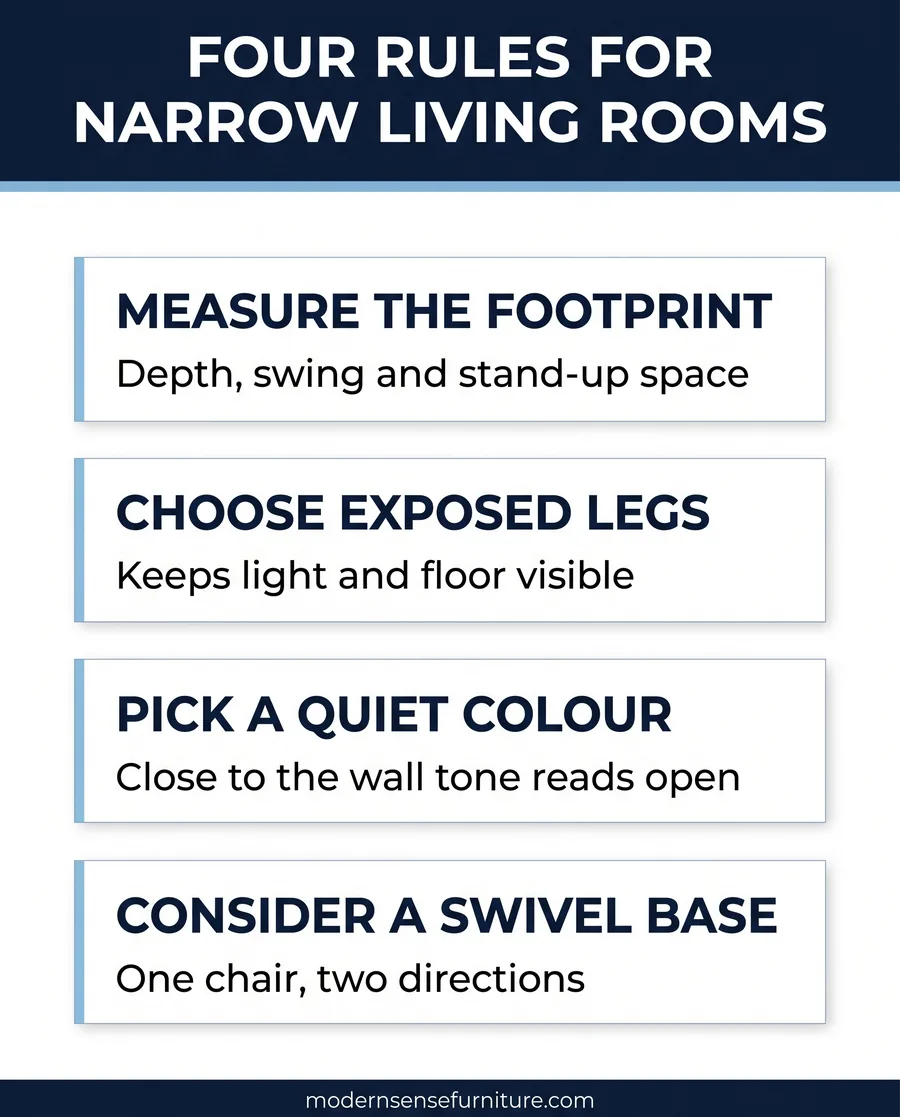
The rooms that work best treat the chair as a piece with a footprint, not just a silhouette. That means thinking about seat depth, arm width, how far the chair pulls out from the wall when someone sits down, and whether the door or window nearby needs its own clear swing. None of that shows up in a product photo, which is exactly why it gets missed. If you are still working out the rest of the room, planning a compact condo layout first tends to make the chair decision easier, since the walking lane and the furniture zones get settled before a single chair has to fit around them.
Fit problems are not unique to accent chairs, either. The same small-space furnishing principles that keep a sectional or a console table from overwhelming a narrow room apply just as directly to a single occasional chair, only with less margin for error since there is nothing else in the room to visually absorb a piece that is too big.
Did you know
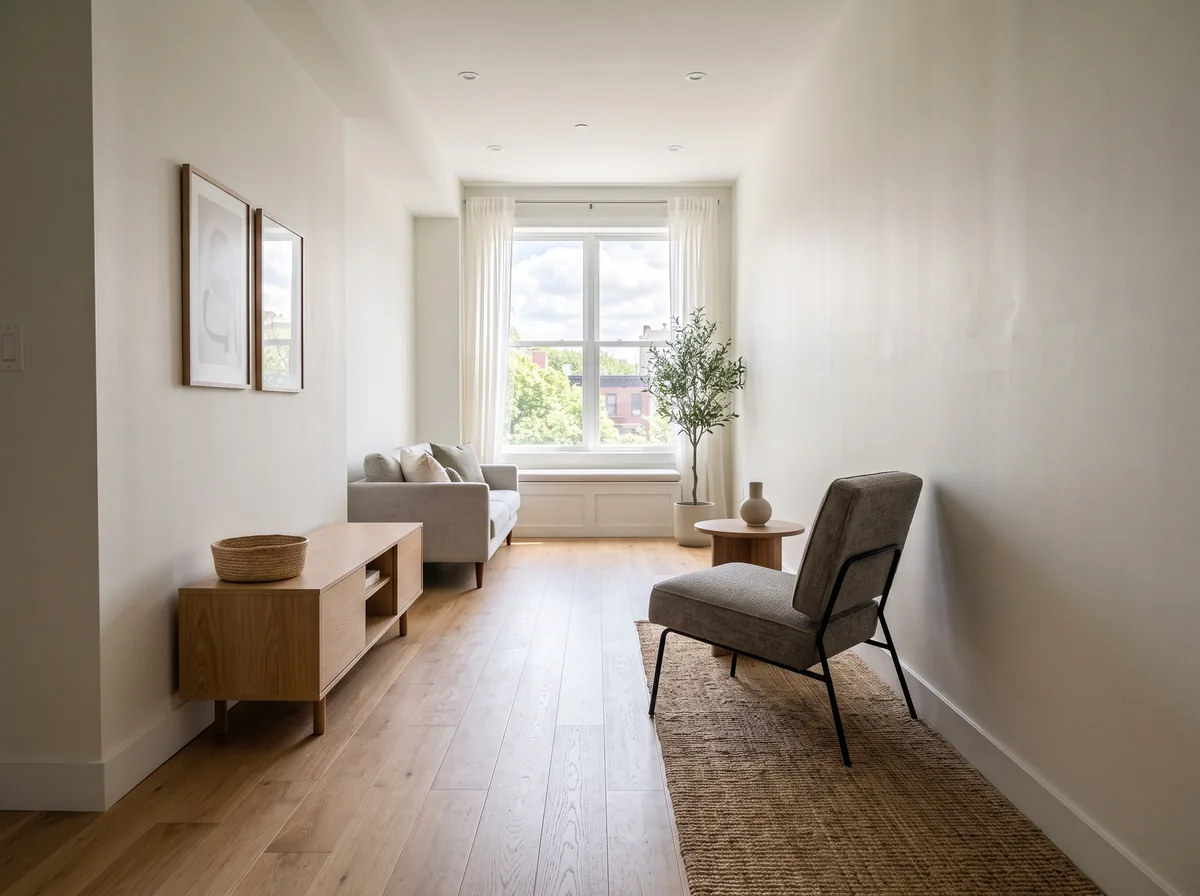
Many newer Toronto condo living rooms run narrower than the living rooms buyers grew up with in a house, since the room often shares its footprint with a dining area or a home office nook rather than standing alone. That single shift is why a chair that would disappear in a suburban living room can dominate a condo one.
Chair depth, arm height, and how much floor space a chair needs
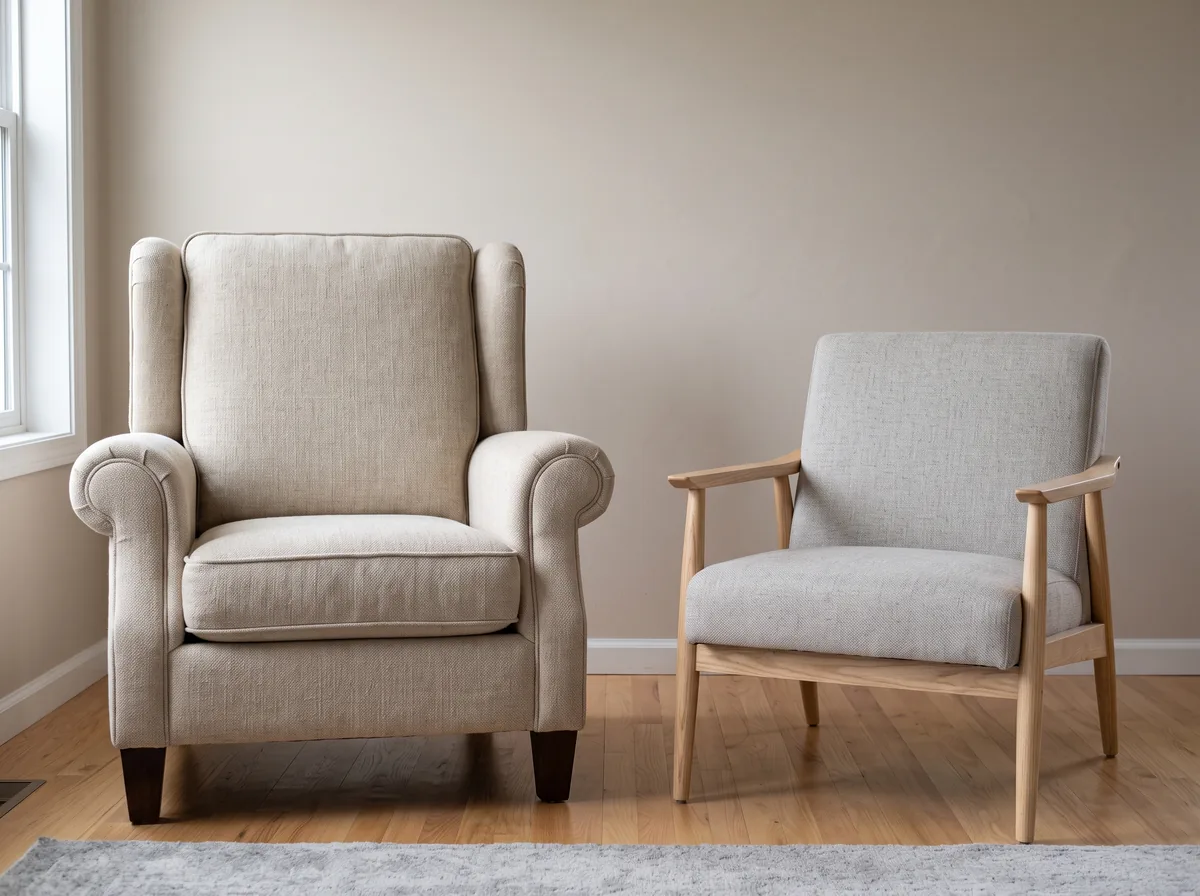
Seat depth varies more between accent chair lines than most shoppers expect. A deep lounge-style chair can need noticeably more floor space than a tailored occasional chair with a straighter back, even when the two look similar width-wise in a photo. Interior designers commonly start room planning from published clearance guidance, such as the general spacing references from the American Society of Interior Designers, then adjust for the specific room in front of them rather than treating any single number as fixed.
Arm height and arm style matter almost as much as depth. A chair with low, open arms or no arms at all tends to feel lighter in a narrow room, since there is less bulk at eye level to interrupt the sightline down the room. A chair with tall, wide arms can look completely reasonable on its own and still make a narrow space feel boxed in once it takes its spot.
Matching scale and silhouette to a narrow footprint
Exposed legs do more for a small room than almost any other single design choice. A chair with visible wood or metal legs lets light and floor show through underneath it, which reads as open even when the seat itself is a normal size. A fully upholstered chair that runs to the floor on a skirt, by contrast, reads as a solid block, and a narrow room rarely has room for more than one solid block before it starts to feel crowded.
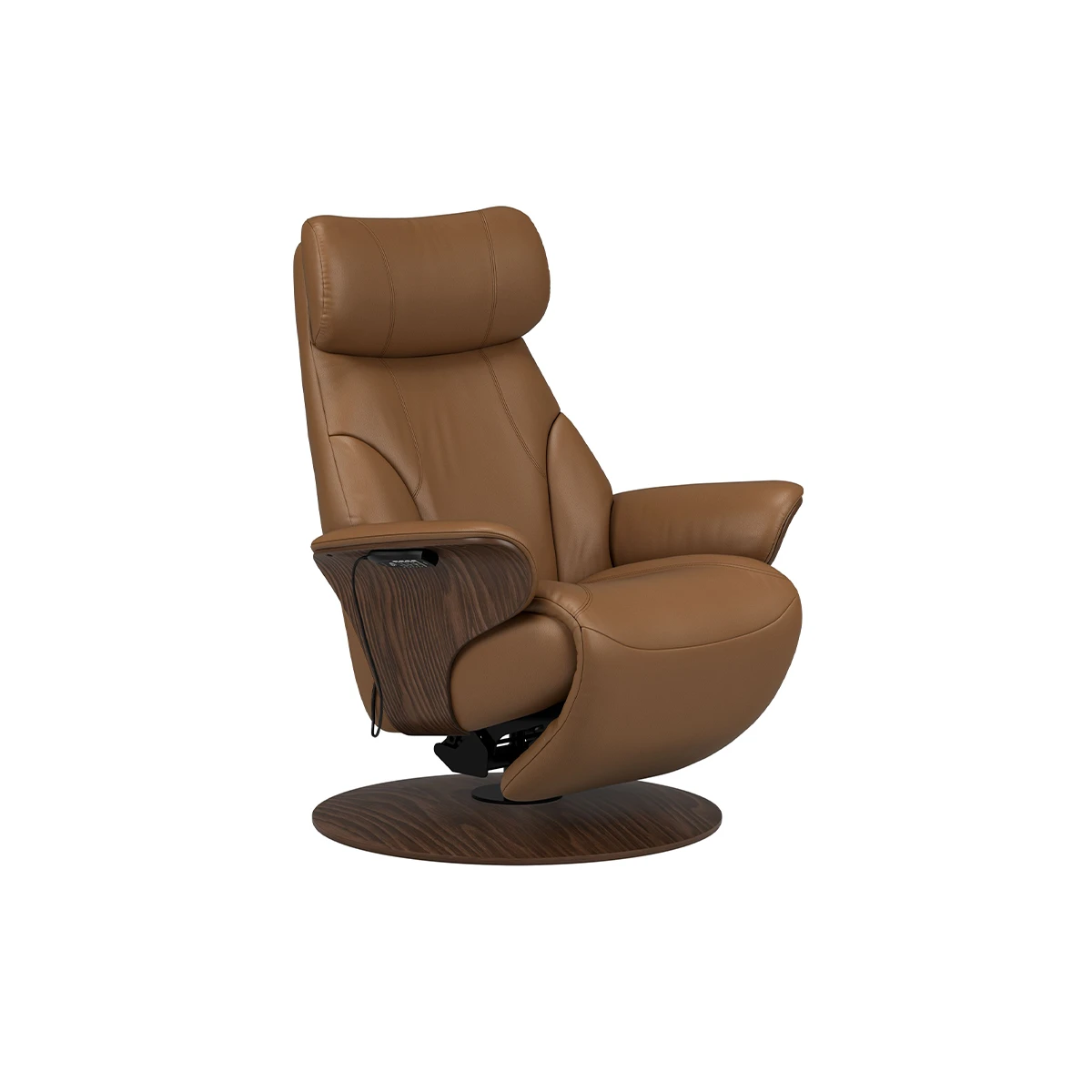
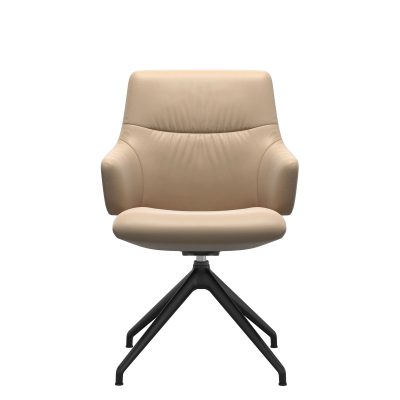
Swivel chairs earn their reputation in tight condo layouts for a practical reason: the chair can face the television, then turn toward a guest or a dining table without anyone needing to physically move the piece. Our modern accent chair collection includes several swivel and track-arm options built with exactly this kind of flexible, tight-footprint room in mind. That exposed-leg, low-arm silhouette is consistently the best performer among accent chairs for narrow living rooms, since it keeps the sightline down the room open instead of blocked.
Pro tip
Before you order, mark the chair’s actual footprint on the floor with painter’s tape, including the space it needs when someone stands up from it. Walk the room for a day with the tape down. A shape that looks fine on paper sometimes reveals itself as a daily obstacle once you actually have to step around it. This one exercise resolves more accent chair, narrow living room mismatches than any other single tip.
Fabric, colour and finish choices that keep a room feeling open
Colour does real work in a narrow room. A chair upholstered close to the wall colour tends to recede, which keeps the eye moving down the length of the room instead of stopping at the chair. A strongly contrasting colour can still work, but it reads as a deliberate focal point rather than a quiet supporting piece, so it is worth choosing that effect on purpose rather than by accident.
Performance fabrics are worth asking about if the chair sits near a kitchen pass-through or a well-used entry, since many are treated to resist everyday spills and general wear better than an untreated textile. How any specific fabric actually performs in your household depends on the exact weave, finish, and how the chair gets used, so it is worth asking our design team about the care profile of a fabric before you commit to it rather than assuming every performance label behaves the same way.
Good to know
Fabric performance, leather characteristics, and finish durability vary by material, household use, and the specific product line. This guide offers general shopping guidance, not a spec sheet for any single chair. Ask our design consultants for the exact care details for a fabric or finish before you buy.
Download the free quick guide
A printable checklist for measuring, comparing and choosing accent chairs for narrow living rooms before you order.
Frequently asked questions
How deep should an accent chair be for a narrow living room?
There is no single number that fits every layout, but many occasional chairs built for tighter rooms run in a more compact seat depth than a deep lounge chair, which generally makes them easier to place along a narrow wall without eating into the walking lane. The more reliable test is measuring the actual space, including the distance the chair needs when someone stands up from it, rather than judging depth from a product photo alone.
Are swivel accent chairs a good choice for small condo living rooms?
Often, yes. A swivel base lets one chair serve two purposes, facing the television for everyday use and turning toward a guest or a dining table when needed, which is useful in a room that does not have space for extra seating. Swivel mechanisms vary by manufacturer, so it is worth trying the motion in person to confirm it feels smooth before you commit to a specific model.
What is the best chair shape for a narrow living room?
A chair with a tailored profile, a moderate seat depth, and visible legs generally works better in a narrow room than an oversized, fully upholstered piece, since exposed legs let light show through underneath and keep the room from feeling boxed in. Among accent chairs for narrow living rooms, shape matters less than footprint, so a well-proportioned chair with a slightly bolder silhouette can still work if the actual floor space it needs fits the room.
Should I choose an armless accent chair to save space?
An armless or open-arm chair can make a narrow room feel lighter, since there is less visual bulk at eye level along the wall. It is not the only option, though. A chair with slim, low arms can look just as open in the right proportions, so it is worth comparing a few arm styles side by side in the room rather than ruling out arms entirely on principle.
How do I know if an accent chair will actually fit before I buy it?
Measure the chair’s full footprint, including how far it extends when someone sits down and stands up, then mark that area on your floor with painter’s tape and live with it for a day or two. Photos and dimensions on a product page rarely capture how a chair feels in daily traffic. If you can bring your room measurements or a photo into our showroom, we can help you compare options against your actual space before delivery.
Fit first, style second: that is the whole method behind choosing accent chairs for narrow living rooms well. The best accent chairs for narrow living rooms are the ones you stop noticing as a squeeze and start using every day: a place to read, a second seat when friends come over, a quiet anchor for a corner that used to sit empty. Solve the fit first, then let the fabric and finish do the styling work, and a narrow room stops feeling like a limitation.
If you want to see how a specific chair actually sits in a narrow layout before you order it, visit our Toronto modern furniture showroom and bring the measurements or a photo of your room. We can walk you through scale, swivel options and fabric in person, next to the pieces you are actually comparing.