













Design Tips, Modern Furniture
How to Furnish a Small Toronto Condo Without It Feeling Cramped

Apr
Anyone who has tried to furnish a 500-square-foot Toronto condo knows the trap: you walk into a showroom, fall in love with a deep eight-foot sofa, get it home, and suddenly the living room is a sofa with a hallway around it. The problem isn’t the condo. The problem is treating a small space the same way you’d treat a 3,000-square-foot suburban house. Small condos need their own rulebook, and the good news is the rules aren’t complicated. They’re just different. After helping hundreds of GTA condo owners furnish places between 400 and 800 square feet, we’ve boiled the entire process down to seven decisions that matter and a handful that really don’t. Here’s what actually works in 2026, starting with modern sectionals.
Start with the floor plan, not the furniture
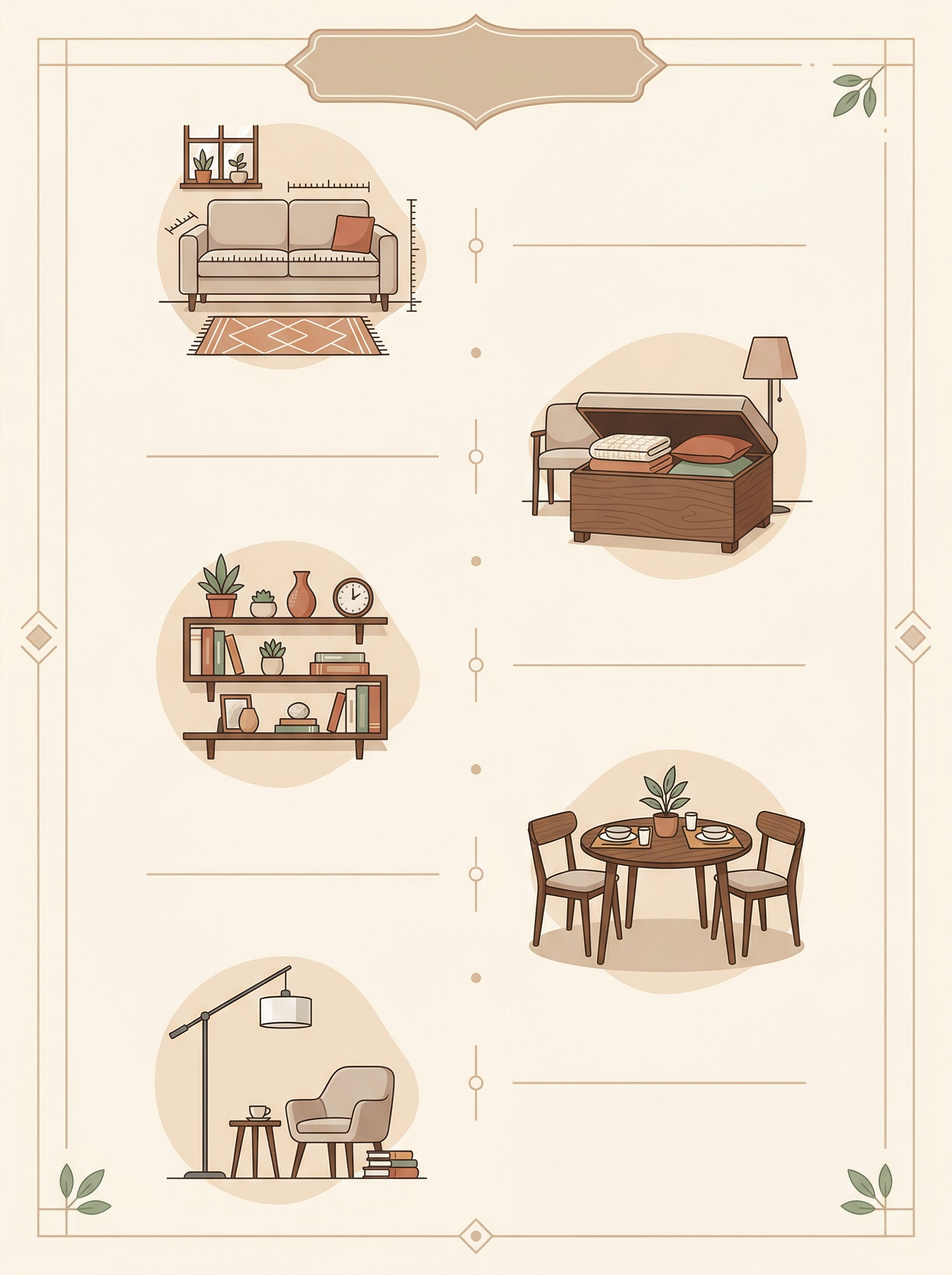
Before you look at a single sofa, sketch your room to scale. Graph paper, a tape measure, and ten minutes will save you a $3,000 mistake. Mark every door swing, every radiator, every outlet, and every window sill. The piece of furniture that ruins more condos than any other isn’t a giant couch, it’s a piece bought without measuring the elevator and the front door. If your sectional won’t fit through a 32-inch door, it doesn’t matter how perfect it looked in the showroom. Most modern condo buildings in Toronto have elevator dimensions you can request from the property manager. Get them in writing.
The 60% rule for sofa width
A sofa should be roughly 60 percent of the wall it sits against, give or take. In a condo with a 12-foot living room wall, that means a seven-foot sofa is the absolute maximum, and a 75-inch piece often looks better. Anything bigger and the room reads as one piece of furniture with some wallpaper around it. Anything smaller and the wall looks empty. The sweet spot for most Toronto one-bedrooms is a 72 to 80-inch slim-arm sofa or a small left-arm sectional that tucks into a corner.
Choose pieces that earn their square footage
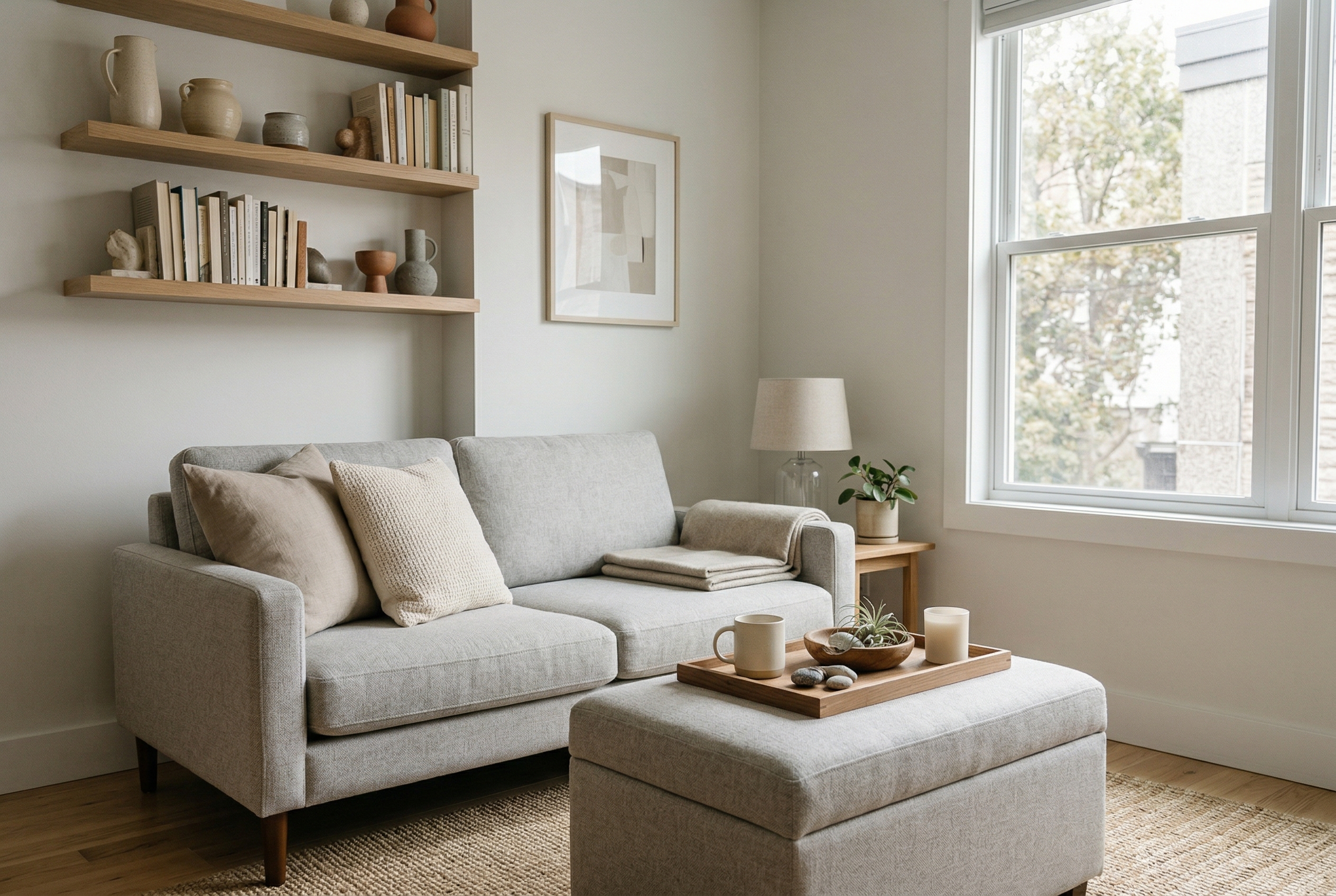
In a small condo, every piece of furniture should do at least two jobs. A coffee table with a lift-top doubles as a desk. A storage ottoman replaces a bench and a side table and hides off-season blankets. A bed frame with drawers underneath cancels out the dresser you’d otherwise need. A console behind a floating sofa serves as a sideboard, a bar, and a workstation depending on the day. The single best thing you can do for a small condo is stop buying furniture that only has one function.
Go vertical, always
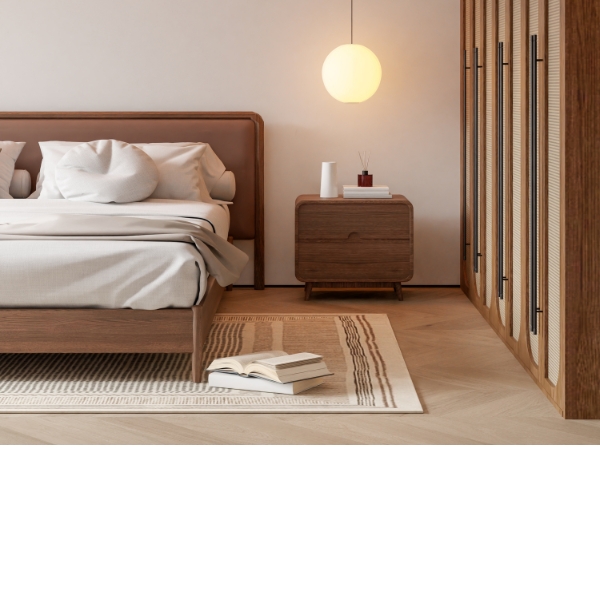
Floor space is finite. Wall space is mostly free. A floor-to-ceiling bookshelf takes the same footprint as a 40-inch credenza but holds five times as much. Wall-mounted nightstands free up the space your bed needs to feel grounded. A pair of tall, skinny lamps reads more luxurious than a chunky floor lamp and a side table. Look up before you look out.
Pick a single visual anchor and let everything else recede
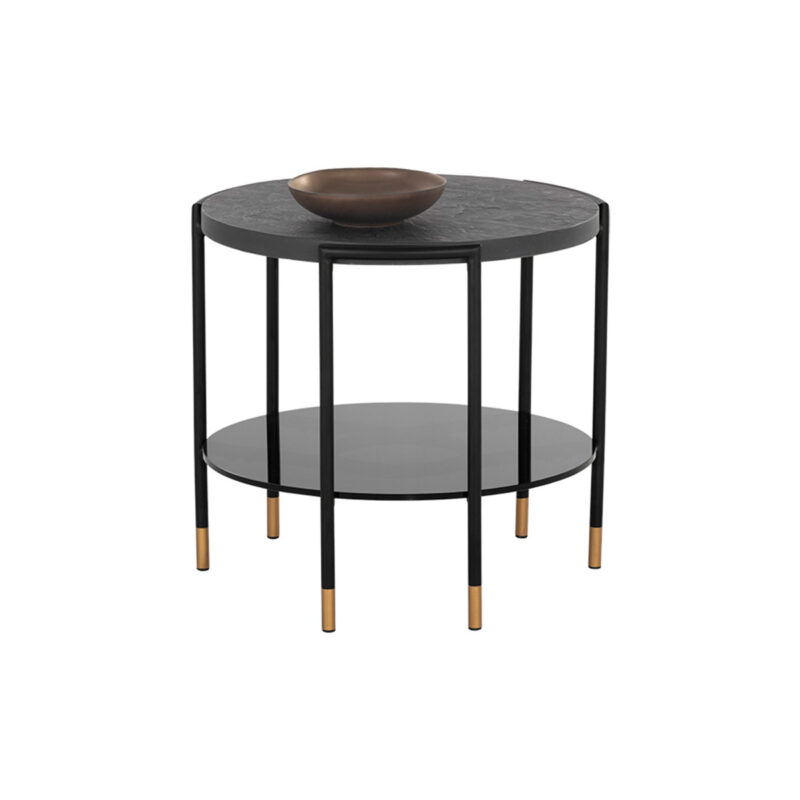
Small rooms get loud fast. If your sofa is a statement piece, your rug should be quiet. If your art is the moment, your sofa should be neutral. Pick one piece per room to be the eye-catcher and treat everything else as supporting cast. The cream boucle sectional with the walnut coffee table works precisely because the coffee table is warm but quiet. Two statement pieces in a 200-square-foot living room is one too many.

Light, fabric, and the illusion of breathing room
Three details quietly do most of the work in a small condo. First, light: layered lighting (overhead, table, accent) makes a room feel bigger than overhead-only ever will. Second, fabric: textured but light-coloured upholstery (boucle, linen, undyed cotton) reflects light and disappears into the wall, while dark velvet swallows the room. Third, leg height: furniture with visible legs lets your eye see the floor underneath, which tricks the brain into reading more square footage than actually exists. Skirted sofas and full-base storage ottomans look heavier than they are.
The dining question
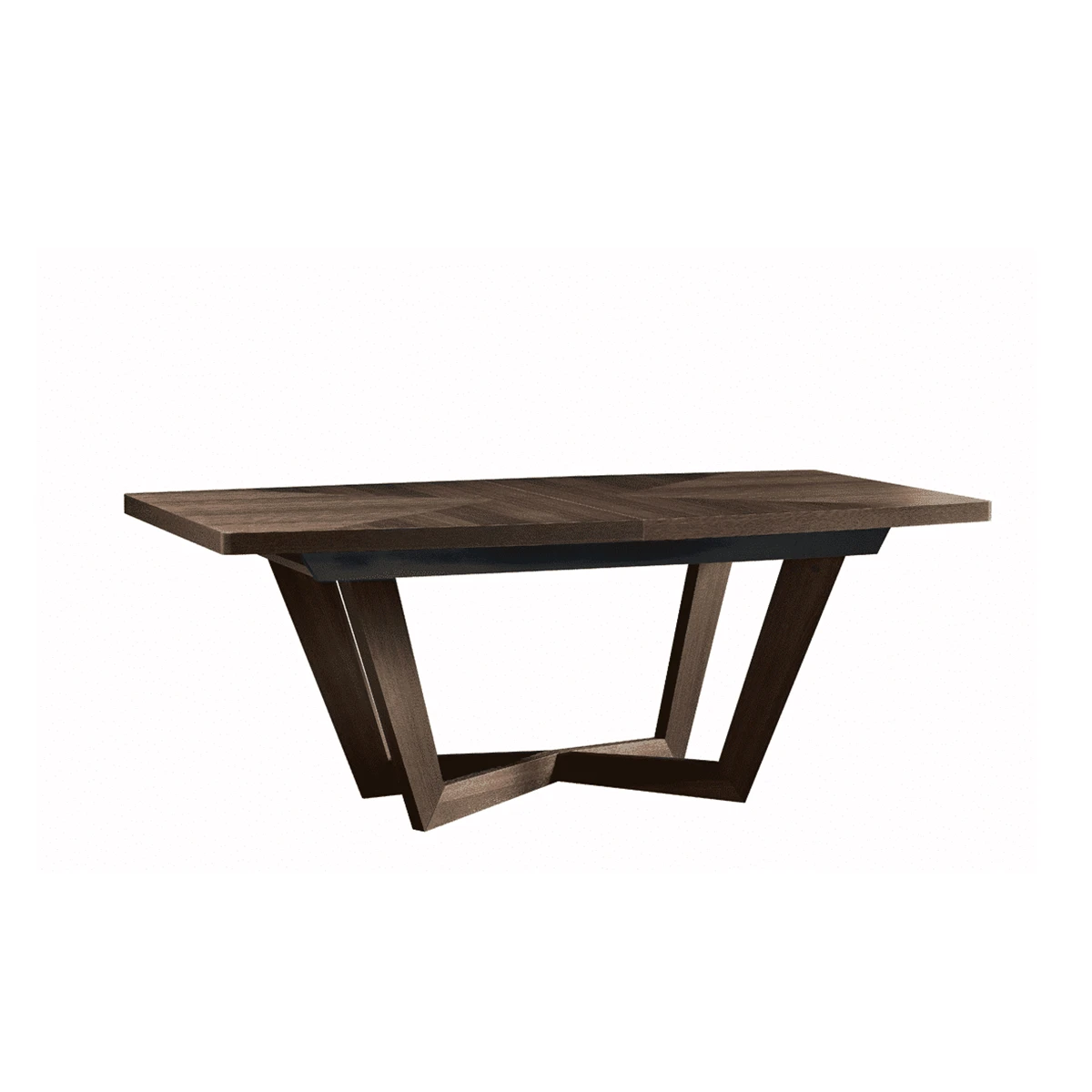
Most Toronto condo owners overthink the dining table. If you eat dinner alone or as a couple six nights out of seven, a 36-inch round pedestal table with two chairs is more than enough, and pulls in two extras when friends come over. A drop-leaf console table against the wall converts to a dining table for four in 30 seconds and reverts to a sideboard the rest of the week. Don’t buy a six-seater for a hosting fantasy you’ll execute twice a year.
Frequently asked questions
How big a sofa fits in a 500 sq ft Toronto condo?
A 72 to 84 inch sofa is the practical sweet spot. Anything over 86 inches starts to dominate the room, and anything under 70 inches looks lost on a typical 12-foot living wall. Always check elevator and door clearances before buying.
Should I buy a sectional or a regular sofa for a small condo?
A small left-arm or right-arm sectional that tucks into a corner can actually save space versus a sofa-and-chair combo, because it eliminates the dead zone between two pieces. The piece to avoid is a U-shaped or symmetrical sectional, which forces a huge open floor area in front of it.
What colours make a small condo look bigger?
Light neutrals on large surfaces (walls, sofa, rug) reflect light and recede visually. You can still use dark or saturated colours, just keep them on smaller pieces like art, throw pillows, a single accent chair, or a coffee table base.
Is a king bed too big for a Toronto one-bedroom?
In most one-bedrooms under 700 sq ft, yes. A queen leaves room for nightstands, a dresser, and a clear walking path. A king usually means giving up at least one of those, which costs you more storage than the extra mattress width is worth.
Do mirrors really make a room look bigger?
They make a room feel brighter, which the brain reads as bigger. A large leaning floor mirror opposite a window does more for a small condo than almost any other single decision. Tiny decorative mirrors on a gallery wall do almost nothing.